
TL;DR
Chinese laboratories released four advanced open-weight models between April 24 and mid-June 2026, creating a weeks-long release cycle for high-capability AI. The models offer permissive licensing and lower hosted prices, but benchmark limits, data governance and the durability of those license terms remain unresolved.
Chinese AI laboratories released four advanced open-weight models between April 24 and mid-June 2026, establishing a release cadence measured in weeks rather than months. The models came from DeepSeek, MiniMax, Moonshot AI and Z.ai, and their combination of downloadable weights, permissive licensing and low hosted prices could reshape how companies plan self-hosted and sovereign AI deployments.
The sequence began with DeepSeek V4 on April 24, followed by MiniMax M3 on June 1. Moonshot AI released Kimi K2.7-Code around June 13, while Thorsten Meyer AI places the GLM-5.2 release between June 13 and June 16. The report classifies all four as frontier-class open-weight releases, an analytical judgment based on capability, architecture and market position rather than a formal industry category.
According to the report, DeepSeek V4 Pro uses a 1.6-trillion-parameter mixture-of-experts architecture while activating 49 billion parameters for each pass, and supports a one-million-token context window. MiniMax M3 also offers a one-million-token context window and native multimodal functions. Moonshot’s Kimi K2.7-Code is designed for agentic coding tasks and reportedly uses about 30% fewer reasoning tokens than Kimi K2.6.
Z.ai’s GLM-5.2 has 753 billion total parameters and an MIT license, the report said. DeepSeek V4 also carries an MIT license, while MiniMax uses modified MIT terms. Exact restrictions can differ by model, so organizations must review the applicable license. Thorsten Meyer AI estimated that hosted access to the Chinese models was five to 30 times cheaper than Western frontier APIs, although pricing depends on model tier, token type and provider.
Four Frontier-Class Open Models in Eight Weeks
China’s Release Cadence Is the Story
Same-day-verified market pulse · July 13, 2026
The production line — spring 2026
The board this week — BenchLM overall score, July 2026
Gift & complication — the European read
The gift
Frontier-adjacent capability, permissive licenses, weeks-long refresh cycle. This cadence is what makes serious on-premises AI economically thinkable in 2026.
The complication
Still a dependency — geopolitical, not technical. Hosted Chinese APIs fall under Chinese data law; many Western agencies won’t touch the weights at all. Licensing generosity is a policy, not a law of nature.
The signal: if your infrastructure strategy assumes open models improve slowly, it’s already wrong. If it assumes the current licensing generosity is permanent, it’s unhedged.

Local AI Engineering with Ollama: Run, understand, customize, fine-tune, and build agentic apps on your own hardware
As an affiliate, we earn on qualifying purchases.
As an affiliate, we earn on qualifying purchases.
China Compresses the Release Cycle
The development matters because high-capability open-weight models are now being refreshed within weeks. Organizations that previously expected major self-hosted upgrades once or twice a year may face a much faster testing and procurement cycle. Lower inference prices and permissive licenses could also make on-premises AI economically practical for more businesses, research groups and public institutions.
The depth of the Chinese field is another part of the shift. BenchLM’s July composite gave DeepSeek V4 Pro a score of 87, six points behind a proprietary leader at 93. It listed GLM-5.1 at 83, Kimi K2.6 at 81 and Qwen 3.5 397B at 79. Those results suggest several Chinese laboratories are competing near the upper end, although one benchmark cannot establish overall model quality across coding, reasoning, safety and real-world reliability.

Laplink PCmover Migration Software – Initial Pay-Per-Use License Fee – Monthly invoicing for additional uses – $29.95/license with Super Speed USB 3.0 cable – Business Technician, 10 Licenses
Flexible Pay-Per-Use Structure: Laplink's Technician licensing bills only for completed transfers. One license covers unlimited transfer attempts from…
As an affiliate, we earn on qualifying purchases.
As an affiliate, we earn on qualifying purchases.
Four Labs Build Distinct Positions
The laboratories are pursuing different technical and commercial positions. DeepSeek emphasizes low-cost inference, Z.ai competes on general capability, and Moonshot is targeting long-running coding agents. Alibaba’s Qwen family, although not one of the four releases in this eight-week sequence, supplies a broad range of smaller self-hosted models and gives China another major open-weight model line.
Thorsten Meyer AI reported that four of the five strongest open-weight model families now come from Chinese laboratories. That conclusion depends on the trackers and model definitions selected. Open-weight also does not always mean fully open source: downloadable parameters may be available while training data, source code or complete training methods remain private.
“The cadence is the signal.”
— Thorsten Meyer AI, AI Dispatch dated July 13, 2026
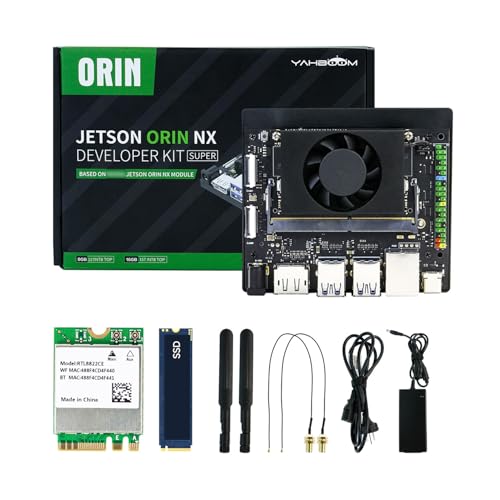
Yahboom Jetson Orin NX Super 16GB RAM 157 Tops Developer Kit Ubuntu Jetpack6.2 with 256GB SSD, Power Supply, for AI Large Model (Orin NX 16GB Developer Kit)
【Core Parameters】★AI Perf: 117/157 TOPS★GPU: 1024-core N-VI-DIA Ampere architecture GPU with 32 Tensor Cores★CPU: 8-core Arm Cortex-A78AE v8.2…
As an affiliate, we earn on qualifying purchases.
As an affiliate, we earn on qualifying purchases.
Benchmarks and Dependencies Remain Unsettled
It is not yet clear whether the reported release pace can be sustained or whether current license terms will apply to later generations. The supplied report links part of the efficiency push to US semiconductor export controls, but the relative effects of hardware scarcity, commercial competition and state policy cannot be established from the release dates alone.
Deployment risks also differ between downloaded weights and hosted services. A locally operated model does not automatically send prompts to its developer, while a hosted Chinese API may create Chinese-law and data-routing exposure. Contract terms, processing locations and retention policies vary. Some Western agencies and regulated organizations may also reject Chinese-origin models, leaving institutional acceptance uncertain even where local deployment is technically possible.

Developing Apps with GPT-4 and ChatGPT: Build Intelligent Chatbots, Content Generators, and More
As an affiliate, we earn on qualifying purchases.
As an affiliate, we earn on qualifying purchases.
Independent Tests Will Check the Claims
Independent benchmark and production testing will show whether DeepSeek V4, MiniMax M3, Kimi K2.7-Code and GLM-5.2 deliver their reported advantages across coding, reasoning, multimodal work and long agent runs. Buyers will also watch future licenses, API prices and export policies to determine whether China’s current open-weight release pattern becomes durable or proves to be a temporary market window.
Key Questions
Which four models were released?
The reported sequence consists of DeepSeek V4, MiniMax M3, Kimi K2.7-Code and GLM-5.2, released between April 24 and mid-June 2026.
Are these models fully open source?
They are described as open-weight models, meaning their trained parameters can be downloaded. That does not necessarily include training data, full source code or complete training recipes.
Are Chinese open-weight models now equal to proprietary leaders?
Not conclusively. BenchLM placed DeepSeek V4 Pro six points behind its proprietary leader in July, but benchmark scores are historical snapshots and do not guarantee equal performance in every workload.
Why are European organizations paying attention?
The models may lower the cost of local and sovereign AI systems. European users still need to examine licenses, security controls, data location and regulatory obligations, especially when using hosted APIs.
What could disrupt this release pattern?
License changes, export policy, computing constraints or commercial repricing could alter the market. The present pace and pricing are documented for this release period, but they are not guarantees of future availability.
Source: Thorsten Meyer AI