TL;DR

Get business pricing on office and shipping supplies
- Business-only prices and quantity discounts
- Tax-exempt purchasing
- Multiple users, one account, clear invoices
Mistral AI’s reported revenue growth has strengthened its position as Europe’s leading AI company, but about 40% of its revenue reportedly comes from outside Europe. Its reliance on US technology, capital and distribution is placing pressure on its European sovereignty pitch.
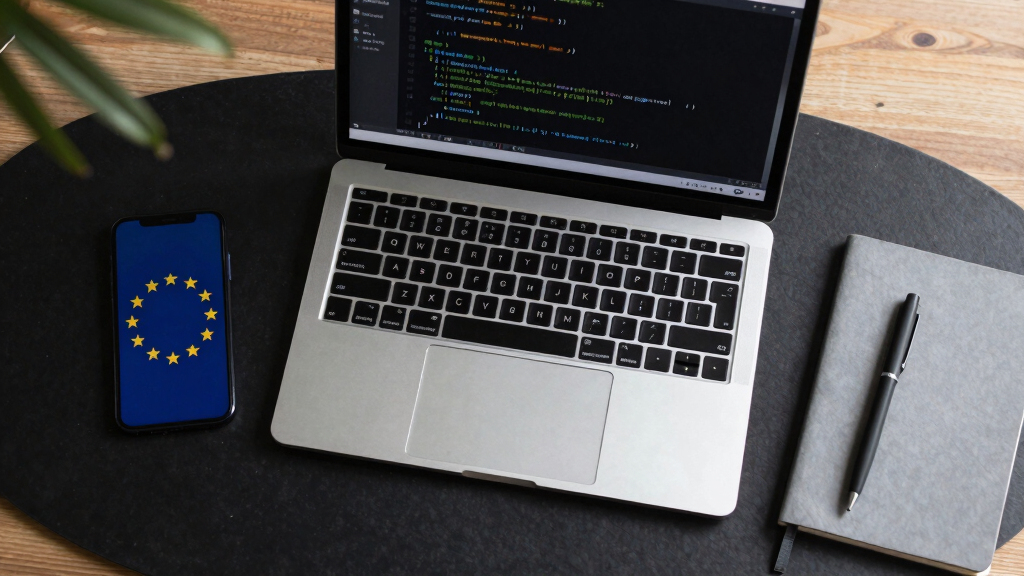
Mistral AI now receives roughly 40% of its revenue from US and other non-European customers, co-founder Arthur Mensch told Forbes, exposing a growing tension between the French company’s international expansion and its promise of European technological sovereignty.
The disclosure comes during a period of rapid growth. The Thorsten Meyer AI Dispatch estimated that Mistral’s annual recurring revenue rose from about $16 million to more than $400 million in roughly a year. Those figures have not been independently audited, and estimates from technology and financial publications differ.
Mistral remains a French parent company, but its operations extend far beyond Europe. It has offices in Palo Alto and London, distributes models through Microsoft Azure, Amazon Web Services and Google Cloud, and depends heavily on Nvidia processors. Its investors include US groups such as Andreessen Horowitz, General Catalyst, Lightspeed, Salesforce, Cisco and Nvidia.
These relationships do not change Mistral’s French incorporation or automatically place European customer data under US jurisdiction. They do show that its business depends on American infrastructure, capital and market access. The central issue is whether Mistral can offer customers meaningful operational independence while relying on foreign-controlled technology at several layers.
Foreign Dependencies Challenge Sovereignty Pitch
Mistral’s appeal to governments and regulated businesses rests partly on keeping sensitive workloads under European law and governance. That position may help it compete for defence, public-sector and regulated-industry contracts that US-controlled providers can struggle to secure under requirements such as France’s SecNumCloud framework.
The company’s dependencies create a different form of exposure. Changes to US export controls, Nvidia supply, hyperscaler distribution or investor priorities could affect Mistral even if its legal headquarters remain in Paris. With a growing share of revenue generated abroad, customers may also watch whether the company’s product roadmap follows European policy needs or its largest commercial opportunities.
As an affiliate, we earn on qualifying purchases.
From Open Models to Full Stack
Mistral first gained attention through efficient, openly available model weights and a message that Europe needed a credible alternative to US and Chinese AI providers. The Dispatch argues that this advantage has narrowed as DeepSeek, Qwen, Kimi and other developers have released capable open models, while Mistral faces stronger rivals in coding, speech and general-purpose assistants.
The company is responding with a broader strategy spanning data centres, cloud services, models, agents and applications. Mensch described the direction at VivaTech as moving “from an AI company doing software to a cloud company.” Mistral has also pursued specialised opportunities including defence, industrial AI, multilingual document processing and formal reasoning.
“Roughly 40% of Mistral’s revenue comes from the United States and other non-European clients.”
— Arthur Mensch, Mistral AI co-founder, as reported by Forbes
cloud computing services for AI development
As an affiliate, we earn on qualifying purchases.
As an affiliate, we earn on qualifying purchases.
Mistral has not publicly disclosed audited revenue, losses or margins, making it difficult to measure the cost of its expansion. Published estimates of its fundraising, recurring revenue and valuation also conflict. Reported growth is historical performance, not a guarantee of future results.
It is also unclear how much infrastructure Mistral directly controls, how quickly planned European capacity can reduce its dependence on US suppliers, or what share of customer workloads remains on hyperscaler platforms. A French parent and European hosting can reduce some jurisdictional risks, but data-control questions depend on specific contracts and systems. This report is not financial or legal advice.
As an affiliate, we earn on qualifying purchases.
European Infrastructure Becomes the Test
Attention will turn to whether Mistral can convert its strategy into European-controlled computing capacity. The Dispatch cited an approximately $830 million data-centre debt syndicate led mainly by European banks, a financing structure that could reduce reliance on US infrastructure if the planned capacity enters service.
Investors and customers will also watch revenue growth, government contracts and adoption in defence and regulated industries. The Dispatch proposed $1 billion in annual recurring revenue by December as a commercial benchmark, but that figure was presented as an analytical test rather than confirmed company guidance. The broader measure will be whether Mistral can expand without weakening its sovereignty proposition.
As an affiliate, we earn on qualifying purchases.
Key Questions
Is Mistral AI still a European company?
Yes. Mistral AI’s parent is French, and the company is headquartered in Paris. Its US office, foreign investors and international customers do not by themselves change its French legal identity.
Why does the 40% revenue figure matter?
It shows that international customers are driving a large part of Mistral’s growth. That may create pressure to balance European policy goals with the demands of US and other non-European markets.
Does using US cloud platforms compromise customer data?
Not automatically. Exposure depends on where data is stored, which entity controls it and the governing contracts. Distribution through US hyperscalers can still create legal or operational dependencies that customers must examine for each deployment.
What is Mistral’s strongest European opportunity?
The clearest openings appear in defence, government, regulated industries and industrial AI, where local control and European certification can carry more weight than broad consumer reach. Mistral has also reported progress in multilingual document processing and specialised reasoning.
Source: Thorsten Meyer AI
Fall Picks
fall essentials
As an affiliate, we earn on qualifying purchases.