
📊 Full opportunity report: The AI-Designed Shortwave Listening Platform Making Waves: Station 36 on ThorstenMeyerAI.com — validation score, market gap, and execution plan.

Get office and shipping supplies delivered free — and shop member deals
- Fast, free delivery on millions of items
- Access to Prime Big Deal Days deals on October 6–7
- Prime Video, Amazon Music and more included
TL;DR
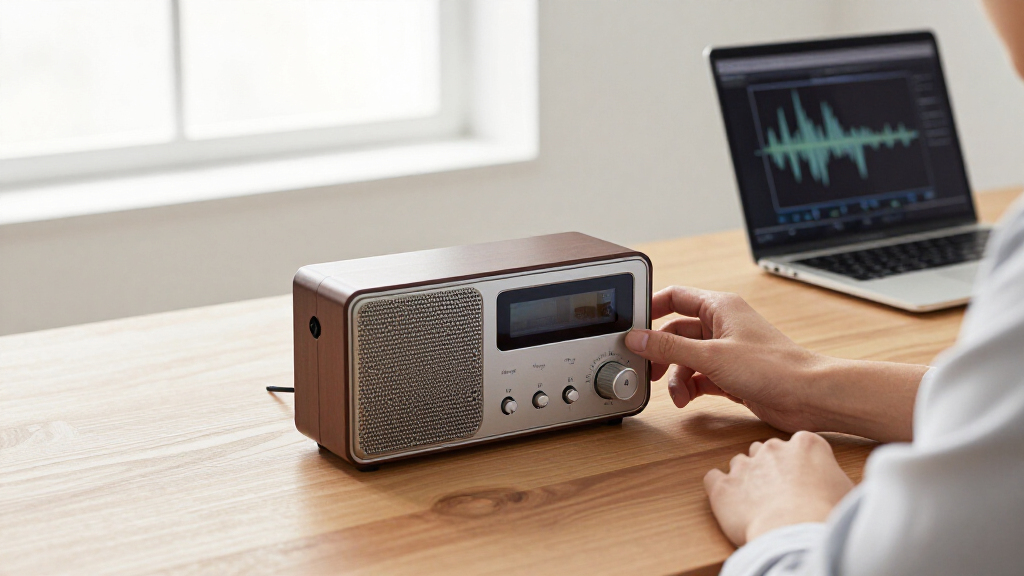
Station 36 is an AI-designed web platform that emulates a vintage shortwave radio listening post. It offers interactive controls, spectral visualizations, and authentic audio, all within a browser. The project showcases AI’s role in recreating immersive, historical radio environments.
Station 36, an AI-designed web platform that simulates a vintage shortwave radio monitoring room, has been launched. Developed entirely through artificial intelligence, it offers users a tactile, immersive experience of tuning into secret signals, combining vintage aesthetics with modern web technology. This development highlights AI’s expanding role in creating realistic, interactive digital environments that evoke historical radio practices.
The platform, accessible via a web browser, features a detailed interface resembling a Cold War-era radio room, with a vintage color palette, SVG-based controls, and a spectral waterfall visualization. For more details on how this design was achieved, see the original analysis. It employs the Web Audio API to synthesize authentic radio sounds, including static hiss, heterodyne whistles, and Morse code signals, which activate only when users toggle a dedicated power switch. The interface includes a draggable tuning dial, meters, and a live spectrogram, all built with inline SVG and JavaScript, ensuring high fidelity and responsiveness without external dependencies.
According to the creators, the entire design process was guided by AI, which generated the visual layout, interaction mechanics, and audio synthesis parameters. The site also features an interactive logbook with redactions and hidden messages, adding a layer of mystery and authenticity. This approach is inspired by techniques used in historical radio signal analysis. The project aims to evoke the slow, deliberate joy of manual signal hunting, a practice largely obsolete but historically significant in espionage and Cold War communications.
Implications of AI-Generated Vintage Radio Experiences
This project demonstrates AI’s capacity to craft highly detailed, immersive digital environments that blend historical aesthetics with modern interactivity. It offers a new tool for education, preservation, and entertainment by recreating the tactile experience of vintage radio listening within a browser. For enthusiasts and historians, it provides a realistic simulation of a Cold War-era monitoring post, potentially inspiring further AI-driven recreations of historical technology and practices.
Moreover, the platform exemplifies how AI can assist in digital craftsmanship, reducing the need for extensive manual coding while maintaining high-quality visual and auditory fidelity. It raises questions about the future of AI in digital heritage preservation and interactive media, highlighting both opportunities and ethical considerations around authenticity and creative control.
As an affiliate, we earn on qualifying purchases.
Background of AI and Vintage Radio Simulations
Historically, shortwave radio monitoring played a key role in espionage, military communications, and hobbyist activities. In recent years, interest has grown in preserving and recreating these experiences digitally, often through static images or simplified simulations. However, the advent of AI-driven web design offers new possibilities for creating dynamic, interactive environments that closely mimic real-world equipment and signals.
Previous projects have used traditional programming and digital art to simulate vintage radio interfaces, but none have integrated AI to generate the entire experience from design to sound synthesis. The launch of Station 36 marks a significant step toward AI-enabled digital recreations of complex, tactile environments rooted in historical technology, expanding the scope of digital preservation and education.
“Station 36 exemplifies how AI can craft immersive, historically authentic radio environments that are both educational and engaging.”
— an anonymous researcher
As an affiliate, we earn on qualifying purchases.
Unclear Aspects of AI’s Role and Future Applications
It is not yet clear how much of the platform’s design was autonomously generated by AI versus human refinement. Details about the specific AI models or training data used remain undisclosed. Additionally, questions remain about the potential for AI to accurately recreate other complex historical environments or signals, and how these tools might be adopted for broader educational or preservation purposes.
As an affiliate, we earn on qualifying purchases.
Next Steps for AI-Driven Historical Radio Projects
Developers plan to expand the platform’s capabilities, possibly integrating more complex signal simulations and user customization. There is also interest in applying similar AI techniques to recreate other vintage technologies, such as early computers or communication devices. Further collaboration with historians and technologists could enhance the realism and educational value of such projects, while ongoing research will clarify AI’s role in digital heritage preservation.
As an affiliate, we earn on qualifying purchases.
Key Questions
Can I listen to real signals on Station 36?
Station 36 synthesizes authentic radio sounds, including static and Morse code, but does not connect to real shortwave signals. It provides a simulated experience for educational and recreational purposes.
Is the platform entirely AI-created?
The platform was guided by AI in its design and audio synthesis, but human developers likely refined the interface and interactions. Exact details about the AI’s role remain undisclosed.
Will this technology be used for other historical recreations?
There are plans to explore similar AI-driven recreations of other vintage technologies and environments, aiming to enhance digital preservation and interactive learning.
Is Station 36 accessible on all devices?
The platform is optimized for desktop browsers at various widths, with high visual fidelity and responsive controls. Compatibility with mobile devices has not been explicitly confirmed.
Source: ThorstenMeyerAI.com
Fall Picks
fall essentials
As an affiliate, we earn on qualifying purchases.