🔍 Read the full analysis: Harnessing AI To Explore La Citadelle’s 1693 Siege In Interactive Digital Archives on ThorstenMeyerAI.com
TL;DR
An AI-powered interactive exhibition recreates the 1693 siege of La Citadelle, offering a cinematic, scroll-driven experience. The project combines layered SVGs, CSS, and AI analysis to enhance historical understanding. Details about the AI workflow and exhibit design are confirmed; the full historical accuracy is still under review.
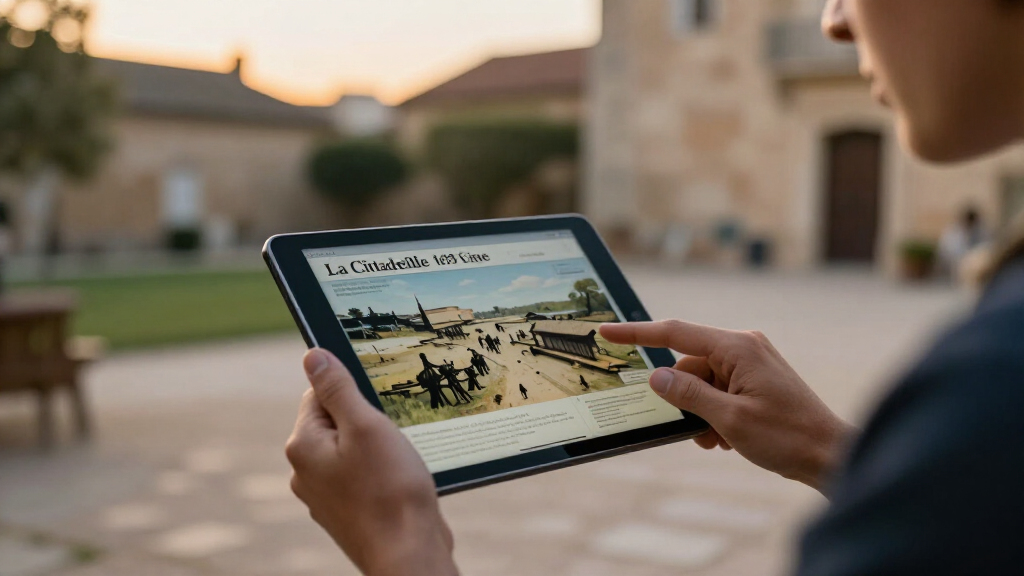
An interactive digital exhibition utilizing AI has been launched to explore the 1693 siege of La Citadelle, offering a cinematic, scroll-driven experience that reconstructs the historic event with high fidelity. The project, developed through a streamlined AI-guided workflow, aims to enhance public understanding of the siege’s military tactics and terrain, making history accessible through innovative technology, as detailed in the original analysis.
The exhibition, hosted on a dedicated online platform, employs layered SVGs, CSS, and canvas elements to create a dynamic, image-free visualization of the siege, inspired by the detailed digital archive. Its standout feature is a scroll-driven diagram that transforms the terrain and military movements into an immersive experience, meticulously crafted without static images, relying solely on code-driven visualizations.
The project follows a three-stage process: initial construction using layered vector graphics, an iterative critique driven by AI analysis of visual coherence and historical plausibility, and final approval by an art director. This process ensures a balance between educational accuracy and aesthetic appeal, guided by a detailed manual authored by an AI assistant.
Design elements include a restrained color palette inspired by historical materials—parchment, fortress ink, smoke gray, and vivid red accents—and typography combining Cinzel, EB Garamond, and Space Mono, creating a layered textual hierarchy that enhances the immersive atmosphere. The signature interaction involves animated SVG layers depicting earthworks, fortifications, and artillery trajectories, synchronized with scrolling and mouse interaction, leveraging techniques discussed in the original source. The entire site is built with pure HTML, CSS, and JavaScript, with no external frameworks or images, ensuring scalability and fidelity across devices.
Impact of AI-Enhanced Historical Reconstruction
This project demonstrates how AI can revolutionize digital history by creating highly detailed, interactive reconstructions that are both educational and visually compelling. It offers a new way for audiences to engage with complex military history, making it accessible beyond traditional text or static images. The approach also showcases AI’s potential to streamline the creation of layered, responsive digital exhibits, setting a precedent for future projects in cultural preservation and education.
interactive digital history exhibit
As an affiliate, we earn on qualifying purchases.
As an affiliate, we earn on qualifying purchases.
Historical and Technological Background of the Siege
The siege of La Citadelle in 1693 was a pivotal event during the wars of Louis XIV, involving complex military engineering and tactics. Historically, the event has been documented through engravings and written accounts, but digital reconstructions have been limited. Recent advances in AI and web technologies have enabled the creation of immersive, interactive exhibits that can simulate such events with high accuracy.
This project builds on prior efforts to digitize military history, but distinguishes itself through its use of AI to critique and refine visual coherence and historical plausibility during the development process. The exhibit aligns with broader trends in digital humanities, where AI tools assist in reconstructing and visualizing historical events with a focus on artistic storytelling and educational value.
“This project exemplifies how AI can facilitate detailed, scalable, and immersive digital reconstructions of historical events, blending artistic storytelling with educational rigor.”
— Thorsten Meyer
AI-powered historical reconstruction tools
As an affiliate, we earn on qualifying purchases.
As an affiliate, we earn on qualifying purchases.
Unconfirmed Aspects of Historical Accuracy and AI Workflow
While the exhibit’s visual fidelity and interactive features are confirmed, the precise extent of AI’s role in analyzing and critiquing the historical accuracy remains unclear. It is not yet confirmed how the AI assesses the plausibility of military movements or terrain reconstructions, or whether external expert validation is involved. Additionally, the accuracy of the siege details, such as troop placements and artillery trajectories, is still under review, with ongoing efforts to verify these aspects against historical sources.
As an affiliate, we earn on qualifying purchases.
Future Developments and Audience Engagement Plans
Developers plan to expand the exhibit’s features, including integrating more detailed historical annotations and possibly interactive timelines. They aim to gather user feedback to refine the experience further. Additionally, efforts are underway to collaborate with historians for external validation of the reconstructions. The platform will also host educational programs and virtual tours to reach broader audiences, with updates expected in the coming months.
digital archive visualization tools
As an affiliate, we earn on qualifying purchases.
As an affiliate, we earn on qualifying purchases.
Key Questions
How does the AI contribute to the exhibit’s creation?
The AI guides the critique process, analyzing visual coherence, responsiveness, and plausibility of the military reconstructions, helping developers refine the exhibit iteratively. It also assists in automating complex visual animations and ensuring consistency across layers.
Is the historical accuracy of the siege confirmed?
The visual and interactive elements are confirmed to be based on historical sources, but the full accuracy of troop movements and terrain details is still under review. External validation is planned to enhance reliability.
Can users interact with the exhibit on mobile devices?
Yes, the exhibit is designed to be fully responsive and scalable across devices, ensuring a smooth experience on desktops, tablets, and smartphones.
Will there be educational programs based on this exhibit?
Developers plan to incorporate virtual tours, guided explanations, and collaboration with educational institutions to maximize its educational impact.
What are the next steps for this project?
Next steps include integrating more detailed annotations, validating historical data with experts, and expanding audience engagement through outreach and interactive features.
Source: ThorstenMeyerAI.com