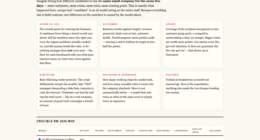

🔍 Read the full analysis: Inside The AI Series: Twelve Rooms At The Observatory On Future Possibilities on ThorstenMeyerAI.com

Get business pricing on office and shipping supplies
- Business-only prices and quantity discounts
- Tax-exempt purchasing
- Multiple users, one account, clear invoices
TL;DR
The Observatory has launched ‘Inside the AI Series,’ an interactive online experience with twelve rooms examining AI’s future. It offers evidence-based insights on topics like trust, ethics, jobs, and surveillance, aiming to inform public understanding.
The Observatory has launched ‘Inside the AI Series’, an interactive online experience that presents twelve themed rooms exploring critical questions about artificial intelligence and its future impact. The series is accessible on any device, with no sign-up or tracking, and aims to provide evidence-based insights on issues such as trust, ethics, employment, and surveillance. This initiative makes complex AI debates more accessible to the public and policymakers alike, emphasizing transparency and informed discussion.
The series, part of The Observatory’s ongoing project, allows users to navigate through twelve virtual rooms, each dedicated to a key question about AI. These include topics like content authenticity, AI’s influence on art, privacy concerns related to facial recognition, economic impacts, and ethical considerations. The experience is designed to be interactive and educational, providing factual information, different viewpoints, and tools for users to explore each issue independently. The platform emphasizes that it does not track users, ensuring privacy while fostering open inquiry.
According to Thorsten Meyer, the creator behind the series, the goal is to foster a nuanced understanding of AI’s multifaceted effects. The series is based on recent research and debates, presenting evidence and contrasting opinions. For example, one room examines how AI learns from artists’ work, highlighting legal and ethical disputes, while another explores AI’s role in surveillance, including the accuracy and biases of facial recognition systems. The series also includes practical tips, such as how to verify content credentials or adjust privacy settings online.
Developers and researchers involved in the project stress that the series is not a static resource but a dynamic platform that will evolve as new developments emerge. The initiative aims to bridge the gap between complex academic debates and public understanding, making AI topics accessible and engaging without sensationalism or technical jargon.
Inside The AI Series: Twelve Rooms At The Observatory
An interactive online experience presenting twelve themed rooms that examine critical questions about artificial intelligence — trust, ethics, jobs, and surveillance — through evidence-based insights, contrasting viewpoints, and practical tools for public understanding.
Our goal is to make complex AI debates accessible and grounded in evidence, helping the public and policymakers understand both the opportunities and risks.
— Thorsten Meyer, CreatorInside the Twelve Rooms
Each room is dedicated to a key question about AI, combining factual information, differing viewpoints, and tools so users can explore each issue independently.
Can We Trust AI?
Examining trust in AI systems, evidence reliability, and how uncertainty shapes public confidence.
The Ethics Question
Ethical frameworks, accountability, and moral dilemmas posed by rapidly advancing AI.
Work & Economy
Economic impacts of automation, job displacement debates, and shifting labour landscapes.
Facial Recognition
Accuracy, biases, and privacy concerns surrounding AI-driven surveillance systems.
AI & Artists’ Work
How AI learns from artists’ work — and the legal and ethical disputes it triggers.
Content Credentials
Verifying what is real: practical tips for checking content authenticity online.
Your Digital Footprint
Adjusting privacy settings and understanding how personal data feeds AI systems.
Research & Debate
Grounded in current research, presenting evidence alongside contrasting expert opinions.
Emerging Questions
Additional rooms explore further societal, technical, and governance dimensions of AI’s future.
Navigating the Experience
A privacy-conscious journey from curiosity to informed participation — no accounts, no data collection.
Visit Online
Open The Observatory’s website on any device
Enter a Room
Choose from twelve themed AI questions
Explore Evidence
Facts, viewpoints, and interactive tools
Take Tools Away
Practical tips: verify content, adjust privacy
Implications & Open Questions
The series responds to a growing demand for reliable, understandable information amid debates on AI ethics, job displacement, and content authenticity.
What It Delivers
- Evidence-based insight on trust, ethics, employment, and surveillance
- Balanced viewpoints without sensationalism or technical jargon
- A privacy standard: learn about AI without being tracked
- Bridging academic debate and public understanding
What Remains Uncertain
- Long-term effectiveness in changing public perceptions is unproven
- Impact on policy discussions and regulation not yet assessed
- Content may become outdated as AI evolves rapidly
- Dynamic updates will be crucial to stay accurate and relevant
Public Engagement With AI
Building on previous interactive exhibits — virtual museums, engine rooms, and towers — the series reflects a broader trend of digital science communication as AI’s influence grows.
FAQ
Quick answers to the most common questions about the series.
| Question | Answer |
|---|---|
| How can I access the Inside AI Series? | Online through The Observatory’s website — works on phones, tablets, and computers, with no sign-up or tracking required. |
| Is the content scientifically accurate? | Yes. The series is based on current research, expert opinions, and factual data, presenting balanced, evidence-based viewpoints. |
| Will it be updated with new information? | Yes. The platform is designed to evolve as AI developments and debates emerge, with new rooms and content planned. |
| Can I trust the information on jobs and privacy? | The series cites reputable sources and multiple perspectives — but AI’s effects are complex and still unfolding, so stay critical. |
| Can I provide feedback or suggest topics? | Yes. The Observatory welcomes user feedback via its website, which may shape future content and features. |
Future Steps for the Series
A living resource designed to evolve alongside AI — deepening engagement with the public, educators, and policymakers.
Fresh Updates
Updates reflecting the latest research and debates, plus new practical tools for navigating AI issues.
New Rooms
Rooms on emerging topics such as advances in generative models and AI governance.
Deeper Engagement
User feedback loops, monitoring of public impact, and collaborations with educational institutions and policymakers.
Implications of the Interactive AI Exploration
This series matters because it directly addresses public concerns about AI by providing accessible, evidence-based information. It helps users understand the realities and uncertainties surrounding AI, from trust issues to economic impacts, fostering informed decision-making. As AI continues to integrate into daily life, tools like this empower individuals to critically evaluate the technology and participate in societal debates. The platform’s privacy-conscious design also sets a standard for transparent digital engagement, emphasizing that users can learn about AI without sacrificing their privacy or being tracked.
As an affiliate, we earn on qualifying purchases.
Background of AI Public Engagement Initiatives
The Observatory’s ‘Inside AI’ series builds on previous efforts to demystify artificial intelligence through interactive exhibits and online resources. Past projects included virtual museums, engine rooms, and towers dedicated to AI’s technical and societal aspects. The series reflects a broader trend of making complex scientific topics accessible to the general public via digital platforms, especially as AI’s influence grows across sectors. Recent debates around AI ethics, job displacement, and content authenticity have heightened the need for reliable, easily understandable information. The series responds to this demand by offering a curated, interactive experience grounded in current research and diverse viewpoints.
It also responds to concerns expressed by artists, privacy advocates, and policymakers about AI’s rapid development and its societal implications. The platform aims to facilitate informed discussions by providing factual data, contrasting opinions, and practical tools, thereby helping users navigate the evolving AI landscape with confidence.
“Our goal is to make complex AI debates accessible and grounded in evidence, helping the public and policymakers understand both the opportunities and risks.”
— Thorsten Meyer
As an affiliate, we earn on qualifying purchases.
Unanswered Questions and Ongoing Developments
While the series provides a comprehensive overview, several aspects remain uncertain. The long-term effectiveness of such interactive tools in changing public perceptions of AI is still unproven. It is also unclear how the platform will adapt to future AI developments, such as new capabilities or emerging ethical dilemmas. Additionally, the impact of the series on policy discussions and regulatory frameworks has yet to be assessed, and some critics question whether the evidence presented can keep pace with rapid technological changes.
Furthermore, the series’ reliance on current research means that some information may become outdated quickly as AI technology evolves. The platform’s ability to update content dynamically will be crucial to maintaining its relevance and accuracy over time.
As an affiliate, we earn on qualifying purchases.
Future Steps for the Observatory’s AI Series
The Observatory plans to expand the series by adding new rooms that address emerging AI topics, such as advances in generative models and AI governance. They also intend to incorporate user feedback to improve interactivity and clarity. Monitoring the series’ influence on public understanding and policy debates will be an ongoing process, with potential collaborations with educational institutions and policymakers to deepen engagement.
In the near term, users can expect updates that reflect the latest research and debates, along with new practical tools to help navigate AI-related issues. The platform aims to remain a living resource that evolves alongside AI developments, fostering ongoing public literacy and informed participation in societal discussions.
As an affiliate, we earn on qualifying purchases.
Key Questions
How can I access the Inside AI Series?
The series is accessible online through The Observatory’s website. It works on phones, tablets, and computers, with no sign-up or tracking required.
Are the contents of the series scientifically accurate?
Yes, the series is based on current research, expert opinions, and factual data. It aims to present balanced viewpoints and evidence-based information.
Will the series be updated with new information?
Yes, the platform is designed to evolve as new AI developments and debates emerge. Future updates will include new rooms and content to reflect ongoing research.
Can I trust the information about AI’s impact on jobs and privacy?
The series presents multiple perspectives and cites reputable sources, but users should remain critical and consider that AI’s effects are complex and still unfolding.
Is there a way to provide feedback or suggest topics?
Yes, the Observatory welcomes user feedback through its website, which may influence future content and features of the series.
Source: ThorstenMeyerAI.com
Evergreen bestsellers Picks
bestsellers
As an affiliate, we earn on qualifying purchases.