

🔍 Read the full analysis: Investors Revisit AI Data Center Expectations As Nasdaq Loses $2.5 Trillion on ThorstenMeyerAI.com

Get business pricing on office and shipping supplies
- Business-only prices and quantity discounts
- Tax-exempt purchasing
- Multiple users, one account, clear invoices
TL;DR
The Nasdaq Composite fell 5.52% on Nov. 5, its steepest one-day decline since April 2025, and the Nasdaq-100 lost about $2.5 trillion in market value, according to Reuters. The selloff followed U.S. election results that raised investor concerns about oversight, permits, power costs and tax incentives for planned data centers; policy changes and the projected effects remain uncertain.
The Nasdaq Composite fell 5.52% on Nov. 5, while the Nasdaq-100 shed about $2.5 trillion in market value, according to Reuters, as investors weighed whether election results could slow or raise the cost of the U.S. data center buildout powering artificial intelligence. The session’s losses were concentrated in chipmakers and data center-related stocks, but the possible policy changes behind the selloff have not been enacted.
The Composite closed at 24,315.00, down 1,421.51 points, based on Nasdaq index data cited by ThorstenMeyerAI.com. The Nasdaq-100 closed at 26,629.81, down 1,807.36 points, or 6.36%. Reuters’ estimate of roughly $2.5 trillion in lost market value refers to the Nasdaq-100’s constituent companies, not every stock listed on Nasdaq.
The PHLX Semiconductor Index fell 12.25%. Reuters reported that Nvidia shares dropped 9% and AMD fell 17%; several data center operators lost more than 14%. Amazon and Alphabet declined 2.2% and Microsoft fell 3.6%, according to the source material’s account of Reuters reporting. The Nasdaq Composite ended 11.9% below its Oct. 6 record, putting it in correction territory, commonly defined as a fall of at least 10% from a recent peak.
The political concern was that new lawmakers and governors could scrutinize projects, change incentives or affect access to electricity and permits. Those are investor concerns and forecasts, not confirmed changes to federal policy. The source reports no new federal law has passed, and President Donald Trump retains veto power.
Infographic 01 · The day in numbers
The Nasdaq's worst day in 19 months
Chips and data center builders led the fall. The dollar figure in the headlines belongs to the Nasdaq-100, the 100 largest non-financial companies on the exchange.
Nasdaq Composite on Thursday, 5 November 2026: down 1,421.51 points to 24,315.00. The biggest one-day fall since 4 April 2025, 19 months earlier.
The five worst Composite days since March 2025
Daily change, closing values
Sources: Nasdaq Global Indexes (COMP, NDX, SOX closing data, retrieved 6 Nov 2026) · Reuters, 5 Nov 2026 (via The Straits Times). History checked back to 25 Mar 2025. Market value is Reuters’ calculation. Not investment advice.
Powered by Thorsten Meyer AI
Election Risks Reach Data Center Plans
The market move shows that investors are considering whether the AI investment boom depends not only on technology demand and corporate spending, but also on approval for the infrastructure behind it. Data centers require large amounts of electricity, land and water, and projects can depend on grid connections, local permits and tax arrangements. If those become harder or more expensive to secure, developers could face delays or higher costs, with potential effects on equipment suppliers, utilities and technology companies.
That does not establish that construction will slow. Thursday’s falls reflect a reassessment of risk and expectations, not proof that planned projects have been canceled or that demand for AI has weakened. The distinction matters: market prices can react to a possible policy shift before any law or regulatory decision takes effect.
The selloff also underlines how broadly exposed the market is to expectations around AI infrastructure. The steep semiconductor losses suggest investors were repricing companies tied to the buildout, while declines among major technology firms indicate concern reaching beyond specialist operators. The $2.5 trillion figure describes a reported change in market value, not cash withdrawn from companies or a direct measure of future project losses.
Products Worth Considering

FLEXISPOT 40-Inch Electric Standing Desk Converter with Keyboard Tray

Apple Mac mini with M2 Chip, 16GB Unified Memory, 256GB SSD, Silver (2023)
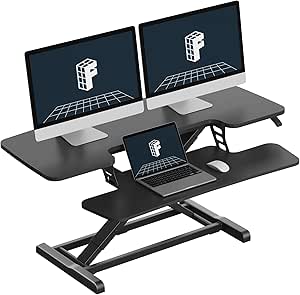
FLEXISPOT Standing Desk Converter 42 – Extra Large Ergonomic Sit-Stand Desk Riser with Keyboard Tray, Black
As an affiliate, we earn on qualifying purchases.
From Midterm Results to Market Selloff
The decline followed a volatile week rather than an immediate election-night collapse. On Nov. 4, the Composite rose 1.44%, even as Reuters reported weakness in data center operators and power companies. Amazon and Microsoft gained about 6% during that session. One explanation offered to Reuters by a strategist was that existing facilities could become more valuable if fewer new data centers were built. On Nov. 5, that interpretation gave way to broad losses.
Nasdaq’s reported close makes the day the Composite’s largest one-session fall since April 4, 2025, when it dropped 5.82% during the tariff shock. Reuters described the Nov. 5 move as the deepest daily fall since the April 2025 “Liberation Day” selloff. The source material also reports that the VIX, a measure of expected market volatility, recorded its largest increase since December 2024.
According to The National, Democrats won control of both chambers of Congress and flipped five governorships: Texas, Georgia, Ohio, Iowa and Nevada. Its analysis of Cleanview project data said those states account for 37% of planned U.S. data center capacity, with Texas representing 22.8%. The National also reported promises by incoming governors in Texas, Georgia and Ohio to pause or limit large projects. These details describe reported election outcomes and campaign positions; they do not by themselves establish what policy will be adopted.
“Existing data centers could become more valuable if fewer new ones get built.”
— A strategist quoted by Reuters
Policy Changes Remain Unsettled
It is not yet clear whether election results will lead to new restrictions, changed tax incentives or slower approvals for data centers. The source material says no new federal law has passed; proposed state-level pauses and campaign commitments are not the same as enacted rules. Congressional oversight could bring hearings or investigations, but the scope and outcome are unknown.
The reported UBS estimate that around 30% of planned 2028 capacity additions could be at risk is a forecast, not a decision by developers or regulators. The underlying assumptions and the projects counted are not detailed in the supplied material. Nor does the one-day market decline establish whether AI demand, company spending plans or construction schedules have changed.
The source also says unofficial results from local data center measures in ten states showed 46 of 47 going against projects, through measures such as bans, size limits and pauses. Those results are described as unofficial; the final status, legal effect and reach of the measures are not established here.
Investors Await Permits and Policy
Investors will be watching how the incoming Congress approaches oversight and whether state and local officials turn campaign statements into formal rules. Relevant developments include hearings, permit decisions, utility-regulator actions, grid connection approvals and changes to tax incentives. The timing and substance of any such steps remain uncertain.
Companies’ updates on capital spending, construction schedules and power arrangements may also clarify whether the market’s concerns are affecting projects. Until those details emerge, the Nov. 5 selloff is best understood as a sharp repricing amid political uncertainty, rather than confirmation that the U.S. AI data center expansion has been halted. Market losses and analyst estimates are historical or prospective figures, not guarantees of future results.
Key Questions
What happened to the Nasdaq on Nov. 5?
The Nasdaq Composite fell 5.52% to 24,315.00, while the Nasdaq-100 dropped 6.36% to 26,629.81, according to the index data cited in the source material.
What does the $2.5 trillion figure represent?
Reuters put the loss in market value at about $2.5 trillion for the Nasdaq-100, which tracks 100 large non-financial companies on the exchange. It does not refer to every Nasdaq-listed stock or to money directly taken out of company accounts.
Why did election results affect AI-related stocks?
Investors were concerned that new congressional oversight and state or local decisions could affect data center permits, electricity access, project costs and tax incentives. Those potential effects remain uncertain, and the election results have not themselves changed the rules.
Have U.S. data center projects been stopped?
The supplied source material does not establish that planned projects have been broadly stopped. It reports campaign promises and unofficial local ballot results, but says no new federal law has passed. The status and effect of individual state and local actions may vary.
Is the estimate that 30% of 2028 capacity is at risk confirmed?
No. The figure is described as a UBS estimate that about 30% of planned 2028 capacity additions could be at risk. It is a forecast, not a confirmed project cancellation or government decision.
Source: ThorstenMeyerAI.com