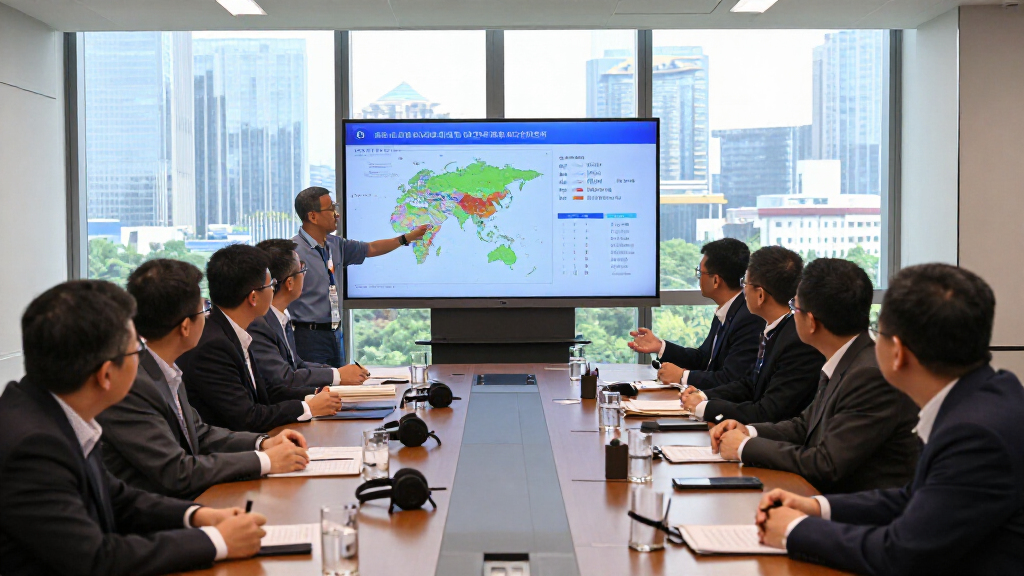

🔍 Read the full analysis: What APEC Leaders May Put On The Table In Shenzhen on ThorstenMeyerAI.com

Get business pricing on office and shipping supplies
- Business-only prices and quantity discounts
- Tax-exempt purchasing
- Multiple users, one account, clear invoices
TL;DR
APEC leaders are meeting in Shenzhen on November 19, with draft proposals on artificial intelligence, digital trade and regional economic integration before them. Their adoption and the wording of any leaders’ declaration were still unknown as of 05:45 UTC; APEC decisions are voluntary and do not directly change laws or tariffs.
Leaders of the 21 APEC economies are meeting in Shenzhen on Thursday, November 19, with draft proposals on artificial intelligence, digital trade and regional integration on the table. As of 05:45 UTC, the leaders’ declaration had not been published, so it was not yet clear which proposals, if any, they would adopt.
The proposals were sent to leaders after APEC senior officials met in Shenzhen on November 14–15. According to the APEC Secretariat, they include China’s proposed statement on the digital economy and AI “for people’s well-being,” a Trade Digitalization Cooperation Framework for 2027–2030 and a draft statement on the Free Trade Area of the Asia-Pacific, a long-term goal for regional economic integration.
The proposed AI statement calls for broader use of AI in health care, education and energy, while promoting safe and trusted development and seeking to prevent wider digital divides. The trade framework covers paperless trade, electronic bills of lading and the use of AI in customs. These remain proposals; the source material does not establish that leaders approved them.
Some related commitments were already on record before the leaders’ meeting. APEC trade ministers said in May they were committed to “harnessing AI’s benefits for trade” and encouraged economies to share AI policies with smaller firms. Labor ministers adopted a joint statement in September covering jobs, skills and social security. Those steps provide a backdrop to the new drafts, but do not settle what leaders will endorse in Shenzhen.
How APEC’s AI Agenda Could Reach Business
The proposals concern rules and cooperation in areas that affect companies trading across borders: digital documents, customs procedures, data flows and AI use. If members support further work, it could shape future coordination and technical assistance. But an APEC statement would not itself create a common AI rulebook or compel a member economy to change its domestic policies.
The forum’s economic reach gives its discussions weight. APEC figures put its 21 economies at 61.6% of world GDP in 2025, about 46% of world trade in goods and commercial services in 2024, and 36.4% of the global population. Those figures describe the members’ collective scale; they do not mean APEC can enact binding regional rules.
The economic outlook also gives the technology agenda practical stakes. APEC’s Policy Support Unit raised its 2026 regional growth forecast to 3.4%, from 3.2%, citing strong technology-related investment and trade. It also warned that technology investment’s benefits could be uneven. That points to a policy challenge alongside the trade opportunity: how economies share gains and address changes to work and skills.
Products Worth Considering

Apple Mac mini Desktop Computer with M5 Pro Chip (2026)

Apple iMac (2024) 24-inch All-in-One Desktop with M4 Chip, 16GB Unified Memory, 256GB SSD, Pink

Samsung 32-inch ViewFinity S8 4K UHD IPS Monitor with USB-C and KVM
As an affiliate, we earn on qualifying purchases.
Drafts Follow Earlier Ministerial Work
China’s host year is organized around the theme “Building an Asia-Pacific Community to Prosper Together”, with stated priorities of openness, innovation and cooperation. China’s foreign ministry published President Xi Jinping’s remarks to the meeting on November 19. Xi described the digital economy and AI as “the engines of innovation-driven growth.” His wording signals the host’s emphasis, not proof of agreement among all APEC economies.
APEC is a regional economic forum founded in 1989. Its members are called “economies” by the forum, and decisions are made by consensus and are non-binding. This limits what a leaders’ declaration can do on its own: it can establish shared direction or invite further cooperation, but does not directly alter national laws, tariffs or chip controls.
The agenda was prepared through a year of meetings. Foreign and trade ministers met by video on November 3, while the senior officials’ meeting reviewed the AI and digital trade drafts shortly before the leaders gathered. Separately, APEC’s November 15 outlook reported strong export growth in the first half of 2026, supported by semiconductor demand, while forecasting slower regional growth in 2027 at 3.1%.
““We are committed to harnessing AI’s benefits for trade.””
— APEC trade ministers, in their May joint statement
Adoption and Final Wording Remain Open
As of 05:45 UTC on November 19, APEC had not published the leaders’ declaration. It was therefore unknown whether leaders would adopt the proposed AI statement, the digital trade framework, the FTAAP draft or other language, and whether any text would be revised before release.
The available material also does not specify implementation schedules, participating economies, funding for the proposed work or measurable targets. APEC’s voluntary, consensus-based process means that even an agreed declaration would not by itself require members to implement the proposals. The source material reports China’s announcement of US$20 million for APEC cooperation and plans for cooperation institutions in digital technology, cross-border data flow, clean energy and small businesses, but does not detail how that funding would be allocated.
Watch for the Leaders’ Declaration
The next concrete milestone is publication of the leaders’ declaration and any accompanying statements. Comparing the final wording with the drafts would show whether leaders endorsed specific AI and digital trade work, softened the language or left the proposals for later negotiations.
Further detail may emerge through APEC’s subsequent work on digital cooperation, paperless trade and regional integration. The source material does not give a publication time or confirm a timetable for implementation. Until those details appear, the Shenzhen proposals should be treated as items under consideration rather than settled regional policy.
Key Questions
What are APEC leaders considering in Shenzhen?
Drafts cover an AI and digital economy statement, a digital trade cooperation framework for 2027–2030 and a statement on the Free Trade Area of the Asia-Pacific. Their adoption was not confirmed by 05:45 UTC on November 19.
Did APEC leaders agree on a common AI policy?
Not in the information available at that time. Senior officials sent a proposed AI statement to leaders, while trade ministers had already committed in May to harnessing AI’s benefits for trade. The leaders’ final position remained unknown.
Can an APEC declaration change national laws or tariffs?
No, not by itself. APEC says its decisions are non-binding and reached by consensus. A declaration can set direction for cooperation, but national governments would have to take separate steps to change laws or tariffs.
Why does the meeting matter to businesses?
The proposals address cross-border trade processes, including paperless trade, electronic bills of lading and AI in customs. If economies pursue the work, it could affect future coordination, though the meeting alone does not establish new requirements for companies.
What is still unknown?
The final declaration, which proposals leaders will adopt, any changes to draft language and the practical timelines and funding for follow-up work had not been set out in the available information.
Source: ThorstenMeyerAI.com