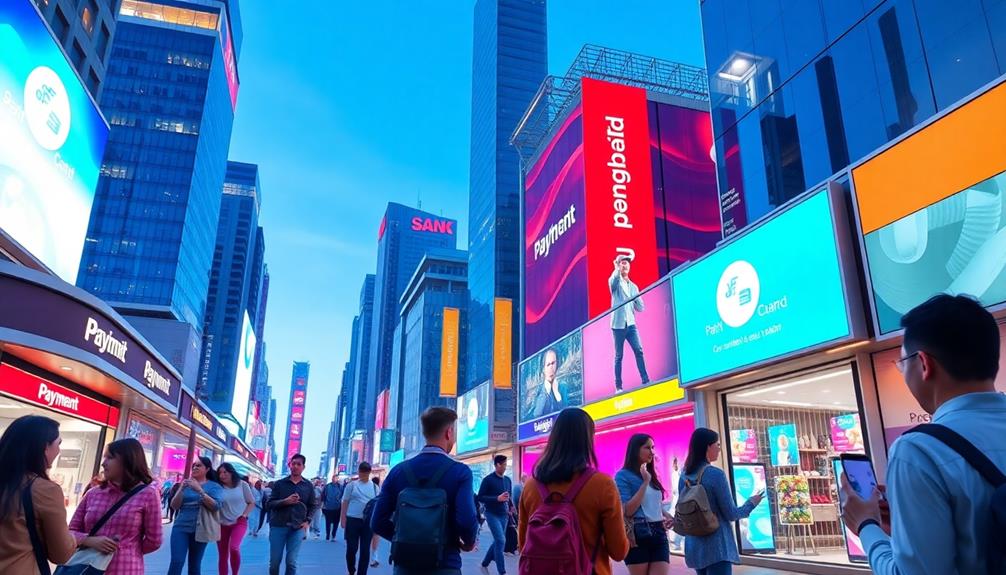
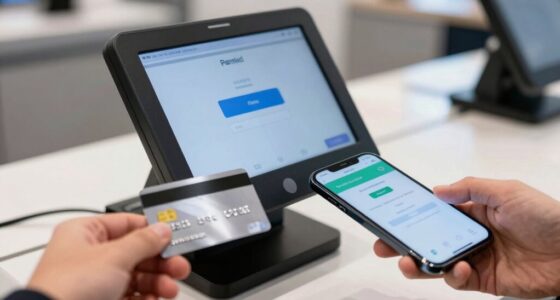
Digital wallet adoption is accelerating as more people prefer quick, secure, and convenient mobile payments over cash or cards. Enhanced security features like encryption and biometrics build trust, while improved interfaces make transactions faster and easier. Integration of loyalty cards, tickets, and IDs further streamlines daily activities. Future trends point to even more seamless, multifunctional wallets driven by innovation. Keep exploring to discover how these changes could transform your payment experience.
Key Takeaways
- Digital wallets are rapidly replacing cash and cards due to increased mobile payment adoption and user convenience.
- Security features like encryption and biometrics are continuously evolving to address rising cyber threats.
- User interfaces are becoming more seamless, intuitive, and AI-driven to enhance transaction speed and ease of use.
- Integration of loyalty programs, tickets, and ID features into digital wallets reduces reliance on physical cards and apps.
- Market growth depends on building trust through secure, user-friendly solutions and ongoing technological innovations.
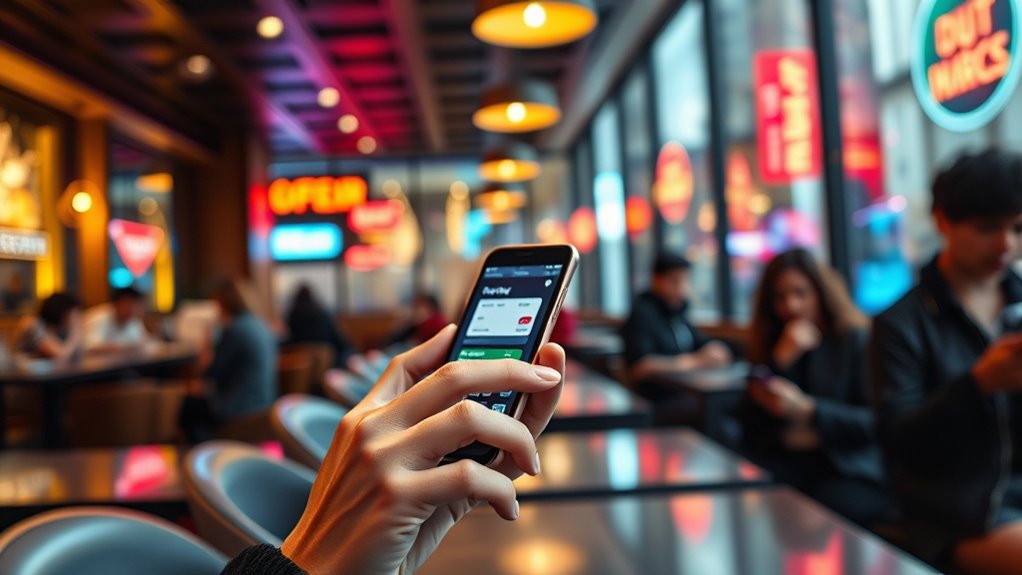
Have you noticed how quickly digital wallets are changing the way we handle money? It’s as if the days of carrying cash or multiple cards are fading fast, replaced by a simple tap or scan on your smartphone. But as more people adopt this technology, concerns about security and user interface come to the forefront. Many users worry about the safety of their financial information and wonder if digital wallets can truly protect their data from hackers or fraud. These fears are valid, especially considering the increasing sophistication of cyber threats. Thankfully, developers are continuously improving security measures, such as encryption, biometric authentication, and tokenization, to keep your money safe. Still, it’s essential to stay vigilant—using strong passwords, enabling two-factor authentication, and keeping your app updated can considerably reduce risks. When it comes to the user interface, digital wallets have made remarkable strides in making transactions seamless and intuitive. You don’t want a complicated or confusing experience every time you try to pay for something. Modern digital wallets focus heavily on simplicity, with clean designs, easy navigation, and quick access to your payment methods. This user-centric approach encourages more people to try and stick with digital wallets, especially those who aren’t tech-savvy. As these interfaces become more refined, you’ll find that paying at a coffee shop or splitting a bill becomes faster and more convenient than ever. Manufacturers and app developers are also integrating features like loyalty cards, tickets, and identification, making your digital wallet a one-stop shop for everyday needs. The goal is to eliminate the hassle of multiple apps and physical cards, creating a more unified experience. As adoption grows, expect user interfaces to become even smarter, leveraging AI to predict your preferences or suggest the best payment option in real-time. The shift to digital wallets isn’t just about convenience; it’s about building trust. You need to feel confident that your money is secure and that the app is easy to use. Companies that prioritize both aspects will lead the way in increasing adoption rates. As technology advances, so will the security protocols, making digital wallets safer than ever before. But ultimately, user interface improvements will determine how quickly and widely these tools become part of your everyday life. If these elements continue to evolve in tandem, you’ll likely find yourself relying on digital wallets more frequently, enjoying the speed, convenience, and security they offer. Additionally, ongoing innovations in security, such as enhanced encryption and biometric authentication, are critical in maintaining user trust and broadening adoption.
Frequently Asked Questions
What Security Measures Protect Digital Wallet Transactions?
You’re protected during digital wallet transactions by security measures like biometric verification, which uses your fingerprint or facial recognition for authentication. Encryption protocols secure your data by converting it into unreadable code, preventing unauthorized access. These combined measures ensure your transactions stay safe from fraud and hacking, giving you peace of mind when using your digital wallet. Always keep your device’s security features current for added protection.
How Do Digital Wallets Integrate With Existing Banking Systems?
Think of digital wallets as a bridge connecting your finances seamlessly. They integrate with existing banking systems through APIs, enabling smooth banking integration. This setup allows for real-time transaction synchronization, so your payments and transfers stay up-to-date across platforms. You can easily link your bank account, ensuring your digital wallet and banking data work together effortlessly, making your financial management more efficient and connected.
What Demographic Groups Are Most Likely to Adopt Digital Wallets?
You’ll find that younger demographics, especially Millennials and Gen Z, are most likely to adopt digital wallets due to their comfort with tech and preference for convenience. They often have fewer adoption barriers, like limited technological access or skepticism about security. Meanwhile, older adults may hesitate because of demographic preferences or concerns about privacy. Understanding these factors helps you target each group effectively for digital wallet growth.
How Do Digital Wallets Impact Traditional Point-Of-Sale Systems?
You notice how digital wallets streamline transactions, making contactless payments quick and seamless. They transform traditional point-of-sale systems by reducing reliance on cash or cards, encouraging merchant acceptance of contactless payments. As you use digital wallets, you see how they modernize checkout processes, enhance security, and improve customer experience. This shift prompts merchants to adapt, creating a more efficient, frictionless environment for everyone involved, changing how transactions happen at every point of sale.
What Are the Environmental Implications of Digital Wallet Usage?
You might not realize it, but using digital wallets can positively impact the environment by reducing paper receipts and plastic card production, promoting sustainability considerations. They also cut down on physical transportation of cash, lowering carbon emissions. However, digital infrastructure requires energy, so consider the environmental impact of data centers and devices. Overall, digital wallets can support eco-friendly practices if their use encourages sustainable behaviors and technological efficiency.

Digital Marketing QuickStart Guide: The Simplified Beginner’s Guide to Developing a Scalable Online Strategy, Finding Your Customers, and Profitably ... (Starting a Business - QuickStart Guides)
As an affiliate, we earn on qualifying purchases.
Conclusion
As digital wallets become more integrated into your daily life, expect convenience to grow, security to strengthen, and accessibility to expand. Embrace the ease of seamless transactions, the confidence in robust protection, and the opportunity to connect with more services. Stay adaptable, stay informed, and stay ahead. Digital wallets are not just changing how you pay; they’re transforming how you live, work, and interact—making your financial world smarter, simpler, and more secure every step of the way.