
To succeed in omnichannel retail, you need to accept multiple payment methods across all touchpoints. Offering contactless options like mobile wallets and digital wallets speeds up transactions, reduces contact, and boosts customer satisfaction. Upgrading your point-of-sale systems ensures smooth integration and faster checkout. Clear signage and staff training further encourage adoption. Implementing these strategies helps you stay competitive and meet modern customer expectations—keep exploring how you can optimize your payment acceptance for better results.
Key Takeaways
- Integrate diverse payment options across online, mobile, and in-store channels to meet customer expectations and enhance shopping flexibility.
- Upgrade POS systems and hardware to ensure compatibility with contactless and digital wallet payment technologies.
- Promote contactless payment methods through clear signage and staff training to encourage faster, safer transactions.
- Leverage mobile wallets and contactless solutions to reduce checkout time, improve operational efficiency, and boost customer satisfaction.
- Communicate the benefits of multi-channel payments to position your retail business as innovative and customer-centric.
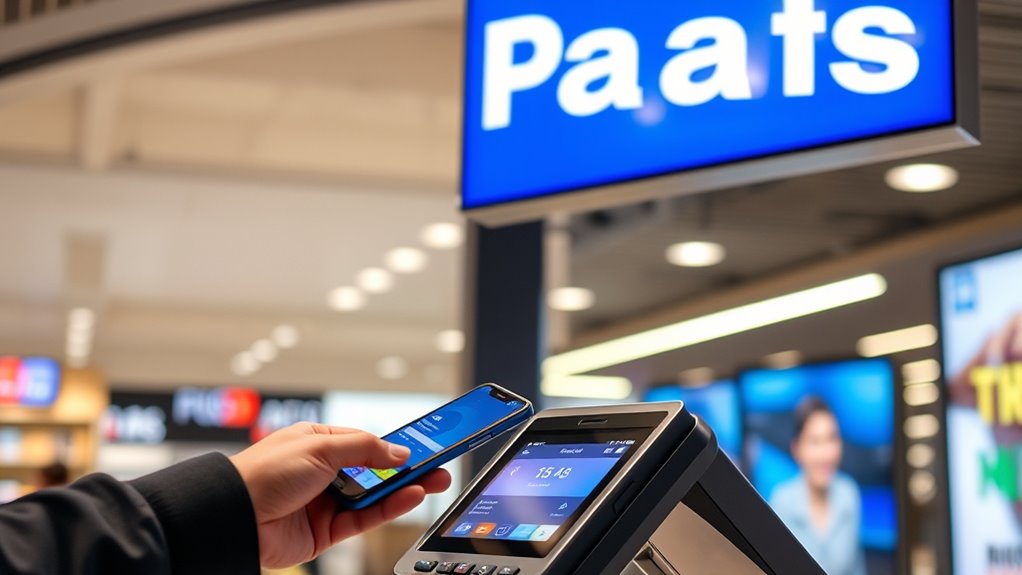
In today’s fast-paced market, accepting payments across multiple channels is essential for meeting customer expectations and staying competitive. Customers now demand seamless, quick, and flexible ways to pay, whether they’re shopping in-store, online, or through mobile devices. To keep up, you need to integrate diverse payment options that accommodate these preferences. Mobile wallets, like Apple Pay, Google Pay, and Samsung Pay, have become popular because they offer convenience and security. Contactless payments, in particular, enable your customers to complete transactions swiftly without fumbling with cash or cards. When you accept contactless payments, you not only reduce wait times but also create an experience that feels modern and effortless.
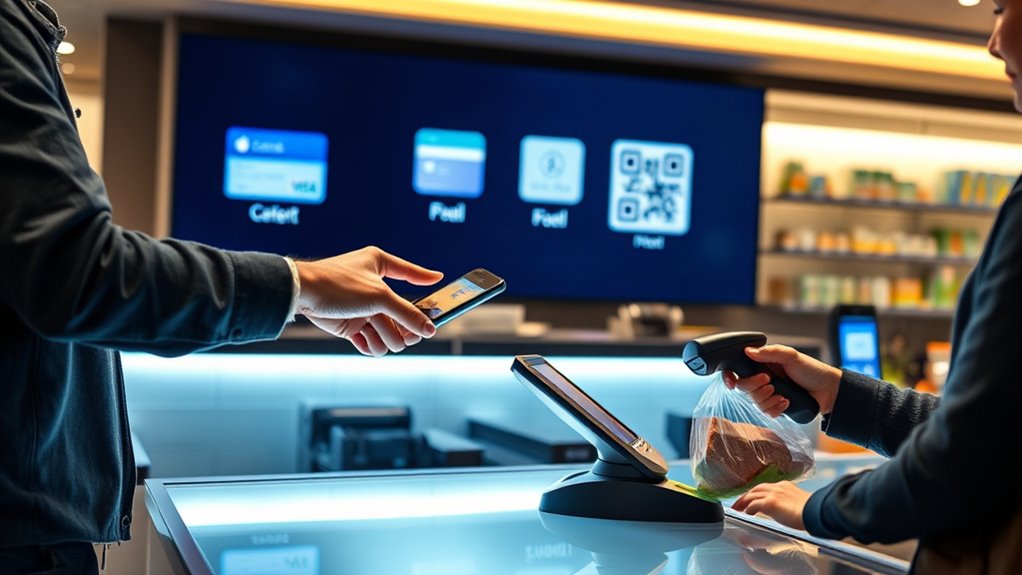
Implementing mobile wallets and contactless payment options isn’t just about keeping up with trends; it’s about meeting your customers’ expectations for ease and speed. When a customer can simply tap their phone or smartwatch to pay, they appreciate the simplicity and safety of the transaction. This convenience can boost customer satisfaction and loyalty, especially among younger shoppers who prefer digital payments over cash or traditional cards. Moreover, contactless payments tend to have higher transaction success rates because they minimize points of friction during checkout. They also reduce physical contact, which is increasingly important in today’s health-conscious environment, making your business more appealing to cautious shoppers.
Tap, pay, and go: contactless payments boost satisfaction, loyalty, and safety in today’s health-conscious retail environment.
To effectively accept mobile wallets and contactless payments, you’ll need to verify your point-of-sale (POS) systems are compatible with the latest payment technologies. Upgrading your hardware may seem like an investment, but it pays off through faster transactions, increased customer satisfaction, and the ability to serve a broader customer base. Many modern POS solutions integrate seamlessly with digital wallets, allowing you to accept multiple contactless payment methods without complicated setups. Additionally, offering a range of contactless options demonstrates that you’re committed to providing a frictionless shopping experience, whether your customers are paying in-store or online.
It’s also crucial to communicate these payment options clearly to your customers. Display signage indicating that you accept mobile wallets and contactless payments, and train your staff to assist customers with using these methods. Promoting your contactless capabilities can encourage hesitant shoppers to try them out, making checkout quicker and more efficient. By embracing multi-channel payment acceptance, especially mobile wallets and contactless payments, you position your business as forward-thinking and customer-centric. This approach not only improves your operational efficiency but also enhances the overall shopping experience, ensuring you stay competitive in a rapidly evolving retail landscape.

Square Terminal – Credit Card Machine to Accept All Payments | Mobile POS
With Square Terminal, you can ring up sales, accept payments, and print receipts, all with one device. Use…
As an affiliate, we earn on qualifying purchases.
As an affiliate, we earn on qualifying purchases.
Frequently Asked Questions
How Does Multi-Channel Payment Acceptance Impact Customer Loyalty?
Multi-channel payment acceptance boosts your customer loyalty by enhancing satisfaction and building brand trust. When customers can pay seamlessly across various channels, they appreciate the convenience and flexibility, which encourages repeat business. This consistent experience shows you value their preferences, making them more likely to stick with your brand. As a result, you foster stronger relationships, increase customer satisfaction, and reinforce trust, ultimately securing long-term loyalty.
What Security Measures Are Essential for Multi-Channel Payments?
You need to implement strong security measures like tokenization and encryption to protect multi-channel payments. Tokenization replaces sensitive data with unique tokens, preventing data theft, while encryption secures data transmission across channels. Using these measures, you reduce fraud risks and guarantee customer data remains safe. Consistently update your security protocols, stay compliant with industry standards, and train staff to recognize potential threats, safeguarding your omnichannel payment system effectively.
How Can Small Retailers Implement Multi-Channel Payment Systems Affordably?
Imagine you’re running a small boutique and want to accept online and in-store payments without breaking the bank. You can start by choosing affordable, integrated payment solutions that connect seamlessly with your existing systems. Focus on staff training to guarantee smooth transactions. Additionally, using simple inventory management tools can help you track sales across channels efficiently, making multi-channel payment implementation both cost-effective and manageable for your retail business.
What Are the Common Challenges in Integrating Multiple Payment Methods?
You’ll face challenges like integrating a reliable payment gateway that supports all your channels smoothly. Managing transaction fees across different methods can get complicated and costly. Compatibility issues may arise when trying to unify various payment systems, causing delays or errors. To overcome these, carefully select payment gateways with flexible integration options and transparent fee structures, so you can create a seamless checkout experience without overwhelming costs or technical hurdles.
How Does Multi-Channel Payment Acceptance Influence Overall Sales Performance?
Multi-channel payment acceptance acts like a magnet, drawing more customers and boosting your sales. When you enable digital wallet adoption and improve transaction speed, you make shopping effortless across all channels. Customers appreciate quick, seamless payments, increasing their likelihood to buy and return. This enhanced experience leads to higher conversion rates and revenue, proving that flexible, fast payment options are essential for elevating your overall sales performance in an omnichannel retail environment.

POS STORE M8W All-in-One POS Terminal, 15.6" Touchscreen, Windows 11, Intel Core i5 5th Gen, 8GB RAM, 128GB SSD, Point of Sale System for Retail, Restaurant & Business Use
15.6" TOUCHSCREEN WINDOWS 11 POS SYSTEM FOR BUSINESS: The M8W is a powerful all-in-one POS system designed for…
As an affiliate, we earn on qualifying purchases.
As an affiliate, we earn on qualifying purchases.
Conclusion
By embracing multi-channel payment acceptance, you’re weaving a seamless shopping experience that meets customers wherever they are. Think of it as a symphony where every instrument plays in harmony, creating a smooth flow from online to in-store. This strategy not only boosts customer satisfaction but also drives your sales higher. In today’s retail landscape, being adaptable is your secret weapon—turning every payment touchpoint into an opportunity for connection and growth.

Wireless Payment Wand – Fast Contactless Payment Tool for Businesses | Sleek Portable Device with Technology, Accepts Cards, Mobile Payments Digital Wallets Enhances 11.81×3.9×1.2in
Innovative No-Card Convenience: With its innovative wand-style design, the Credit Card Wand provides a secure card slot and…
As an affiliate, we earn on qualifying purchases.
As an affiliate, we earn on qualifying purchases.

ideasum 40 pcs Blank NTAG215 PVC Cards, NFC Card for Home and Office, Programmable NFC Tags, NFC Gaming Cards, NFC Card for Access Payment and Contact, White, NOT Suit for YOTO
Generous Quantity and Standard Size: The package contains 40 pcs NTAG215 NFC cards, the card size is 85x54x0.8MM,…
As an affiliate, we earn on qualifying purchases.
As an affiliate, we earn on qualifying purchases.