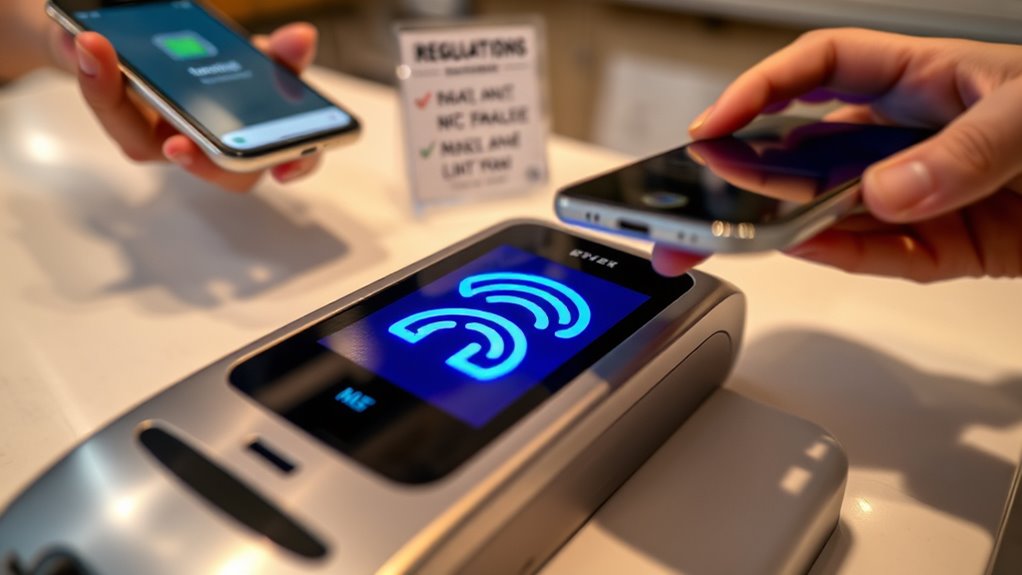

Contactless payment regulations and limits are in place to keep your transactions secure and quick. They require encryption, tokenization, and secure authentication to safeguard your financial information. Limits on contactless spending prevent unauthorized or accidental large purchases, with extra verification needed for higher amounts. Continuous security updates and monitoring help detect threats early. Staying compliant ensures your payments stay safe. To find out how these rules affect you, keep exploring the details behind these protections.
Key Takeaways
- Regulations mandate security measures like encryption and tokenization to protect contactless payment data.
- Transaction limits are set to prevent fraud, with higher amounts triggering additional authentication.
- Small transactions typically do not require verification, while larger ones prompt PIN, biometric, or password checks.
- Continuous monitoring and regular updates ensure compliance with evolving security standards.
- The regulations aim to balance convenience with security, safeguarding consumers and ensuring reliable digital payments.
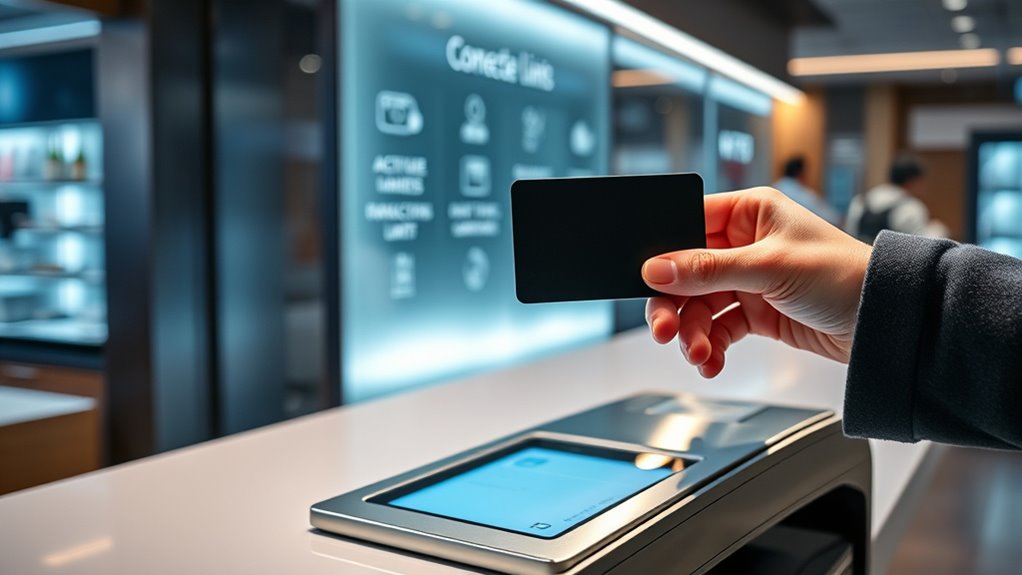
As contactless payment methods become increasingly popular, regulators are establishing rules to guarantee security and consumer protection. You need to be aware that these regulations often focus on security compliance, ensuring that payment systems safeguard your financial information against theft or fraud. Security measures include encryption, tokenization, and secure authentication processes, which all aim to keep your data protected during transactions. Financial institutions and merchants are required to adhere to these security standards to minimize risks associated with digital payments.
Regulations ensure contactless payment security through encryption, tokenization, and strict compliance for consumer protection.
Another critical aspect of these regulations involves transaction thresholds. These limits are set to prevent unauthorized or accidental large purchases without proper verification. For example, many regulators impose a maximum amount you can spend via contactless payment without entering a PIN or providing additional authentication. These thresholds are put in place to balance convenience with security, so you can quickly pay for small items while protecting yourself from potential misuse of your card or device. Once you hit that transaction limit, you’ll typically be prompted to verify your identity again, often through a PIN, biometric scan, or password.
Keeping track of these transaction thresholds helps you avoid surprises at checkout. If you’re making multiple small purchases, you might not need to authenticate each one, which speeds up your experience. However, if a purchase exceeds the set limit, you’ll be asked to provide extra verification to confirm you’re the authorized user. This process reduces the risk of fraud, especially if your contactless card or device is lost or stolen. Regulators have designed these rules to strike a balance: they allow swift, convenient transactions for everyday items while maintaining tight security for larger purchases.
Additionally, ongoing security monitoring and regular updates are essential components of maintaining compliance and protecting consumers in the digital payment landscape. Financial institutions and merchants are required to stay current with evolving security standards to protect your transactions. This means you should expect consistent improvements in security protocols, like updated encryption methods, to stay ahead of cyber threats. Regulators frequently review these standards, and you benefit from a safer payment environment, even as fraud tactics become more sophisticated.
Frequently Asked Questions
Are There Specific Age Restrictions for Using Contactless Payments?
There are generally no strict age restrictions for using contactless payments, but your payment eligibility depends on your bank or card issuer’s policies. Typically, minors can use contactless payments if they have a linked account or card authorized by a parent or guardian. It’s crucial to check with your bank for any specific age limits or requirements. As long as you’re eligible, you can enjoy the convenience of contactless payments regardless of age.
How Do Privacy Regulations Impact Contactless Payment Data Collection?
Privacy regulations require you to prioritize privacy compliance when collecting contactless payment data. You must inform users about data collection and obtain consent where necessary. Data encryption plays a crucial role in protecting sensitive information from unauthorized access during transmission and storage. These measures ensure that your contactless payment system adheres to legal standards, safeguarding user data and maintaining trust in your payment processes.
Can Contactless Payment Limits Vary Between Different Countries?
Yes, contactless payment limits can fluctuate between different countries due to cross-border regulations and regional transaction limits. When you travel, you might notice that the maximum amount you can pay contactlessly differs from your home country. These variations are set by local authorities and financial institutions to guarantee security and compliance. Always check the specific limits before making large purchases abroad to avoid transaction declines.
What Security Measures Are in Place for Contactless Transactions?
You’re in safe hands with contactless payments because biometric authentication and tokenization methods keep your data secure. Biometric scans, like fingerprints or facial recognition, act as a digital lock, ensuring only you can authorize transactions. Tokenization replaces sensitive card info with unique tokens, so even if data is intercepted, your details stay protected. It’s a win-win situation—your security is tight, and payments stay quick and hassle-free.
Are There Penalties for Exceeding Contactless Payment Limits?
Yes, if you exceed contactless payment limits, you might face transaction fees or the transaction could be declined. Merchants and banks implement fraud prevention measures, so exceeding limits can trigger additional security checks or penalties. To avoid issues, stay within your card’s contactless limit. If needed, you can opt for chip or PIN transactions, which typically don’t have the same restrictions or fees.
Conclusion
As you navigate the world of contactless payments, remember these regulations are the steady beat guiding your transactions. They’re the guardian’s shield, ensuring your money flows safely like a gentle stream. Stay aware of limits, like the checkpoints on a smooth journey, keeping your experience seamless. Embrace the rhythm of secure payments, dancing effortlessly through your day, confident that these rules keep your financial dance safe, swift, and always in harmony with your needs.