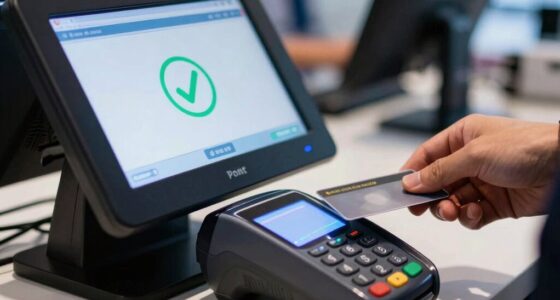

Terminal certification guarantees your devices meet strict security and performance standards needed for sensitive environments. It assures they operate safely, with robust encryption, and are resistant to hacking or data breaches. Certification processes define technical requirements, testing, and documentation, helping you choose reliable, compliant devices. This helps prevent operational failures and security risks. If you’re curious about how this all works, staying informed will give you a clearer understanding of protecting your devices and data effectively.
Key Takeaways
- Terminal certification verifies devices meet security, safety, and performance standards essential for protecting sensitive data.
- It ensures compliance with industry protocols like PCI PTS and EMV, reducing security risks.
- Certification involves standardized testing, clear documentation, and validation of device security and functionality.
- Certified terminals are reliable, interoperable, and suitable for demanding environments like banking and healthcare.
- Understanding certification helps users make informed choices and ensures devices are secure and compliant before deployment.

Have you ever wondered what terminal certification really entails and why it’s so important? When it comes to electronic terminals, like payment devices or communication interfaces, certification isn’t just a formality — it’s a safeguard for security, reliability, and compliance. Terminal certification guarantees that your device meets specific standards set by regulatory bodies or industry groups, which helps prevent issues like data breaches, fraud, or operational failures. It’s a way to confirm that your terminal operates safely within a designated environment, especially when it comes to sensitive information or financial transactions.
Terminal certification ensures security, reliability, and compliance for electronic devices handling sensitive data and transactions.
One of the key areas covered by certification standards is wireless security. If your terminal relies on wireless communication, certification ensures that it employs robust encryption and security protocols. This reduces the risk of interception, hacking, or unauthorized access. For example, standards like PCI PTS (Payment Card Industry PIN Transaction Security) or EMV (Europay, Mastercard, and Visa) include specific requirements for wireless security, ensuring that payment terminals protect cardholder data during transmission. When these standards are met, you can trust that your device won’t become a weak link in your security infrastructure. These certifications also specify testing procedures, which help to verify that devices meet the necessary security and operational criteria before deployment.
Certification standards also provide a clear framework for manufacturers and users. They specify technical requirements, testing procedures, and documentation needed to verify compliance. This process helps you identify whether a terminal is suitable for your operational environment and whether it adheres to industry best practices. It removes guesswork and minimizes the risk of deploying devices that could compromise security or fail to function properly. Basically, certification standards serve as a common language that guarantees a certain level of performance and security across different devices and manufacturers.
Knowing that your terminal has undergone certification gives you peace of mind. It reassures you that the device has been tested against rigorous criteria, including security measures, interoperability, and durability. This is especially critical in sectors like banking, retail, or healthcare, where sensitive data and financial transactions are involved. Without certification, you risk using equipment that might not meet vital security standards, leaving you vulnerable to breaches or operational disruptions. Additionally, understanding certification standards can help you stay ahead of evolving security challenges and ensure your devices are compliant with current regulations. Recognizing the importance of security protocols and how they are enforced through certification can further enhance your understanding of device safety and compliance. As a result, understanding the importance of terminal certification and the standards it encompasses helps you make informed decisions, ensuring your devices are both secure and compliant with industry regulations.

Dejavoo Z8 EMV CTLS Credit Card Terminal (IP, WiFi, no Dial)
- Encryption by Elavon: Secure payment encryption included
- EMV and NFC Compatible: Supports chip and contactless cards
- 2.4-inch Color LCD: Backlit display for easy viewing
As an affiliate, we earn on qualifying purchases.
As an affiliate, we earn on qualifying purchases.
Frequently Asked Questions
How Long Does Terminal Certification Typically Last?
Terminal certification typically lasts for one to two years, depending on your specific certification and issuing authority. You need to stay aware of the certification expiration date to guarantee you meet renewal requirements. Certification renewal is vital to maintain your credentials, so plan ahead. Once your certification expires, you may need to retake exams or fulfill additional requirements, making it imperative to track expiration dates and renew on time to avoid lapses in your certification status.
Is Terminal Certification Valid Internationally?
Yes, terminal certification can be valid internationally if it meets the world’s highest standards. You’ll want to verify the certification processes align with global terminal standards, which are designed to promote safety and efficiency worldwide. While some certifications might be accepted across borders, others may require additional validation or local approval. Always double-check the specific requirements of each country to make sure your certification holds up everywhere you need it to.
What Are Common Reasons for Certification Denial?
Certification denial often occurs because your application doesn’t meet the required terminal standards or fails during the certification process. You might lack proper documentation, or your equipment may not comply with safety or performance criteria. Incomplete or inaccurate information, failure to follow procedural steps, or missing essential tests can also cause delays or denials. To avoid this, make certain your application thoroughly adheres to the certification process and satisfies all terminal standards.
Can Certification Be Transferred Between Terminals?
Did you know that over 60% of terminals seek certification transfers to improve compliance? Yes, certification can be transferred between terminals, but it must meet existing certification standards and guarantee terminal compliance. You’ll need to coordinate with the certifying body and provide documentation proving compliance at the new site. Keep in mind, transfers aren’t automatic and depend on meeting all certification requirements, ensuring smooth continuity of standards.
What Are the Costs Involved in Obtaining Certification?
The costs involved in obtaining certification vary, but generally, you should prepare for a cost breakdown that includes application fees, training expenses, and testing costs. You also need to meet certification prerequisites, such as specific training hours or experience, which can add to your overall expenses. Budget accordingly, and research the specific certification program to understand all associated costs and prerequisites to avoid surprises.
Dejavoo Z8 EMV CTLS Credit Card Terminal (IP, WiFi, no Dial)
- Encryption by Elavon: Secure payment encryption included
- EMV and NFC Compatible: Supports chip and contactless cards
- 2.4-inch Color LCD: Backlit display for easy viewing
As an affiliate, we earn on qualifying purchases.
As an affiliate, we earn on qualifying purchases.
Conclusion
Now that you’ve grasped the essentials of terminal certification, you’re better prepared to navigate the complex world of maritime standards. It’s like comparing a clear blueprint to a confusing maze—you can now see the path ahead. With this knowledge, you won’t just avoid pitfalls; you’ll confidently steer through certification processes, transforming what once seemed overwhelming into a manageable journey. Embrace the clarity you’ve gained and set sail with confidence.
Dejavoo Z8 EMV CTLS Credit Card Terminal (IP, WiFi, no Dial)
- Encryption by Elavon: Secure payment encryption included
- EMV and NFC Compatible: Supports chip and contactless cards
- 2.4-inch Color LCD: Backlit display for easy viewing
As an affiliate, we earn on qualifying purchases.
As an affiliate, we earn on qualifying purchases.

Square Terminal – Credit Card Machine to Accept All Payments | Mobile POS
- All-in-One Payment Device: Ring up sales, accept payments, print receipts
- Universal Card Acceptance: Accept all major credit and debit cards
- Fast Chip Card Processing: Process chip cards in 2 seconds
As an affiliate, we earn on qualifying purchases.
As an affiliate, we earn on qualifying purchases.