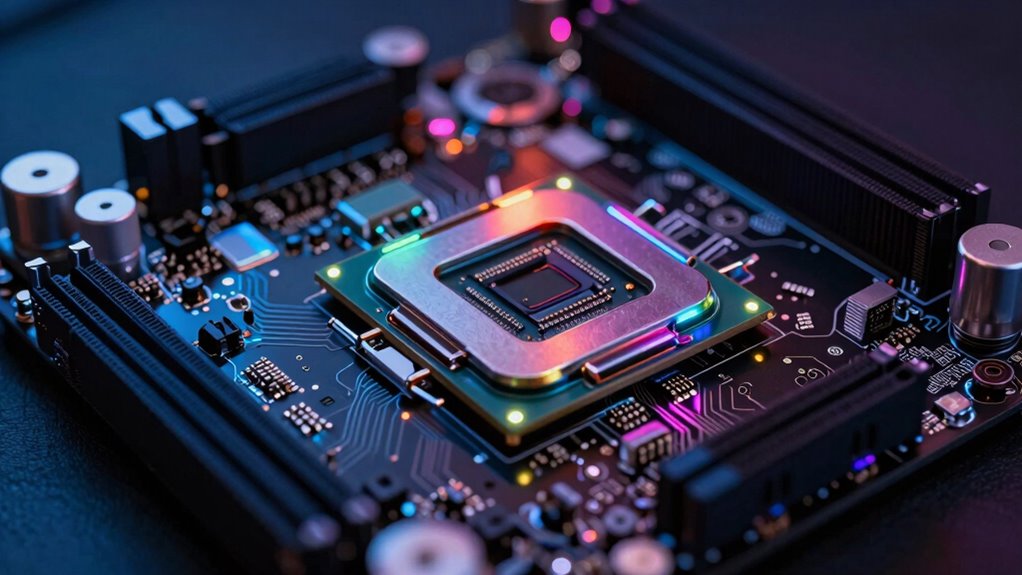

Processor stability means your system can run smoothly and reliably, even during demanding tasks like gaming or video editing. It involves keeping temperatures in check with effective cooling, ensuring consistent voltage regulation, and stable power delivery. When these factors are managed well, your CPU won’t crash, overheat, or throttle, extending its lifespan. If you’re curious about how these elements work together to keep your system steady, there’s more to discover below.

Get business pricing on office and shipping supplies
- Business-only prices and quantity discounts
- Tax-exempt purchasing
- Multiple users, one account, clear invoices
Key Takeaways
- Processor stability ensures consistent performance without crashes or errors during various workloads.
- It depends on effective thermal management to prevent overheating and maintain optimal operating temperatures.
- Stable power delivery and voltage regulation are essential to prevent fluctuations that cause system crashes.
- Proper cooling solutions, like heatsinks or liquid cooling, help maintain processor temperatures and stability.
- System stability is critical for demanding tasks such as gaming, video editing, and scientific calculations.
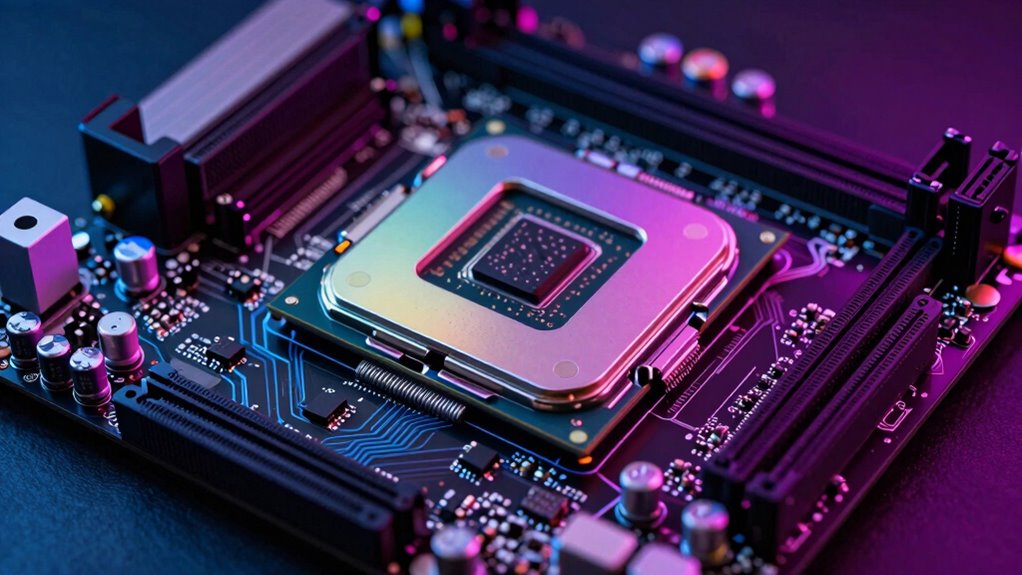
Ever wondered what makes a processor stable under various workloads? It all comes down to how well your system manages its internal conditions and how effectively it handles power delivery. The two essential factors that influence processor stability are thermal management and voltage regulation. When these elements work in harmony, your processor can perform demanding tasks without crashing, overheating, or becoming erratic.
Thermal management is indispensable because processors generate heat as they execute instructions. If that heat isn’t controlled, it can cause the CPU to throttle down its performance or, worse, shut down to prevent damage. Effective cooling solutions—like high-quality heatsinks, liquid cooling, or advanced airflow—keep temperatures within safe limits. You might notice that when your system maintains a lower temperature, it runs more reliably and sustains higher clock speeds without instability. Proper thermal management not only prolongs your processor’s lifespan but also guarantees consistent performance, especially during intensive workloads like gaming, video editing, or scientific calculations. Understanding how cooling solutions influence heat dissipation can help optimize your system’s stability. Additionally, ensuring that your case airflow supports proper heat removal is crucial for maintaining overall thermal stability.
Voltage regulation plays an equally critical role. Your processor relies on a steady supply of power to function correctly, and fluctuations in voltage can lead to errors, crashes, or even permanent damage. Modern motherboards incorporate voltage regulation modules (VRMs) that deliver clean, stable power to the CPU. When these VRMs are well-designed and properly cooled, they prevent voltage dips or surges that could destabilize your processor. Overclocking pushes the limits of your CPU’s capabilities, but it also demands precision in voltage regulation. If the power supply isn’t sufficiently stable, your system may become unstable under load, resulting in blue screens or system freezes. Maintaining proper voltage regulation guarantees your processor has the consistent power it needs to handle demanding tasks reliably. Proper power delivery is essential for maximizing processor stability and performance during overclocking or extended workloads.
As an affiliate, we earn on qualifying purchases.
Frequently Asked Questions
How Does Ambient Temperature Affect Processor Stability?
Ambient temperature directly impacts your processor’s stability by influencing thermal management. When environmental factors cause higher temperatures, your CPU struggles to cool effectively, leading to overheating and potential crashes. Cooler surroundings help maintain ideal thermal conditions, ensuring stable performance. To keep your processor stable, monitor ambient temperatures, improve airflow, and consider cooling solutions. Proper thermal management adapts to environmental factors, preventing thermal throttling and ensuring your system runs smoothly under various conditions.
Can Software Optimizations Improve Processor Stability?
Yes, software optimizations can improve processor stability. While some believe hardware is the only factor, software tuning plays a vital role in managing workloads and preventing overheating or crashes. Regular firmware updates fix bugs and enhance compatibility, boosting stability further. You should optimize your system through these updates and fine-tune software settings, ensuring your processor runs smoothly under various conditions, ultimately extending its lifespan and performance.
What Role Does Power Supply Quality Play in Stability?
Power supply quality considerably impacts processor stability because power fluctuations and electrical noise can cause instability or crashes. When your power supply delivers consistent, clean power, your processor operates smoothly without unexpected resets or errors. Poor quality power supplies introduce electrical noise, which interferes with the processor’s signals, reducing overall stability. Investing in a high-quality power supply ensures your system remains stable, even during demanding tasks or power surges.
How Do BIOS Settings Influence Processor Stability?
Think of BIOS settings as the captain steering your system’s ship. Your BIOS configuration directly influences processor stability by fine-tuning voltage regulation, ensuring the CPU gets just the right power without overworking. Adjusting these settings carefully helps prevent crashes and overheating, keeping your system steady and smooth. Proper BIOS management is essential for maintaining ideal processor performance and stability, especially during demanding tasks or overclocking.
Is Overclocking Always Detrimental to Processor Stability?
Overclocking isn’t always detrimental to processor stability, but it can cause issues like thermal throttling and voltage fluctuations if not done carefully. When you push your CPU beyond its limits, it may generate excessive heat, leading to thermal throttling that reduces performance. Voltage fluctuations can also destabilize your system. To maintain stability, monitor temperatures and voltages closely, and consider gradual overclocking with proper cooling solutions.
As an affiliate, we earn on qualifying purchases.
Conclusion
While a stable processor keeps your system running smoothly, chasing the highest overclock might lead to instability. Think of it as balancing on a tightrope—you want maximum performance without falling. Stability isn’t just about avoiding crashes; it’s about trust in your hardware’s consistency. So, aim for a sweet spot where power meets reliability. After all, a processor that’s too overclocked can be a reckless thrill, but a stable one offers peace of mind amidst the digital chaos.
motherboard voltage regulation modules
As an affiliate, we earn on qualifying purchases.
As an affiliate, we earn on qualifying purchases.
As an affiliate, we earn on qualifying purchases.
Evergreen bestsellers Picks
bestsellers
As an affiliate, we earn on qualifying purchases.