
When choosing an Android POS system, you need to ask if it securely protects sensitive data with encryption, authentication, and regular updates to prevent breaches. Check if it easily integrates with your existing hardware and software, and whether it’s scalable for future growth. A user-friendly interface and reliable support are critical to minimize errors and downtime. If you want to guarantee your system meets these needs, keep exploring the key questions smart operators ask before buying.
Key Takeaways
- Does the Android POS system support robust security features like encryption and secure authentication?
- Is the system compatible with existing hardware (tablets, scanners, printers) and software?
- How user-friendly is the interface, and what training/support options are available?
- Does the system offer reliable customer support and regular updates?
- Can the POS scale with business growth and ensure ongoing operational compatibility?
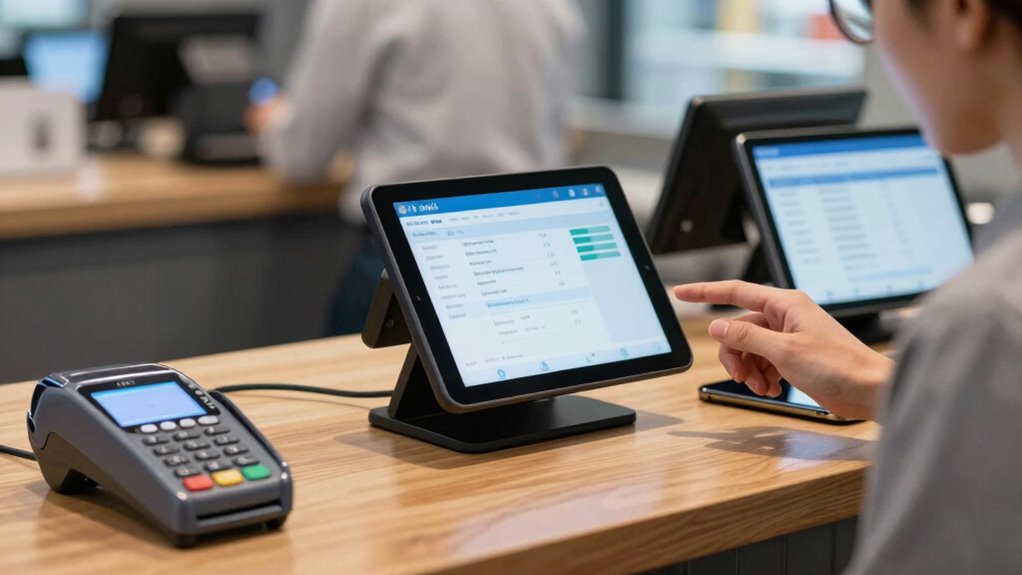
Choosing the right Android POS system can profoundly impact your business operations, but with so many options available, it’s easy to get overwhelmed. As you evaluate different systems, one of the first considerations should be security features. Your POS handles sensitive customer data, payment information, and inventory details, so you need to guarantee it has robust security measures. Look for systems that support encryption protocols, secure user authentication, and regular security updates. These features protect your business from data breaches and fraud, giving you peace of mind and building customer trust. Don’t overlook the importance of compliance with industry standards like PCI DSS, which is vital for processing card payments securely. A POS with strong security features isn’t just about protecting data; it’s about safeguarding your reputation and avoiding costly penalties. Ensuring your POS system is security compliant can also help you meet legal and industry requirements, further minimizing risk. Additionally, understanding the security protocols supported by your POS can help you better assess its ability to defend against emerging threats. Being aware of the security standards your system adheres to can help you stay ahead of potential vulnerabilities. Incorporating security best practices into your evaluation process can further enhance your system’s defenses against evolving cyber threats.
Another vital question to ask yourself involves compatibility issues. Your new Android POS must seamlessly integrate with your existing hardware, software, and operational systems. Consider whether the POS is compatible with your current devices—like tablets, barcode scanners, or printers—and whether it can integrate with your inventory management, accounting, or CRM software. Compatibility issues can cause major disruptions, leading to delays, data loss, or increased costs as you try to bridge gaps with additional hardware or software. To minimize these risks, verify that the POS vendor provides clear documentation on supported devices and software integrations. Also, ask about the ease of updating or customizing the system to suit your unique needs. Compatibility isn’t just about current hardware; it’s about ensuring your POS system will grow with your business.
Beyond security features and compatibility issues, you should also consider the user interface and customer support. A user-friendly interface reduces training time and minimizes errors during transactions. As for support, responsive customer service can be a lifesaver if technical issues arise. Ultimately, your goal is to choose a system that’s secure, compatible, easy to use, and backed by reliable support. By focusing on these questions, you’re better positioned to select an Android POS that enhances efficiency and keeps your business running smoothly. Remember, investing time in these questions upfront saves you headaches down the line, ensuring your POS system truly serves your operational needs.

Cryptnox FIDO2 Security Key Card, Two Factor Authentication (2FA) NFC Security Key FIDO 2.1 Level 1 Certified, Passwordless Login & 2FA Via NFC Or Contact, Works with Windows, Mac, iOS, Android
🔐 FIDO2 Level 1 Certified for Advanced Authentication: Cryptnox fido2 security key is certified to FIDO 2.1 Level…
As an affiliate, we earn on qualifying purchases.
As an affiliate, we earn on qualifying purchases.
Frequently Asked Questions
How Secure Is the Android POS System Against Cyber Threats?
Android POS systems are generally secure, especially when they implement robust cybersecurity protocols and data encryption. You should guarantee the device receives regular security updates and uses strong passwords. Look for features like secure payment processing and encrypted data transmission. By actively maintaining these security measures, you can considerably reduce the risk of cyber threats, safeguarding your business and customer information effectively.
Can the Android POS Integrate With Existing Inventory Management Software?
Wondering if your Android POS can seamlessly integrate with your existing systems? The answer is yes, especially if you prioritize software compatibility. It can connect with popular inventory management software, ensuring smooth inventory tracking and real-time updates. Before buying, double-check compatibility with your current software to avoid integration issues. This way, you’ll streamline operations, reduce errors, and keep your inventory data accurate across platforms.
What Is the Typical Downtime During System Upgrades or Maintenance?
System downtime during upgrades or maintenance usually ranges from a few minutes to an hour, depending on the upgrade frequency and system stability. You should plan for brief disruptions, especially during major updates. Regular maintenance helps improve system stability, reducing unexpected downtime. To minimize impact, schedule updates during off-peak hours, and make sure your POS system is compatible with your existing infrastructure for smoother upgrades and consistent performance.
Are There Options for Customizing the User Interface?
Yes, there are options for customizing the user interface on Android POS systems. You can typically modify layouts, colors, and functionalities to match your branding and workflow needs. Many systems offer flexible customization options through built-in tools or third-party apps, allowing you to tailor the user interface for a more intuitive and efficient experience. This helps streamline operations and enhances user satisfaction, making your POS more aligned with your business requirements.
How Scalable Is the Android POS for Future Business Growth?
You’ll find that Android POS systems are quite scalable, especially if you consider hardware durability and battery life. As your business grows, you’ll want devices that withstand daily use and keep up with longer shifts, so investing in robust hardware and long-lasting batteries guarantees smooth operations. This flexibility allows you to add features or expand your network without worrying about outgrowing your POS system, making it a smart choice for future growth.
![Hardware Bundle for Shopify POS - Cash Drawer, Thermal Receipt Printer, Barcode Scanner [Compatible with Shopify POS]](https://m.media-amazon.com/images/I/41XvxPuHTkL._SL500_.jpg)
Hardware Bundle for Shopify POS – Cash Drawer, Thermal Receipt Printer, Barcode Scanner [Compatible with Shopify POS]
Compatible with: ✅Shopify POS on Android ✅Shopify POS on iPad
As an affiliate, we earn on qualifying purchases.
As an affiliate, we earn on qualifying purchases.
Conclusion
Before you take the plunge, remember that asking the right questions is your compass in steering the Android POS landscape. Just like a seasoned sailor reads the stars, wise operators evaluate features, costs, and support to steer clear of storms. By doing your homework now, you’re setting yourself up for smooth sailing ahead. So trust your instincts, gather your answers, and let your smart choices light the way to retail success.

Multzo POS Android 14 Receipt Printer Android 14 and 58mm High Speed Thermal Printer 5.5’ Touch Screen. Handheld Point of Sale with NFC and 4G Network. 3GB Ram+32GB ROM
High-Performance Android 14 OS: Experience superior speed with the latest Android 14 and an Octa-Core 2.0GHz Processor, ensuring…
As an affiliate, we earn on qualifying purchases.
As an affiliate, we earn on qualifying purchases.

MUNBYN Bluetooth Thermal Receipt Printer P047, 80mm POS Printer, Thermal Printer with USB Serial Ethernet, Bluetooth, Support Android Windows PC (Do Not Support iOS Paypal Doordash Grubhub Vagaro)
NO Compatible with iOS Devices: NO iOS, NO iPad and iPhone. NO Compatible Doordash support, No WIFI !
As an affiliate, we earn on qualifying purchases.
As an affiliate, we earn on qualifying purchases.