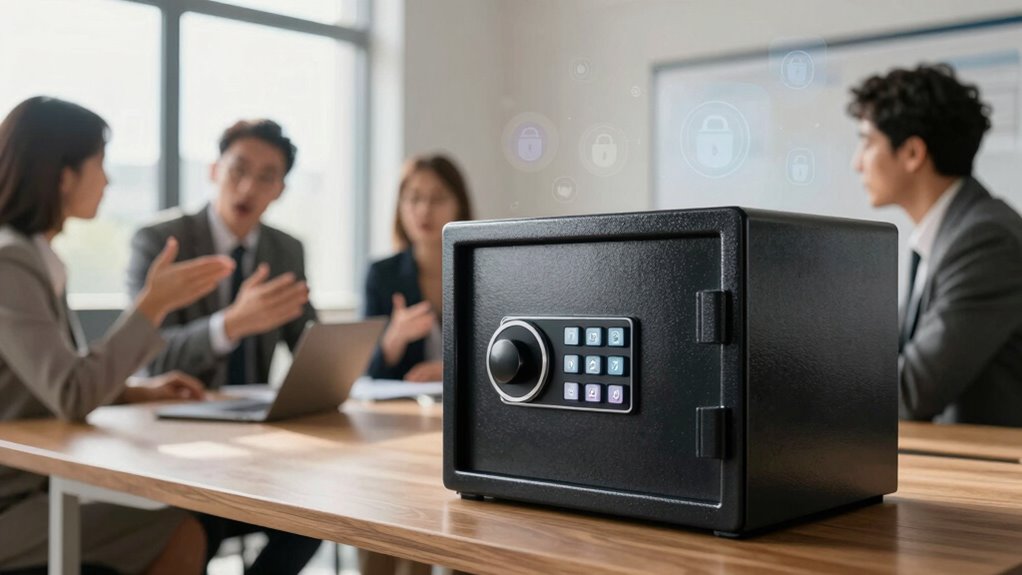

Intelligent safes can lower your security risks, but their effectiveness depends on how well your team adopts proper habits. If you share access codes, skip authentication, or ignore logouts, security gaps can appear despite advanced technology. To truly protect your assets, you need to promote a security-conscious culture and encourage behavioral changes. By aligning team practices with security protocols, you strengthen your defenses. Keep going to discover how fostering these habits makes a real difference.
Key Takeaways
- Technology like intelligent safes enhances security only when user behaviors align with established protocols.
- Proper training and ongoing education are essential to reinforce safe habits alongside technological safeguards.
- User compliance, such as secure code management and logging out, directly impacts the effectiveness of safes.
- Monitoring usage patterns helps identify behavioral gaps and guides targeted behavior change efforts.
- Cultivating a security-conscious culture ensures that teams consistently follow procedures, maximizing safe system benefits.
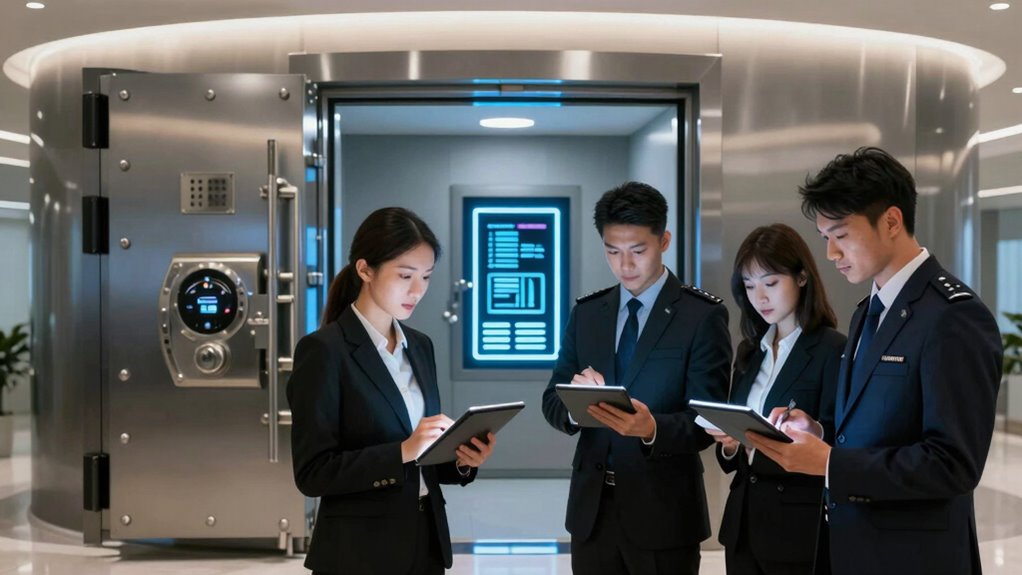
When teams change their habits, the risk of security breaches or errors often increases—unless you have the right safeguards in place. Implementing intelligent safes can be a significant step forward, but they won’t fully protect your assets if user behavior isn’t aligned with established security protocols. These safes are designed to reduce risks by automating access controls, logging activities, and preventing unauthorized entries. However, their effectiveness depends heavily on how your team interacts with them. If users ignore procedures or find workarounds, even the smartest safes can become vulnerable.
Smart safes reduce risks, but user habits and adherence to protocols are crucial for true security.
You need to understand that technology alone doesn’t guarantee security. Human behavior plays a vital role. When your team adopts new habits—whether due to changes in procedures, new tools, or shifts in work environments—they might inadvertently introduce weaknesses. For example, employees might share access codes, bypass authentication steps, or neglect to log out after use. These actions undermine the security protocols built into intelligent safes. Consequently, training and ongoing education are essential. You must clearly communicate the importance of following security procedures and demonstrate how these safes enhance safety, not complicate it.
Furthermore, fostering a culture of security is key. When team members see the value in adhering to security protocols and understand the risks of non-compliance, they’re more likely to change their behavior positively. Regular reminders, updates, and feedback can reinforce best practices. It’s also beneficial to incorporate user-friendly interfaces and clear instructions into your safes, making it easier for your team to follow protocols without frustration or confusion. When security becomes part of your team’s routine, the risk of errors diminishes. Building a security-conscious mindset among staff is essential for long-term protection. Additionally, understanding the role of human behavior in security can help tailor more effective training strategies.
Additionally, monitoring usage patterns helps identify deviations from accepted behaviors. Intelligent safes often come with integrated logging features that allow you to track who accessed what and when. Analyzing this data can reveal gaps in compliance and areas where user behavior needs to be addressed. This proactive approach helps you enforce security protocols more effectively and adapt training as needed. Recognizing that behavior change management involves not only implementing new policies but also addressing cultural barriers to change is crucial for sustained security improvements. Remember, technology can support your team, but it can’t replace the need for ongoing behavioral management and awareness. Recognizing the importance of security culture is crucial to long-term success.
intelligent safe with logging features
As an affiliate, we earn on qualifying purchases.
As an affiliate, we earn on qualifying purchases.
Frequently Asked Questions
How Do Intelligent Safes Integrate With Existing Security Systems?
Intelligent safes integrate seamlessly with existing security systems by supporting multiple security protocols, such as encryption and network integration. You authenticate users through advanced methods like biometric scans, PIN codes, or RFID. This guarantees only authorized personnel access sensitive contents. By syncing with your current security setup, intelligent safes enhance safety, streamline access control, and ensure compliance, all while adapting to your team’s established security habits effortlessly.
What Training Is Required for Teams to Adopt New Habits?
Think of training as planting seeds that grow new habits. You’ll need engaging training sessions that spark curiosity and reinforce behavioral incentives, making team members enthusiastic to adapt. Focus on hands-on demonstrations, real-life scenarios, and ongoing support to keep engagement high. By making learning interactive and rewarding, you turn the learning curve into a smooth slope, helping your team embrace new routines confidently and effectively.
Are There Industry Standards for Implementing Intelligent Safes?
Industry standards for implementing intelligent safes focus on industry compliance and safety protocols, guaranteeing secure and reliable use. You should follow guidelines from organizations like the Underwriters Laboratories (UL) and the National Institute of Standards and Technology (NIST). These standards help you establish proper installation, access controls, and maintenance procedures. Adhering to safety protocols minimizes risks, guarantees compliance, and ensures your team operates the safes effectively and securely.
How Do Intelligent Safes Handle Data Privacy Concerns?
You’ll be interested to know that 85% of data breaches involve weak authentication. Intelligent safes handle data privacy by using robust data encryption and multi-factor user authentication, ensuring only authorized personnel access sensitive info. These safes continuously monitor access patterns, alerting you to suspicious activity. By prioritizing strong encryption protocols and secure user verification, they effectively protect your data, reducing risks associated with theft or tampering.
What Are the Common Challenges in Changing Team Habits?
You’ll face common challenges in changing team habits due to behavioral resistance and difficulty with habit formation. People often stick to familiar routines, fearing change or doubting its benefits. To overcome this, you need to provide clear guidance, foster a supportive environment, and gradually introduce new behaviors. Consistent reinforcement and patience help team members adapt, making new habits more natural and less intimidating over time.

2026 Upgraded ANSI Standard Heavy Duty Electric Door Strike Lock for Door Access Control System,Cylindrical/Mechanical Locksets,Fail-Secure/Fail-Safe Adjustable,(Input Voltage 12VDC)
【Excellent quality 】 New upgraded Electric Door Strike Lock for Door Access Control System Made of high-quality alloy,…
As an affiliate, we earn on qualifying purchases.
As an affiliate, we earn on qualifying purchases.
Conclusion
So, are you ready to embrace smarter security? Remember, intelligent safes can lower risks, but only if your team changes their habits too. Without consistent, intentional behavior, even the best technology can fall short. It’s not just about having advanced tools—it’s about using them correctly and making security a team effort. Will you take the necessary steps to foster these habits and truly enhance your safety? The choice is yours.

SAFE SANCTUARY: Church Security Training Guide
As an affiliate, we earn on qualifying purchases.
As an affiliate, we earn on qualifying purchases.

2.6 Cuft Biometric Drop Safe for Business, Anti-Theft Fingerprint Safe Box with Quick Place Drop Slot, Digital Keypad and Spare Key, Depository Safe for Home Office Retail Store Business Mail Church
【LARGE SPACE】The external sizs: 13.78”(L) x 12.2”(W) x 17.71”(H), 2.6 cubic feet large depository safe provides protection for…
As an affiliate, we earn on qualifying purchases.
As an affiliate, we earn on qualifying purchases.