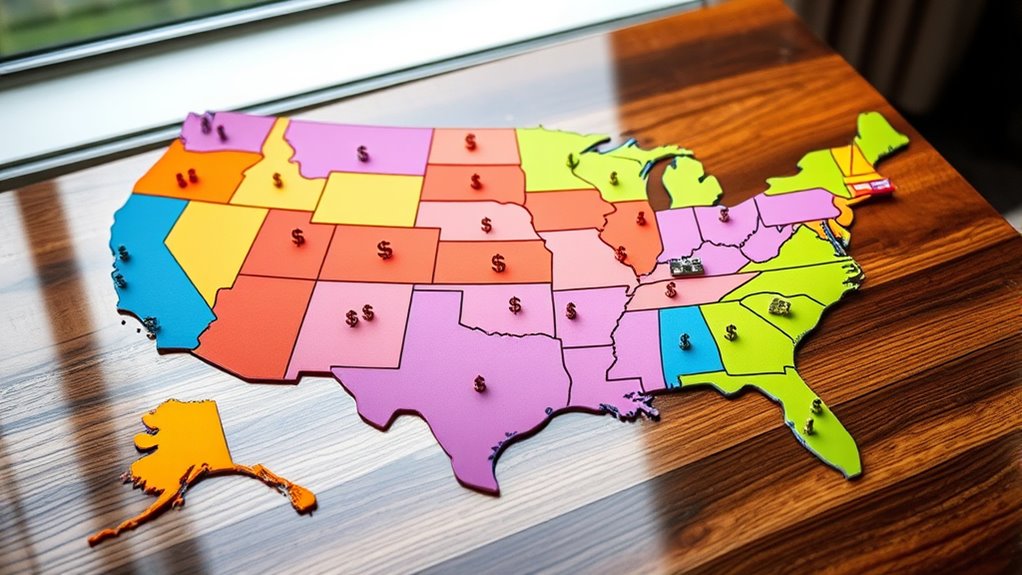

In the US, payment regulations vary by state, creating a complex landscape you need to navigate carefully. Each state has its own rules related to licensing, consumer protection, fraud prevention, and data security for mobile and digital payments. Some states require operators to obtain specific licenses before offering services, while others focus on transparency and dispute resolution. Staying informed about these local regulations is essential for compliance; continue exploring to understand how each state’s rules may impact your payment activities.
Key Takeaways
- Regulations vary by state, focusing on licensing, transparency, and fraud prevention for mobile payment providers.
- Some states require specific licensing or registration before operating mobile payment services.
- State laws enforce data security, encryption, and customer verification standards to protect users.
- Federal agencies establish baseline standards, which states often incorporate or expand upon in their laws.
- Compliance with both state and federal regulations is essential to avoid fines, legal issues, and ensure consumer protection.

Have you ever wondered how payments are regulated in the US? The landscape of payment regulation is complex, especially with the rapid rise of mobile payment options. As a user or business owner, understanding how these transactions are governed is essential for ensuring payment compliance and avoiding legal pitfalls. Each state has its unique rules, creating a patchwork of regulations that can seem overwhelming at first glance. But by breaking down the essentials, you’ll see that most regulations aim to protect consumers, promote fair competition, and prevent fraud.
Mobile payments have become increasingly popular, offering a convenient way to transfer funds, make purchases, and manage finances on the go. However, because these transactions bypass traditional banking channels, they are subject to specific state and federal oversight. States tend to regulate mobile payment services through a combination of consumer protection laws, licensing requirements, and anti-fraud measures. For example, some states require mobile payment providers to obtain licenses before operating within their borders, ensuring that these companies adhere to certain standards of payment compliance. These laws are designed to foster transparency, prevent unauthorized transactions, and shield users from scams or data breaches.
Payment compliance is a key concern in the regulatory framework across different states. Many states enforce strict rules around data security, encryption, and customer verification processes. This means that if you’re operating a mobile payment solution, you must align your practices with state-specific regulations, such as implementing robust identity verification to prevent fraud. Failure to comply can lead to hefty fines, legal disputes, or even losing the right to operate in certain markets. Some states also have regulations regarding chargebacks, dispute resolution, and customer notification procedures, all of which aim to create a fair environment for consumers and providers alike. Additionally, understanding the various materials used in tableware helps businesses and consumers appreciate the importance of quality and safety in products related to dining and living spaces.
Furthermore, federal agencies like the Federal Reserve and the Consumer Financial Protection Bureau set overarching standards that influence state policies. They focus on safeguarding payment systems, ensuring fair practices, and maintaining the integrity of digital transactions. These federal regulations often serve as a baseline that states build upon with their specific rules. As a business or consumer, staying informed about both federal and state regulations helps you navigate the legal landscape effectively. It guarantees you’re engaging in compliant mobile payment activities and protecting yourself from potential legal issues.

Burning Studio 26 – Burn, copy, save – the multimedia all-rounder – burning software – create covers, inlays, disk labels for Win 11, 10
Your powerful burning software for burning and copying CDs, DVDs and Blu-ray Discs
As an affiliate, we earn on qualifying purchases.
As an affiliate, we earn on qualifying purchases.
Frequently Asked Questions
How Do State Regulations Affect Online or Mobile Payments?
State regulations directly impact your use of online or mobile payments by shaping how digital wallets operate and ensuring payment security. You might face different rules on data protection, transaction limits, or authentication processes depending on your location. These regulations aim to keep your transactions safe and compliant, but they can also influence how quickly and easily you access or use digital wallets across various states.
Are There Specific Rules for International Payments Within States?
Sure, there are specific rules for international payments within states—if you believe crossing borders is just a hop, skip, and a jump. For cross border transactions, you must navigate international compliance requirements, including anti-money laundering laws and currency regulations. States may have their own quirks, but federal rules tighten the leash. So, you better stay informed or risk getting caught in a bureaucratic maze when handling global transactions.
What Are the Penalties for Non-Compliance With State Payment Laws?
If you don’t adhere to state payment laws, penalty enforcement can lead to fines, legal action, or even suspension of your business license. Non-compliance also increases your compliance costs, as you’ll need to address penalties and possibly overhaul your payment processes. To avoid these issues, make certain you stay updated on relevant regulations, implement proper payment procedures, and consult legal experts when necessary. Staying compliant helps you avoid costly penalties.
How Do State Regulations Impact Small Businesses’ Payment Options?
State regulations directly impact your small business’s payment options by imposing licensing requirements and merchant restrictions, which you must comply with. These laws may limit which payment methods you can accept or require specific licensing, affecting how smoothly you operate. Ignoring these rules can result in fines or penalties, so stay informed about your state’s licensing and restrictions to guarantee compliant, flexible payment options that serve your customers effectively.
Are There Exemptions for Certain Types of Payment Transactions?
Yes, there are payment exemptions and transaction exceptions that can act like hidden doors in the regulation maze. You might find that certain small transactions, like tips or specific government payments, are excused from usual rules, giving you more freedom to operate. These exemptions vary by state, so it’s wise to check local rules to avoid surprises. Knowing these exceptions helps you navigate the payment landscape smoothly and stay compliant.

Yaregelun USB Numeric Password Keypad Programmable Encryption Pin Pad for POS Payment Systems Secure Digital Entry Device
Enhanced Security: The numeric keypad ensures secure data entry and enhanced transaction security for all your POS payment…
As an affiliate, we earn on qualifying purchases.
As an affiliate, we earn on qualifying purchases.
Conclusion
Now that you’ve seen how each state handles payment regulations, one thing’s clear: maneuvering these rules isn’t straightforward. Each state’s unique approach could impact your plans in ways you hadn’t expected. Are you prepared for the surprises that might come your way? Stay tuned—there’s more to uncover about how these regulations could shape your next move. The next step might just change everything you thought you knew. Keep watching—you won’t want to miss what’s coming next.
identity verification solutions for payments
As an affiliate, we earn on qualifying purchases.
As an affiliate, we earn on qualifying purchases.

Construction Arbitration and Alternative Dispute Resolution (Construction Practice Series)
As an affiliate, we earn on qualifying purchases.
As an affiliate, we earn on qualifying purchases.