
Strong Customer Authentication (SCA) under PSD2 and PSD3 requires you to verify your identity during online transactions to ensure security and reduce fraud. It typically uses methods like biometrics, such as fingerprints or facial recognition, combined with risk assessments based on your device, location, or transaction history. This approach balances security with convenience, making online payments safer. To discover more about how these regulations protect your financial data, keep exploring how they work in practice.
Key Takeaways
- SCA under PSD2 and PSD3 mandates two or more independent authentication factors for online payments.
- It enhances transaction security by verifying user identity through biometrics, device, or knowledge-based methods.
- Risk-based authentication adjusts security measures based on transaction risk, balancing security and user convenience.
- Advanced algorithms analyze behavioral data to improve authentication confidence and compliance with security standards.
- Evolving standards aim for seamless, user-friendly security solutions like biometric scans, reducing friction while ensuring safety.
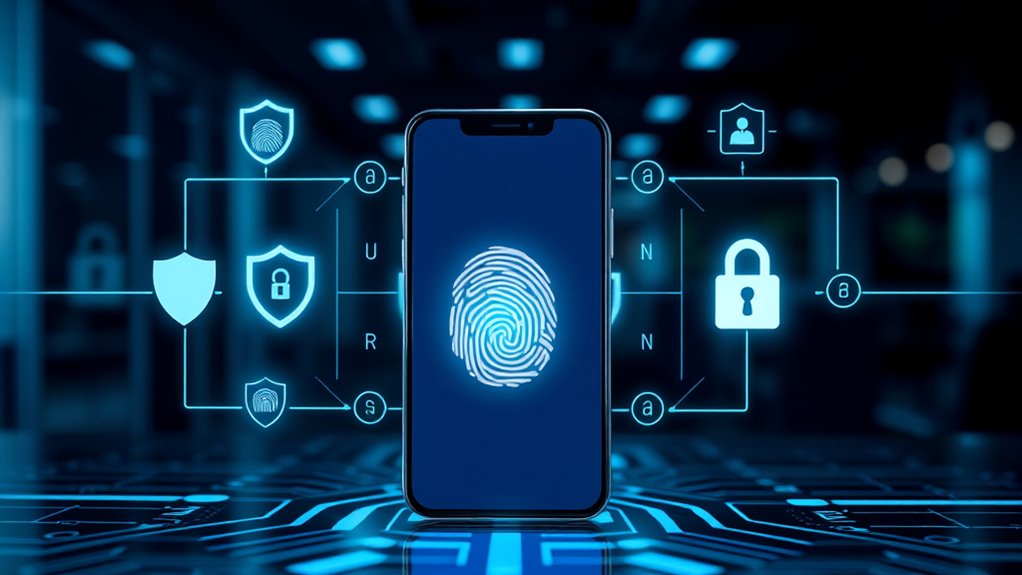
Have you ever wondered how online transactions stay secure? It’s thanks to strong customer authentication (SCA), a critical part of modern digital security standards. Under regulations like PSD2 and the upcoming PSD3, SCA aims to reduce fraud and protect your financial data by ensuring that only you can authorize transactions. But how does it actually work? One key method involves biometric verification, which uses your unique physical traits—like fingerprints or facial recognition—to confirm your identity. This technology makes it easier and faster for you to authenticate, eliminating the need for remembering complex passwords or codes. Biometric verification offers a high level of security because your biometric data is difficult for others to mimic, making it a dependable way to prove who you are during online payments or account access.
Biometric verification uses your fingerprint or face to securely confirm your identity online.
Alongside biometric verification, risk-based authentication plays a critical role. Instead of applying the same strict checks for every transaction, this approach assesses the risk level in real-time. For example, if you’re making a small purchase from a familiar device and location, the system might require only a simple verification step, like a fingerprint scan. But if a transaction seems suspicious—say, it’s large or from an unusual location—the system may trigger additional security measures, such as entering a PIN or answering security questions. This dynamic process balances security and convenience, minimizing friction for low-risk activities while stepping up protections when risks are higher.
Risk-based authentication relies on sophisticated algorithms that analyze various factors: your device, location, transaction history, and even behavioral patterns. These systems continuously learn and adapt, providing a personalized security experience. They’re designed to authenticate you confidently without creating unnecessary hurdles, allowing smoother transactions while maintaining compliance with PSD2’s strict security requirements. Additionally, the integration of advanced security technologies, like multi-factor authentication, further enhances the robustness of the process.
The combination of biometric verification and risk-based authentication under PSD2 and PSD3 reflects a shift toward more intelligent, user-friendly security measures. Instead of relying solely on static passwords, the industry embraces methods that are both secure and seamless. This way, you don’t have to compromise convenience for safety. You get quick access to your accounts and can authorize payments with just a fingerprint or face scan—while the system keeps a watchful eye for anything unusual. This layered security approach not only protects your assets but also builds trust in digital financial services, making online banking and shopping safer and more efficient for everyone.

Digital Persona 88003-001U.are.u 4500 Reader 70" Cable
Target Applications – Desktop PC security, Mobile PCs, Custom applications
As an affiliate, we earn on qualifying purchases.
As an affiliate, we earn on qualifying purchases.
Frequently Asked Questions
How Does SCA Impact Small Online Businesses?
You’ll find that SCA impacts your small online business by enhancing customer trust through secure transactions. While it may add an extra step during checkout, it considerably boosts fraud prevention, protecting both you and your customers. This increased security can lead to higher conversion rates and loyalty. Embracing SCA helps you stay compliant and shows your commitment to safeguarding customer data, ultimately strengthening your reputation and reducing chargebacks.
Are There Exceptions to SCA Requirements?
Yes, there are exceptions to SCA requirements through transaction exemptions and regulatory flexibility. You might not need SCA for low-value transactions, recurring payments, or trusted beneficiaries. These exemptions help streamline your checkout process while maintaining security. However, you should stay updated on specific criteria and guarantee you meet the regulatory guidelines to avoid compliance issues. Always verify if an exemption applies to your transaction to simplify customer experience without risking security.
How Is Biometric Authentication Handled Under SCA?
Biometric authentication is accepted as an authentication method under SCA, using biometric data like fingerprints or facial recognition. You can rely on biometric data for strong customer authentication because it provides a secure and convenient way to verify your identity. Banks and payment providers incorporate biometric methods alongside other authentication options, ensuring compliance while enhancing user experience. Just make sure your biometric data is securely stored and managed to meet regulations.
What Are the Penalties for Non-Compliance With SCA?
Ignoring SCA compliance is like leaving your front door unsecured; it risks hefty penalties and fraud. Non-compliance can lead to fines up to 10 million euros or 2% of your annual turnover, whichever is higher. Regulators emphasize fraud prevention and customer verification, so neglecting these rules could damage your reputation and lead to legal actions. Staying compliant guarantees your customers’ trust and secures your business from costly penalties.
How Will SCA Evolve With PSD3 Regulations?
With PSD3, SCA will likely become more flexible, especially for digital wallets and low-risk transactions. You’ll see increased transaction limits, allowing smoother payments without frequent authentication, but security remains a priority. Digital wallets may benefit from streamlined processes, reducing friction. Overall, PSD3 aims to balance user convenience and security, so you should expect smarter, adaptive SCA methods that enhance your transaction experience while maintaining robust protection.

ITEFDTUTNE Access Control Time Attendance Machine, Visible Dynamic Facial Recognition with 2000 User Capacity and Networked Devices, for Office Factory Hotel School Restaurant
[Multifunctional Verification Methods] This attendance machine offers flexible verification options including facial recognition id card swiping password entry…
As an affiliate, we earn on qualifying purchases.
As an affiliate, we earn on qualifying purchases.
Conclusion
By understanding SCA under PSD2 and PSD3, you can better protect your customers and guarantee smoother transactions. For example, imagine a small online retailer implementing biometric authentication; customers enjoy faster payments while security stays intact. Staying ahead of these regulations helps you build trust and avoid penalties. Embrace these changes confidently, knowing you’re safeguarding your business and your customers’ data every step of the way.

Yubico – YubiKey 5C NFC – Multi-Factor authentication (MFA) Security Key and passkey, Connect via USB-C or NFC, FIDO Certified – Protect Your Online Accounts
POWERFUL SECURITY KEY: The YubiKey 5C NFC is the most versatile physical passkey, protecting your digital life from…
As an affiliate, we earn on qualifying purchases.
As an affiliate, we earn on qualifying purchases.

After the Trade Is Made: Processing Securities Transactions
Used Book in Good Condition
As an affiliate, we earn on qualifying purchases.
As an affiliate, we earn on qualifying purchases.