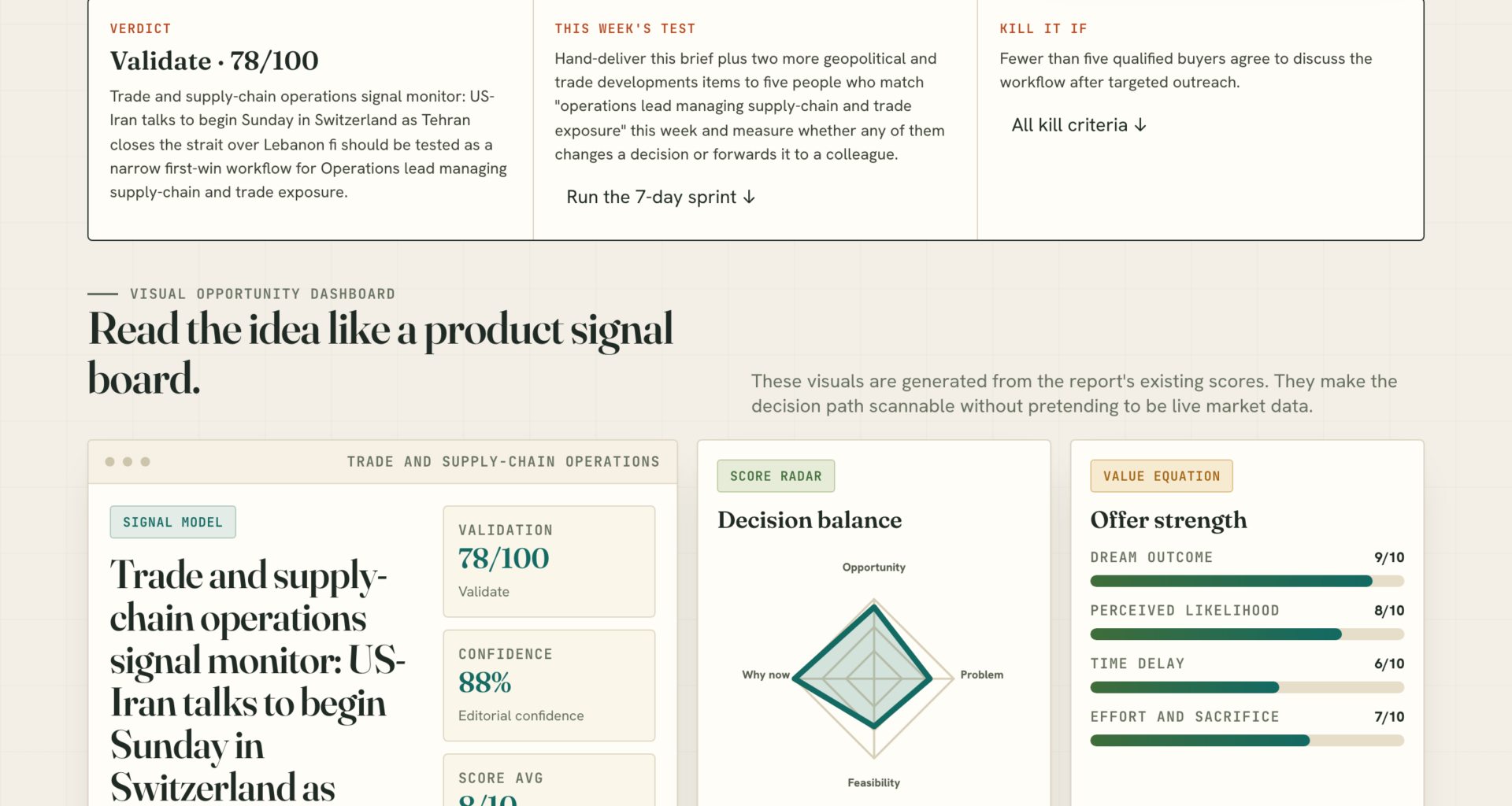

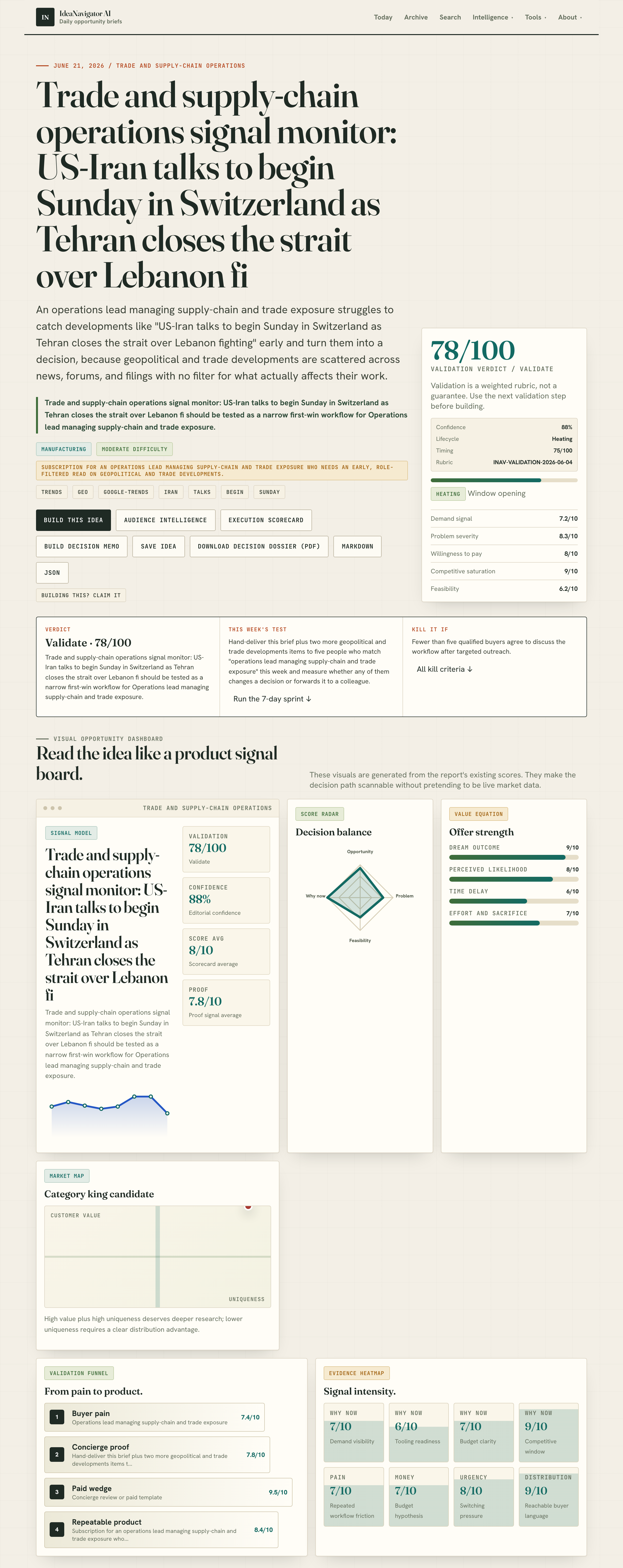
📊 Full opportunity report: Trade and supply-chain operations signal monitor: US-Iran talks to begin Sunday in Switzerland as Tehran closes the strait over Lebanon fi on IdeaNavigator AI — validation score, market gap, and execution plan.

Get business pricing on office and shipping supplies
- Business-only prices and quantity discounts
- Tax-exempt purchasing
- Multiple users, one account, clear invoices
TL;DR
The US and Iran are scheduled to hold talks in Switzerland starting Sunday, amid escalating tensions including Tehran’s closure of the strait over Lebanon. This development could influence global trade flows and supply chain stability.
Diplomatic talks between the United States and Iran are set to begin this Sunday in Switzerland, amid rising tensions that include Iran closing the strait over Lebanon, a move that could disrupt global trade routes.
The upcoming negotiations, confirmed by multiple sources, mark a significant diplomatic engagement aimed at de-escalating regional tensions between the two nations. Iran has recently closed the strait over Lebanon fighting, a strategic waterway critical for international shipping, raising concerns about potential disruptions in global supply chains.
Trade and supply-chain operations are closely monitoring these developments, as escalation could affect shipping lanes, commodity flows, and trade routes and supply chain stability for multinational companies. The negotiations are viewed as a test of diplomatic efforts to de-escalate tensions and restore stability to regional and global trade routes.
Impacts on Global Supply Chains and Trade Routes
This development matters because the potential disruption of the strait over Lebanon could significantly impact global trade flows, especially for energy and commodity shipments. The diplomatic talks could either ease tensions or lead to further escalation, affecting supply chain stability and operational planning for companies worldwide.
Products Worth Considering

Dell UltraSharp 27 Thunderbolt Hub Monitor (U2726DER), QHD

LG 34U60ZB-B 34-Inch Curved UltraWide WQHD 120Hz Monitor

Samsung 34-Inch Odyssey G5 Curved Ultra WQHD Gaming Monitor, 180Hz
As an affiliate, we earn on qualifying purchases.
Recent Tensions and Strategic Movements in the Region
Over the past months, Iran has taken aggressive steps, including closing the strait over Lebanon, which is a vital conduit for oil and shipping. The US has engaged in diplomatic efforts to prevent further escalation, but tensions remain high. The upcoming talks in Switzerland are seen as a critical moment for potential de-escalation, following a series of regional conflicts and geopolitical shifts that have heightened supply chain risks.
“The US and Iran are scheduled to begin talks this Sunday in Switzerland, aiming to reduce tensions and prevent further disruptions in key trade routes.”
— an anonymous diplomatic source
Unconfirmed Outcomes and Potential Escalation Risks
It is not yet clear whether the talks will lead to de-escalation or if tensions will worsen. The exact impact of Iran’s strait closure on global trade remains uncertain, and the outcome of the negotiations could influence future regional stability and supply chain resilience.
Next Steps in Diplomatic Engagement and Supply Chain Monitoring
Following the Sunday start, developments will depend on the negotiations’ progress. Supply chain managers and trade operators should monitor official statements and regional security updates, preparing for possible disruptions or easing of tensions in the coming weeks.
Key Questions
Why are the US and Iran negotiating now?
The negotiations are part of ongoing efforts to reduce regional tensions, especially after Iran’s recent closure of the strait over Lebanon, which threatens global trade routes.
What is the significance of the strait over Lebanon?
The strait is a vital maritime route for oil and cargo shipments; its closure can disrupt global supply chains and increase transportation costs.
How could these talks affect global trade?
If successful, the talks could lead to a de-escalation and reopening of the strait, stabilizing trade routes. If not, tensions may escalate, causing disruptions in shipping and commodity flows.
What should supply chain operators do now?
Operators should monitor official updates from diplomatic sources and prepare contingency plans for potential delays or disruptions in shipping routes.
When will the outcomes of the talks be known?
It is uncertain; the negotiations begin Sunday, and their results could take days or weeks to fully materialize.
Source: IdeaNavigator AI