
TL;DR

Get business pricing on office and shipping supplies
- Business-only prices and quantity discounts
- Tax-exempt purchasing
- Multiple users, one account, clear invoices
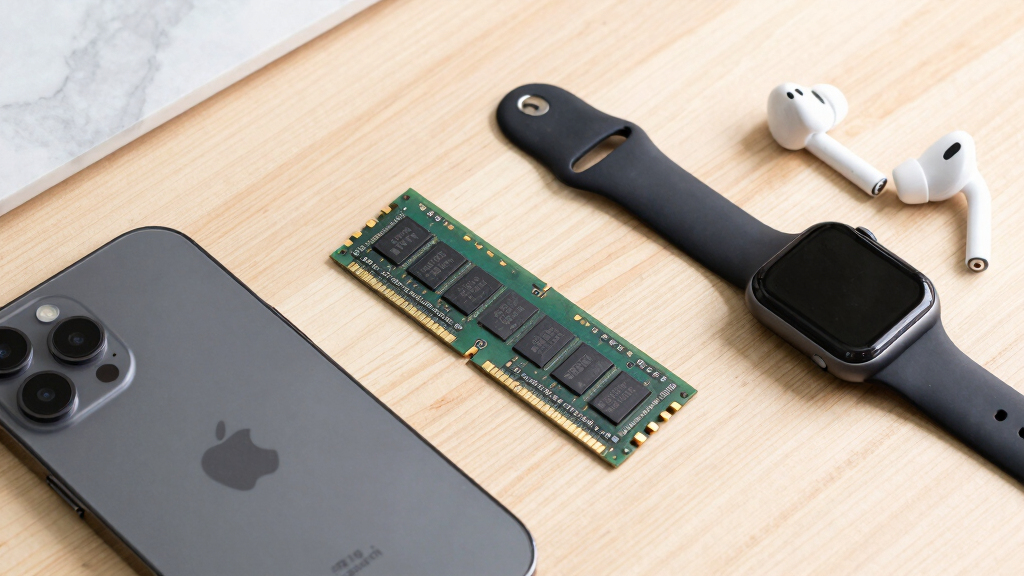
Apple reportedly asked the U.S. administration for clearance to buy memory chips from China’s CXMT after raising prices on Macs and iPads because of higher memory costs. The report highlights a wider supply problem: Europe has strong chipmaking choke points, but no major domestic DRAM or HBM supplier.
Apple has asked the U.S. administration for clearance to buy memory chips from ChangXin Memory Technologies, the Chinese DRAM maker on the Pentagon’s 1260H list, MarketWatch reported, citing the Financial Times. The request matters because it came after Apple raised Mac and iPad prices over surging memory costs, while Europe has no comparable memory supplier to turn to.
The reported request is not the same as a completed supply deal. Apple has not confirmed a CXMT contract in the source material, and U.S. clearance has not been reported as granted. What is confirmed is that Apple raised prices on June 25; the company said it could no longer absorb memory and storage chip costs, according to The Guardian. The reported increases affected MacBooks, iPads, HomePod speakers and Apple TV, but not the iPhone at that point.
CXMT’s status makes the reported request politically sensitive. The company is described in reports as being on the Pentagon’s 1260H list of Chinese military-linked companies, a designation that raises national security questions even if it is not the same as a blanket commercial ban. MarketWatch reported that Apple approached Washington because buying from CXMT without approval could draw political backlash.
The pressure comes from the memory market, where DRAM is concentrated among a few major suppliers: Samsung, SK Hynix and Micron, with CXMT emerging from China. Apple can still seek supply from Micron, ask Washington for cover, or examine a Chinese supplier. Europe, by contrast, has no large DRAM or HBM producer of its own.
Apple is reaching for Chinese memory. Europe doesn’t even have that option.
The shortage exposes America’s dependence — and Europe’s far more brutally. Apple has a domestic supplier, political weight, and the China option. Europe has no memory of its own, no seat at the table, no leverage on what counts.
- EU makes < 10% of the world’s semiconductors
- Effectively no DRAM, no HBM from Europe
- 3–4 memory makers worldwide — none European
- Pure price-taker: memory ~4× in 3 quarters
- ASML: EUV monopoly — no leading-edge chip without it
- Zeiss: precision optics, unrivalled worldwide
- imec · CEA-Leti · Fraunhofer: world-class research
- Infineon, NXP, STMicro: automotive · power · SiC
The shortage is a sovereignty test — Europe fails on supply but still holds the leverage in its hand. If even Apple can’t buy its way out, Europe’s answer isn’t to buy its way in, but to run two tracks: press the unique chokepoints as real leverage — and cut dependence wherever it can without Brussels: local-first, open weights, quantization, right-sized hardware. Bury the 20% dream, defend what’s yours, need less.
Europe Lacks Memory Leverage
The Apple request turns a component shortage into a supply-power test. If a company with Apple’s purchasing scale is raising device prices and asking for a China waiver, then smaller electronics makers, industrial users and AI builders face even tighter choices. For readers, the effect may show up in device prices, corporate margins and the availability of AI hardware, not only in semiconductor policy debates.
For Europe, the issue is sharper because memory is the part of the semiconductor stack where its position is weakest. The bloc has strengths in ASML’s EUV systems, Zeiss optics, research hubs such as imec and CEA-Leti, and chipmakers including Infineon, NXP and STMicroelectronics. But those assets do not create immediate DRAM or HBM capacity, which is what AI servers, PCs and consumer devices are short of now.
As an affiliate, we earn on qualifying purchases.
Chips Act Target Slips
The EU Chips Act set a target of 20% of global semiconductor production value by 2030. The European Court of Auditors said in its 2025 report that the current path is very unlikely to meet that target and cited a Commission forecast of only 11.7% by 2030. The auditors also said large fabs take four to five years to build, which limits how quickly policy can ease a shortage.
That gap matters because memory supply has become more concentrated at the same time AI demand has surged. Industry trackers cited in recent reports put DRAM price increases at steep double-digit rates in early 2026, with some broader memory measures showing multiples over several quarters. Memory makers have prioritized AI data-center customers, leaving consumer electronics groups with less room to negotiate.
Europe’s current semiconductor base is stronger in automotive, power and industrial chips than in advanced memory. It also owns supply-chain choke points through lithography and precision optics. That gives Brussels leverage, but it is different from having a domestic memory supplier able to allocate wafers during a crunch.
“We have never seen a component price increase this much, this quickly.”
— Apple, in a statement reported by The Guardian
High Bandwidth Memory (HBM) modules
As an affiliate, we earn on qualifying purchases.
As an affiliate, we earn on qualifying purchases.
Approval And Supply Remain Open
It is not yet clear whether Washington will approve Apple’s reported request, whether Apple would use CXMT chips broadly or only in selected products, or whether CXMT could meet Apple’s quality, volume and security requirements. It is also unclear how much of Apple’s price action is tied to DRAM, NAND storage, supplier contracts, or product-specific costs.
For Europe, the open question is whether the response will center on building new capacity, using ASML and Zeiss as bargaining leverage, reducing demand through right-sized hardware, or some mix of those approaches. None of the sources confirm a near-term European plan that would create large-scale HBM production inside the bloc.
As an affiliate, we earn on qualifying purchases.
Washington Decision Sets The Pace
The next milestone is a U.S. decision, formal or informal, on whether Apple can source from CXMT without a political fight in Washington. Investors, suppliers and device makers will also watch whether Apple extends price increases to the iPhone lineup before its fall launch cycle. Historical price moves are not a guarantee of future product or market outcomes.
In Europe, the next test is policy. Brussels is expected to keep pushing a revised chip strategy focused less on self-sufficiency and more on targeted capacity, advanced packaging and the choke points it already controls. The memory shortage will test whether that strategy can reduce exposure before the next supply squeeze.
As an affiliate, we earn on qualifying purchases.
Key Questions
Did Apple confirm it will buy CXMT memory?
No. The available reports say Apple sought U.S. clearance, but they do not confirm a completed CXMT supply deal or approval from Washington.
Why is CXMT sensitive for Apple?
CXMT is described in reports as being on the Pentagon’s 1260H list of Chinese military-linked companies. That makes any Apple sourcing decision a political and security issue, not just a procurement choice.
Why can’t Europe use the same option?
Europe does not have a major domestic DRAM or HBM supplier comparable to Micron, Samsung or SK Hynix. It also cannot lobby Washington as a home regulator for Apple-style clearance over Chinese memory sourcing.
Does Europe still matter in chips?
Yes. Europe has major strengths in ASML lithography, Zeiss optics, research institutes and automotive and power semiconductors. The weakness exposed here is specifically advanced memory supply.
Is this financial advice?
No. This article reports supply-chain developments and historical price information; it is not financial, tax or legal advice.
Source: Thorsten Meyer AI
Halloween Picks
halloween
As an affiliate, we earn on qualifying purchases.