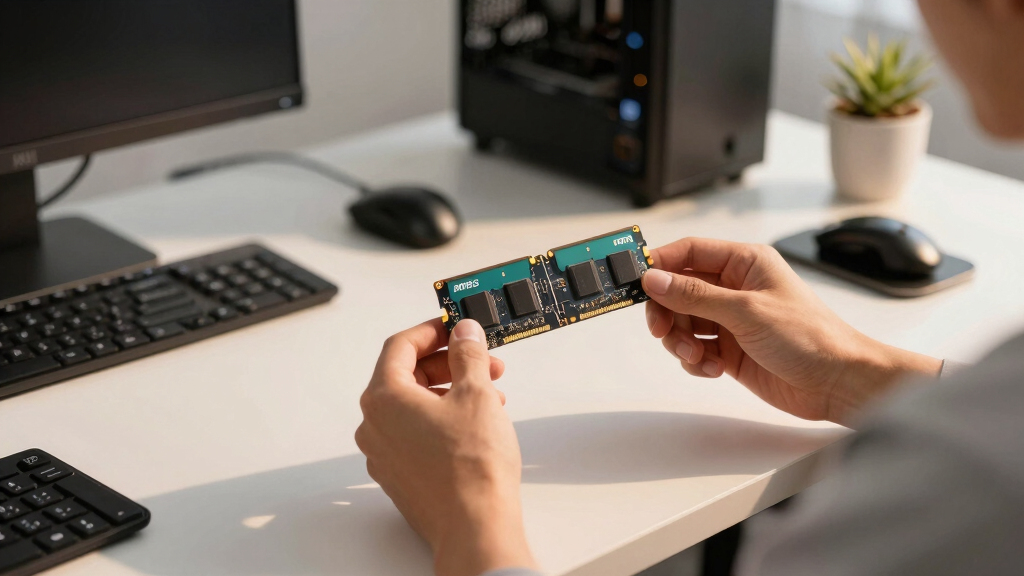

📊 Full opportunity report: DDR5 Now, DDR6 Soon: A Buyer’s Field Guide on ThorstenMeyerAI.com — validation score, market gap, and execution plan.

Get office and shipping supplies delivered free — and shop member deals
- Fast, free delivery on millions of items
- Access to Prime Big Deal Days deals on October 6–7
- Prime Video, Amazon Music and more included
TL;DR
DDR5 memory remains the best choice for most users in 2026, with DDR6 not arriving until 2027 and at a premium. Buyers should prioritize current needs over waiting for future upgrades.
DDR5 memory remains the recommended choice for mainstream builds in 2026, with no immediate benefit from waiting for DDR6, which is not expected to be widely available until 2027 and beyond. This guidance comes amid market shortages and rising prices, making current purchases more practical than delaying.
Market forecasts indicate that DDR5 prices are unlikely to fall significantly before 2028, and the next-generation DDR6 will arrive on new platforms around 2027, at a cost 2-3 times higher per gigabyte. Therefore, waiting for DDR6 to reduce costs or improve performance is generally not advisable for most consumers.
For current DDR5 options, the recommended configuration is DDR5-6000 with CL30 timings, as it offers the best balance of performance and price for both AMD and Intel systems. Higher-speed kits, such as DDR5-8000, provide minimal real-world gains and are not cost-effective for most users.
In terms of capacity, 32GB remains sufficient for gaming and general use, while 64GB is preferable for content creation and multitasking. Buyers should avoid overspending on 128GB kits unless engaging in specialized workloads like large AI models, which require actual capacity rather than hypothetical future needs.
Regarding platform compatibility, newer boards support CUDIMMs for higher speeds, and workstation platforms are increasingly moving toward RDIMM modules for signal integrity. However, buying DDR4 in 2026 is discouraged, as DDR4 is nearing end-of-life and now costs roughly the same as DDR5, with no future upgrade path.
As for DDR6, it features a significant architecture leap with four 24-bit sub-channels, higher speeds starting at 8,800 MT/s, and a new form factor called CAMM2. However, DDR6 is not backward compatible, requires a new CPU and motherboard, and is expected to be staged across enterprise, high-end, and mainstream markets from 2026 through 2030.
Only long-term workstation users or those with specific high-bandwidth needs should consider waiting for DDR6, and even then, only if they can wait until 2027 for a compatible platform. For most consumers, a well-chosen DDR5 system purchased in 2026 will outperform early DDR6 systems in 2027 at a lower cost.
DDR5 now, DDR6 soon
A buyer’s field guide. The 20-year instinct — wait for prices to drop, or wait for the next generation — is broken this cycle. Buy the DDR5 you actually need now; don’t wait for DDR6. Here’s the reasoning.
Driven to end-of-life, production slashed. Same money, dead-end socket. Leave a working DDR4 box alone — but never start a new build on DDR4 to “save.”
A framework, not a gamble. Buy the DDR5 you need now, at the sweet spot, in the capacity you’ll actually use — don’t buy DDR4, don’t wait for DDR6. The two costliest mistakes in this market are the ones that feel prudent: waiting for a price drop that isn’t coming, and waiting for a next-gen part that launches dearer than what’s on the shelf. Next: The SSD Squeeze.
Why Immediate DDR5 Purchase Makes Sense in 2026
This guidance is crucial for consumers navigating a market characterized by high prices and limited supply. By prioritizing current DDR5 options, buyers can avoid paying premium prices for unproven DDR6 technology that won’t be widely available for years. This approach maximizes value and performance, ensuring users get the most out of their investments without delaying their builds or upgrades.
As an affiliate, we earn on qualifying purchases.
Market Trends and Future Memory Standards
The 2026 memory market is marked by shortages and soaring prices, driven by supply chain disruptions and increased demand. Historically, new memory standards like DDR4 and DDR5 followed gradual adoption curves, but this cycle’s market dynamics suggest that prices for DDR5 will remain elevated until at least 2028. DDR6, announced as a future standard, is still in development, with its first implementations expected in enterprise and high-end platforms around 2026–27. The transition to DDR6 will be staged, with broad adoption not expected until around 2030, similar to DDR4’s timeline from 2014 to 2018.
“DDR6 offers a significant performance leap, but it’s not backward compatible and will require new platforms. Early adopters should be prepared for higher prices and potential stability issues.”
— Hardware manufacturer spokesperson
As an affiliate, we earn on qualifying purchases.
Unconfirmed Aspects of DDR6 Adoption Timeline
While DDR6’s specifications are finalized, its actual market availability and pricing remain uncertain. The staged rollout means some platforms may see DDR6 adoption earlier than others, and the full ecosystem support is still in development. Additionally, the impact of DDR6 on gaming performance remains unproven, as most current titles are not bandwidth-limited.
As an affiliate, we earn on qualifying purchases.
Key Milestones for DDR5 and DDR6 Development
Next steps include the transition of JEDEC standards from draft to official release for DDR6, followed by the appearance of compatible CPU and motherboard combinations. Consumers should monitor motherboard QVL lists and official announcements, with the first DDR6 modules expected to appear in enterprise and high-end systems in late 2026, and mainstream desktop adoption around 2027. Meanwhile, DDR5 prices are likely to stabilize or slightly decline as supply improves, but significant drops are not expected before 2028.
As an affiliate, we earn on qualifying purchases.
Key Questions
Should I buy DDR4 or DDR5 in 2026?
Buy DDR5 if you’re building a new system or upgrading now. DDR4 is nearing end-of-life and offers no future upgrade path, making DDR5 the sensible choice for longevity and compatibility.
When will DDR6 be widely available and affordable?
DDR6 is expected to be staged across enterprise, high-end, and mainstream markets from 2026 through 2030. Full affordability and broad adoption will likely occur around 2030.
Is it worth waiting for DDR6 to save money?
For most consumers, waiting isn’t advisable. DDR6 will be more expensive initially and offers limited benefits for gaming or typical workloads in the early stages.
What performance benefits does DDR6 offer over DDR5?
DDR6 promises higher speeds, increased bandwidth, and improved efficiency, but these benefits will mainly matter for specialized workloads like AI, scientific computing, and heavy rendering, not gaming.
Can I upgrade my current motherboard to support DDR6 later?
No, DDR6 requires new CPUs and motherboards with compatible controllers. Upgrading later will involve building a new system around DDR6-compatible hardware.
Source: ThorstenMeyerAI.com
Halloween Picks
halloween
As an affiliate, we earn on qualifying purchases.