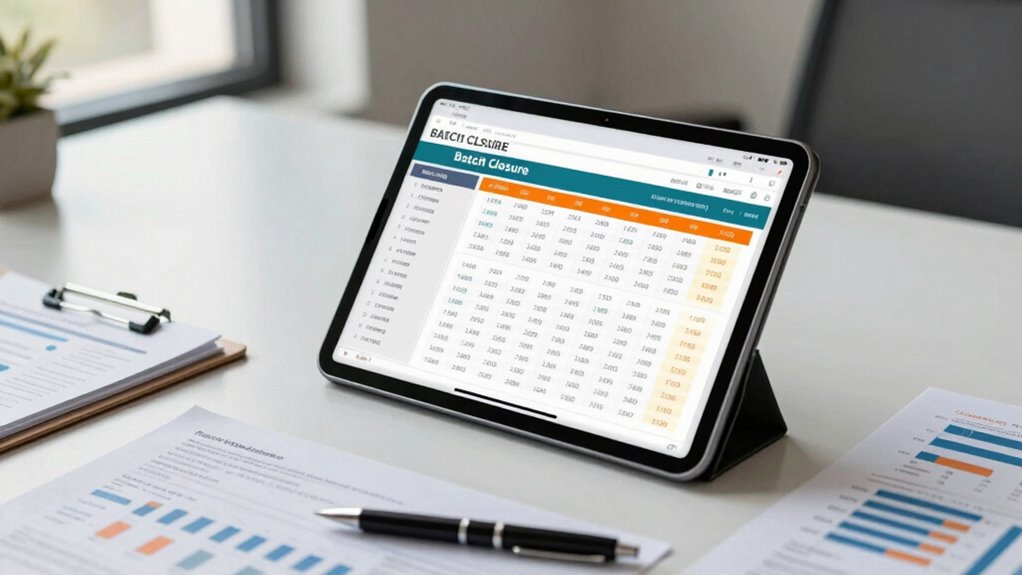

Understanding when to close your batch is vital for smooth cash flow, accurate transactions, and security. Closing too early might miss pending sales, causing reconciliation issues, while delaying can hold up fund deposits and disrupt operations. Proper timing helps you catch suspicious activity early and stay compliant with industry standards. Consistent batch closures make monitoring easier and minimize errors. Keep these points in mind to optimize your process—if you keep exploring, you’ll uncover even more essential tips.

Get business pricing on office and shipping supplies
- Business-only prices and quantity discounts
- Tax-exempt purchasing
- Multiple users, one account, clear invoices
Key Takeaways
- Proper batch closure timing ensures timely fund transfers and smooth cash flow management.
- Closing batches too early or late can cause reconciliation errors and operational delays.
- Regular, timely batch closures enhance fraud detection and transaction security.
- Aligning batch timing with industry standards helps maintain compliance and avoid penalties.
- Consistent batch timing simplifies transaction reconciliation and improves fraud prevention efforts.
Understanding the timing of batch closures is essential for merchants looking to optimize cash flow and streamline operations. When you close a batch, you’re fundamentally finalizing all transactions processed within a specific period, which impacts how quickly funds move into your account. Knowing the ideal time to close your batches ensures smoother cash flow management and minimizes delays in fund availability. If you close your batch too early, you might miss out on transactions that are still pending or in process, leading to discrepancies in your payment reconciliation. Conversely, waiting too long to close batches can cause delays in depositing funds, which can impact your cash flow and operational planning. Timing is critical because it also affects your ability to monitor and manage transactions effectively. Proper batch timing also helps in detecting fraudulent activity, allowing you to respond swiftly and protect your business. Additionally, understanding how technology influences batch processing can further enhance your ability to optimize this timing for better outcomes. Being aware of compliance requirements related to transaction processing can also help you align your batch schedules with industry standards and reduce the risk of penalties or audit issues. For instance, staying informed about industry-specific regulations ensures you avoid potential legal complications. Payment reconciliation is closely tied to batch timing. When you close a batch at the right time, it becomes easier to match transactions against sales records, reducing the risk of discrepancies or errors. Proper batch timing helps you identify any mismatched or fraudulent transactions quickly, allowing you to address issues before they escalate. If you close your batches too frequently or too infrequently, you risk either overlooking problematic transactions or delaying the detection of potential fraud. Consistent, well-timed batch closures give you a clearer picture of your sales and help guarantee your accounts are accurate, which is indispensable for maintaining financial integrity and preparing accurate reports. Establishing a routine**** for batch closures can further improve your transaction monitoring and operational efficiency.
Closing batches at the right time optimizes cash flow and improves transaction management.
Fraud prevention is another key aspect influenced by batch closure timing. By closing batches at strategic intervals, you can better monitor for suspicious activity. For example, if you notice a spike in chargebacks or unusual transaction patterns right after a batch closes, you can investigate promptly. Regular, timely batch closures can help you implement more effective fraud detection strategies because you’re reviewing transactions in manageable segments rather than an overwhelming backlog. Additionally, closing batches at consistent times creates a routine that can help you spot inconsistencies or fraudulent transactions more efficiently. This proactive approach minimizes your exposure to fraud and reduces potential losses, while also maintaining customer trust. Furthermore, timely batch closures enable quicker responses to emerging threats, further strengthening your security measures.
merchant batch processing software
As an affiliate, we earn on qualifying purchases.
As an affiliate, we earn on qualifying purchases.
Frequently Asked Questions
How Do Batch Closures Impact Daily Cash Flow?
Batch closures can considerably impact your daily cash flow by causing reconciliation challenges, making it harder to track actual revenue. If you delay closing batches, you might experience discrepancies that affect your cash flow forecasting accuracy. Timely closures ensure your records reflect real-time transactions, helping you manage cash flow more effectively. Staying on top of batch timing minimizes surprises, allowing you to plan better and maintain healthy cash flow.
Can Batch Timing Vary Between Different Payment Processors?
Did you know that over 60% of merchants experience payment processor discrepancies due to batch timing issues? Batch timing can indeed vary between different payment processors, affecting your cash flow. To avoid delays, prioritize batch timing synchronization, ensuring that closures happen consistently across all processors. This helps streamline your cash flow, reduces discrepancies, and keeps your financial records accurate, providing a clearer picture of daily transactions.
What Are Common Errors During Batch Closure?
Common errors during batch closure include forgetting to reconcile the batch, which can lead to discrepancies, and closing the batch too early or late, causing timing issues. You should double-check all transactions to prevent errors and guarantee accurate batch reconciliation. To avoid mistakes, establish clear procedures and use automated systems when possible. Proper training helps prevent common errors, ensuring smooth batch closures and accurate financial reporting.
How Often Should Merchants Review Batch Closure Reports?
You should review batch closure reports daily to guarantee accurate inventory reconciliation and detect any discrepancies early. Regular reviews help prevent fraud and identify errors promptly. By staying consistent, you can verify that all transactions are accounted for, maintain data integrity, and reduce the risk of financial loss. Making this a routine practice allows you to address issues quickly, safeguarding your business and ensuring smooth operations.
Are There Penalties for Delayed Batch Closures?
Delaying batch closures can lead to penalties, costing merchants both time and money. Studies show that 30% of fraud cases are linked to delayed batch reconciliation. Quick batch closure helps prevent fraud and guarantees accurate records. Missing deadlines may result in account holds or fines. To stay compliant and secure, you should prioritize timely batch closures, which are essential for effective fraud prevention and smooth transaction processing.
transaction reconciliation tools
As an affiliate, we earn on qualifying purchases.
As an affiliate, we earn on qualifying purchases.
Conclusion
Understanding batch closures and timing helps you avoid payment delays and chargebacks. By aligning your processes with your payment provider’s schedule, you guarantee smoother transactions and better cash flow. Did you know that missing a batch closure window can delay funds by up to 48 hours? Staying vigilant about these timings keeps your business running seamlessly, so you can focus on growth instead of payment hiccups. Mastering this aspect makes a significant difference in your success.
As an affiliate, we earn on qualifying purchases.
As an affiliate, we earn on qualifying purchases.
Halloween Picks
halloween
As an affiliate, we earn on qualifying purchases.