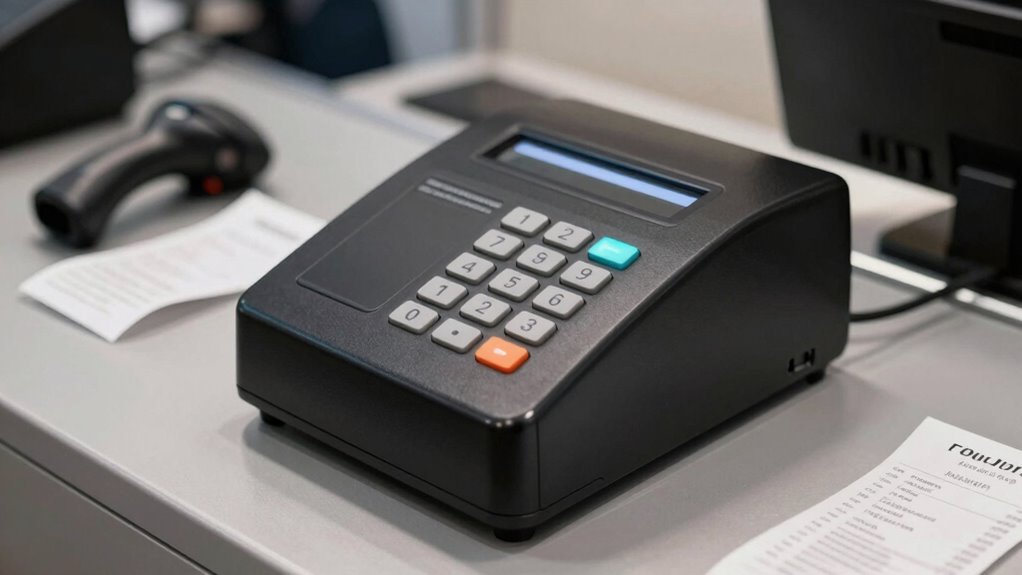

You need to guarantee your PIN pads are placed securely, away from prying eyes and potential tampering. Most counters don’t consider ideal height, angle, or shielding, making PIN entry vulnerable to theft and observation. Proper placement within the customer’s line of sight but hidden from outsiders can greatly boost security. Adding physical anchors and considering biometric options can further protect sensitive data. To explore more ways to improve your setup, keep going.

Get business pricing on office and shipping supplies
- Business-only prices and quantity discounts
- Tax-exempt purchasing
- Multiple users, one account, clear invoices
Key Takeaways
- Many counters place PIN pads in open areas, increasing risk of PIN observation and tampering.
- Proper placement ensures PIN pads are shielded from prying eyes and hidden cameras.
- Securing PIN pads at optimal heights and angles enhances both security and customer privacy.
- Inadequate placement exposes devices to theft, skimming, and physical tampering.
- Improving physical positioning and anchoring reduces vulnerabilities and boosts compliance with security standards.
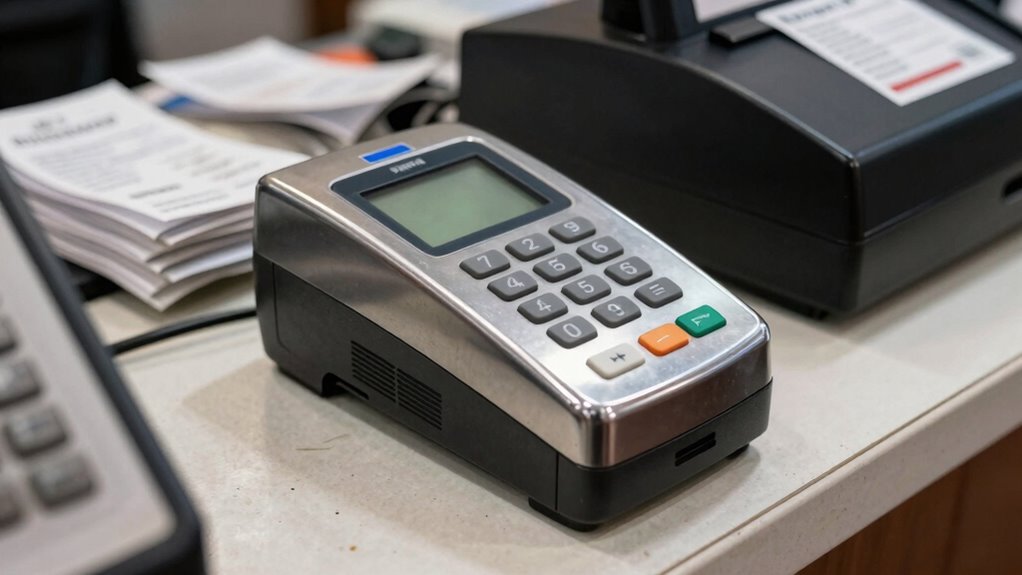
In today’s digital payment environment, ensuring the security of sensitive information is more essential than ever. When it comes to secure PIN pads, physical placement plays a pivotal role in protecting your customers’ data. Many counters, however, are set up in ways that leave PIN pads vulnerable to theft or tampering. If you want to uphold high standards of mobile payment security, you need to rethink where and how these devices are positioned. Proper placement isn’t just about convenience; it’s about creating a secure environment that deters malicious activity and builds trust.
Most counters put PIN pads in open, easily accessible spots, thinking that convenience encourages customer use. But this approach often backfires, making it easier for malicious actors to observe PIN entries or even install skimming devices. You should aim to place PIN pads in a location that’s within the line of sight but not exposed to prying eyes or hidden cameras. This means positioning the device at a height and angle that only the customer and cashier can see clearly, reducing the risk of shoulder surfing or covert observation. It also involves ensuring the PIN pad is fixed securely to prevent physical tampering. Additionally, designing the placement with physical security in mind can significantly reduce the chances of tampering or theft. Proper device anchoring can further enhance security by making tampering physically difficult. Evaluating the environmental factors around the installation can help identify potential vulnerabilities to external threats.
Place PIN pads where only customers and staff can see, minimizing risks of observation and tampering.
Another essential factor is incorporating biometric authentication where possible. Biometric methods, such as fingerprint or facial recognition, can considerably enhance mobile payment security by providing an additional layer of authentication. When combined with a well-placed PIN pad, biometric authentication makes it harder for unauthorized users to access sensitive accounts, even if the PIN or device is compromised. This dual-layer approach helps you protect customer data more effectively and minimizes the risk of fraud. Ensuring that the entire payment setup aligns with security best practices is crucial for maintaining customer trust and compliance. Regularly updating security protocols and staying informed about emerging threats can further bolster your defenses.
As an affiliate, we earn on qualifying purchases.
Frequently Asked Questions
How Does Physical Placement Affect PIN Pad Security?
Proper physical placement of PIN pads enhances security by protecting user privacy and preventing theft. When you position PIN pads out of sight from potential onlookers, users feel more secure entering their PINs. Additionally, placing the device in a location that’s harder for thieves to access decreases the risk of skimming or physical theft. Thoughtful placement guarantees a safer transaction environment, fostering trust and reducing vulnerabilities.
What Are Common Vulnerabilities Related to PIN Pad Positioning?
Poor placement of PIN pads promotes prevalent vulnerabilities like skimming, sneaky snatching, and theft. When positioned poorly, PIN pads become prime targets for thieves who exploit gaps in security, increasing skimming vulnerabilities. You’re risking unauthorized access and loss, so make sure PIN pads are strategically placed to prevent prying eyes, tampering, and theft. Proper positioning fortifies your defenses, making theft prevention easier and safeguarding sensitive customer information effectively.
Are There Industry Standards for PIN Pad Placement?
Yes, industry standards emphasize proper PIN pad placement to enhance security and user comfort. You should focus on PIN pad ergonomics, ensuring it’s positioned to reduce shoulder strain and visible to customers without exposing PIN entry. Staff training is essential; instruct employees on ideal placement, avoiding proximity to theft-prone areas. Following these standards helps prevent shoulder surfing and skimming, creating a safer environment for both staff and customers.
How Can Retailers Improve PIN Pad Security Without Costly Renovations?
You can improve PIN pad security by implementing strong encryption protocols and ensuring staff are well-trained in security practices. Position PIN pads away from customer view and avoid placing them near distractions. Regularly update your security software and monitor transactions for suspicious activity. Staff training helps prevent shoulder surfing and mishandling sensitive data. These measures boost security without costly renovations, protecting customer info and reducing fraud risks effectively.
What Role Does Customer Visibility Play in PIN Pad Placement?
Think of your customers’ privacy as a shield, protecting their sensitive information. Proper PIN pad placement balances visibility concerns with customer privacy, ensuring they can confidently see their transaction without exposing their PIN to onlookers. By positioning PIN pads where customers feel secure and can view their inputs comfortably, you reduce the risk of shoulder surfing and build trust. Clear sightlines and discreet placement are key to safeguarding customer data while maintaining transparency.
As an affiliate, we earn on qualifying purchases.
Conclusion
So, next time you’re swiping your card, remember the irony: those secure PIN pads, designed to protect your data, often sit in the most exposed spots—just a quick reach away from prying eyes. You’d think security would come first, but instead, it’s often an afterthought, leaving your info vulnerable while the counter’s shiny surface distracts from the real risks lurking just out of sight. Sometimes, safety’s the last thing you see.
As an affiliate, we earn on qualifying purchases.
As an affiliate, we earn on qualifying purchases.
Halloween Picks
halloween
As an affiliate, we earn on qualifying purchases.