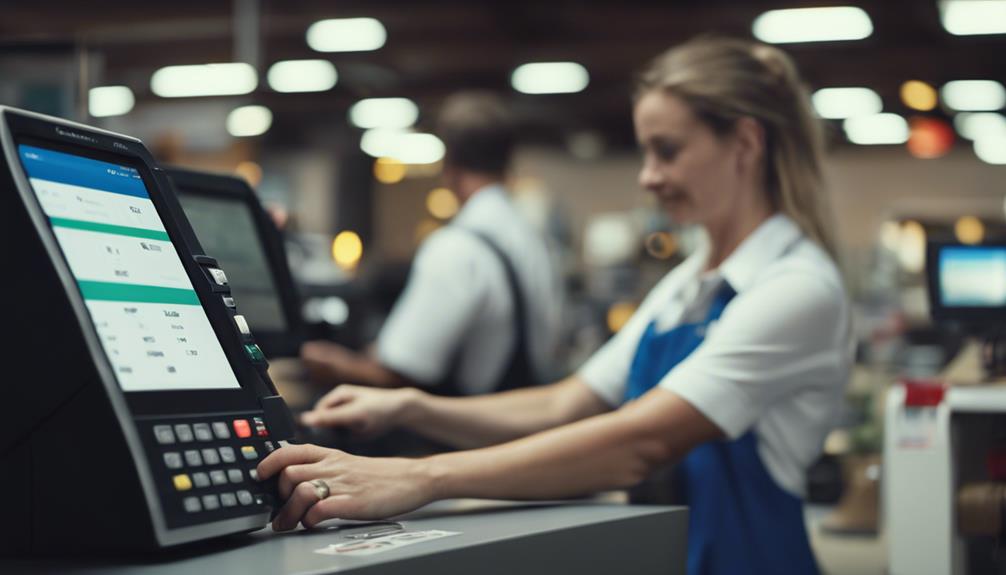
In choosing between interchange plus and tiered pricing models, you should understand that interchange plus offers transparency by charging a clear base rate plus a small markup, making costs predictable and easier to manage. Tiered pricing groups transactions into tiers, which can obscure actual costs and vary fees based on classification criteria. Understanding how risk assessment influences both models can help you select the most cost-effective option—continue exploring to see which model fits your business best.
Key Takeaways
- Interchange plus provides transparent fees by adding a fixed markup to the card network’s interchange rate.
- Tiered pricing groups transactions into tiers with preset rates, which can obscure actual costs.
- Interchange plus easily tracks and manages costs, ideal for high-volume or straightforward transactions.
- Tiered pricing’s tier classification depends on transaction attributes, potentially leading to variable and unpredictable fees.
- Both models involve risk assessment; understanding these helps optimize processing costs and select the best model.
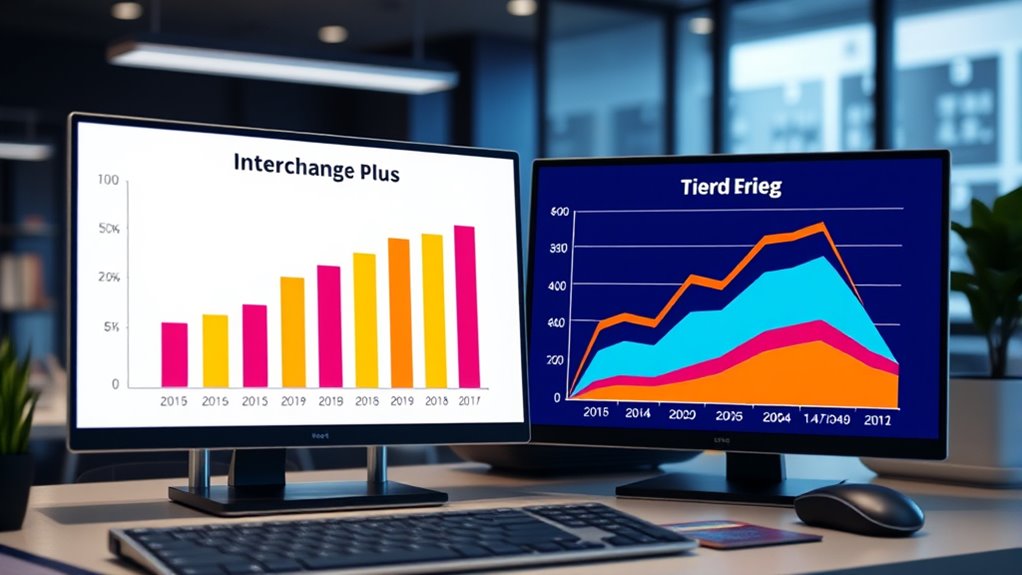
Have you ever wondered how businesses determine the costs of accepting credit and debit card payments? It all comes down to understanding the pricing models that card processors use, primarily interchange plus and tiered pricing. These models directly influence your transaction fees and are shaped by factors like risk assessment, which helps processors decide how much to charge for each transaction. Knowing how these models work can save you money and help you choose the best option for your business.
Understanding credit card fees helps businesses save money and choose the best processing options.
In the interchange plus model, your business pays a base rate called interchange, which is set by the card networks like Visa or Mastercard, plus a small markup from the processor. This setup offers transparency because you see the exact interchange fee for each transaction, making it easier to track and manage costs. Your processor assesses the risk involved in each transaction – for example, whether it’s a swiped card, online purchase, or a high-value transaction – and adjusts the transaction fees accordingly. Because of this detailed risk assessment, interchange plus often results in fairer, more predictable costs, especially when your sales volume is high or transactions are straightforward. It’s ideal if you want to avoid hidden fees and have a clear picture of your processing costs.
On the other hand, tiered pricing groups transactions into different levels—qualified, mid-qualified, and non-qualified—based on certain criteria like card type, method of payment, or security features. The processor then applies a preset rate to each tier, which can sometimes obscure the actual costs behind these classifications. This means your transaction fees can vary considerably, especially if your transactions frequently fall into the higher-priced tiers. Tiered pricing relies heavily on risk assessment, but in a less transparent way; the processor determines the tier based on the transaction’s attributes, which can sometimes lead to higher fees if your transactions don’t meet the criteria for the lowest tier. Additionally, some processors may use general ledger coding practices to categorize transactions in a way that benefits their fee structure. While tiered pricing might seem simpler, it can mask the true costs and make it harder to predict expenses, especially if your sales mix shifts.
Ultimately, understanding the differences between these models helps you make smarter decisions. If transparency and predictability matter most, interchange plus is often the better choice. If convenience and simplicity appeal to you, tiered pricing might seem easier, but it could cost more in the long run. Both models involve risk assessment to determine transaction fees, but they do so in different ways, affecting your overall costs. By comparing these options carefully, you can choose a pricing structure that aligns with your business’s needs and minimizes unnecessary expenses.

Square Terminal – Credit Card Machine to Accept All Payments | Mobile POS
With Square Terminal, you can ring up sales, accept payments, and print receipts, all with one device. Use…
As an affiliate, we earn on qualifying purchases.
As an affiliate, we earn on qualifying purchases.
Frequently Asked Questions
Which Pricing Model Benefits High-Volume Merchants the Most?
You benefit most from the interchange plus pricing model if you’re a high-volume merchant. This model offers volume discounts and greater pricing transparency, helping you understand your costs clearly. Unlike tiered pricing, which can hide fees, interchange plus lets you see exactly what you’re paying for each transaction. As your volume increases, you can negotiate better rates, saving money and optimizing your profit margins.
How Does Interchange Plus Pricing Impact Overall Transaction Costs?
Interchange plus pricing helps lower your overall transaction costs by providing transparency and allowing dynamic negotiations with processors. You can better understand fees linked to each transaction, making it easier to identify areas for savings. However, keep in mind that it may also introduce compliance challenges, as you need to stay updated with interchange rate changes and ensure your processing practices meet industry standards. Overall, it gives you clearer cost control.
Are Tiered Pricing Plans Suitable for Small Businesses?
Is a tiered pricing plan a good fit for your small business? Think of it as a double-edged sword—offering pricing flexibility but often hiding costs. While tiered plans can simplify billing, they might lead to higher charges if you process varied transactions frequently. For small businesses seeking transparency and cost control, tiered pricing may not be ideal. Instead, consider options that give you clearer insights into your transaction costs.
What Are the Hidden Fees Associated With Tiered Pricing?
With tiered pricing, you might encounter surcharge fees and hidden costs that aren’t obvious upfront. These extra charges can add up unexpectedly, making your processing more expensive over time. Surcharge fees are often applied for certain card types or transactions, while hidden costs may include monthly minimums or PCI compliance fees. Always review your contract carefully to avoid surprises and understand all potential costs involved.
How Can Merchants Switch Between Pricing Models Easily?
Ever wondered how you can switch pricing models effortlessly? You should start by reviewing your current contract negotiations to understand flexibility, then coordinate with your payment processor for seamless software integration. Contact your provider to discuss options, as many offer streamlined change procedures. Does your current setup allow easy model changes? Taking these steps ensures a smooth shift without disrupting your transactions or incurring unnecessary fees.
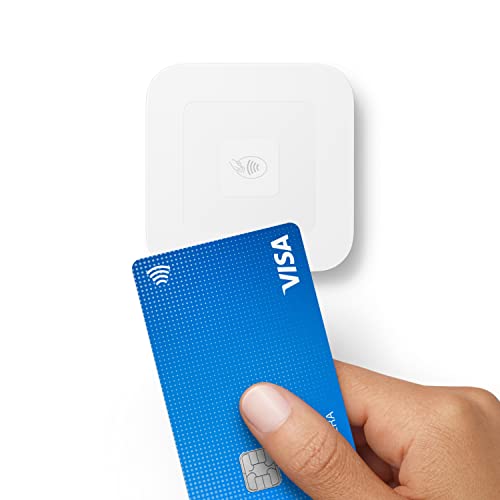
Square Reader for contactless and chip (2nd Generation)
Use the, easy-to-use, and customizable POS to get started.
As an affiliate, we earn on qualifying purchases.
As an affiliate, we earn on qualifying purchases.
Conclusion
Choosing between interchange plus and tiered pricing is like selecting the right map for your journey—interchange plus offers clarity like a straight highway, while tiered pricing feels like charting a winding trail with hidden turns. By understanding each model’s terrain, you can steer your business smoothly toward savings and transparency. Remember, the right choice lights the path ahead, helping you avoid costly detours and reach your destination with confidence.
Square Terminal – Credit Card Machine to Accept All Payments | Mobile POS
With Square Terminal, you can ring up sales, accept payments, and print receipts, all with one device. Use…
As an affiliate, we earn on qualifying purchases.
As an affiliate, we earn on qualifying purchases.
Square Terminal – Credit Card Machine to Accept All Payments | Mobile POS
With Square Terminal, you can ring up sales, accept payments, and print receipts, all with one device. Use…
As an affiliate, we earn on qualifying purchases.
As an affiliate, we earn on qualifying purchases.