🔍 Read the full analysis: DeepSeek Runs On Gaming Hardware, With Safety And Censorship Linked on ThorstenMeyerAI.com

Get business pricing on office and shipping supplies
- Business-only prices and quantity discounts
- Tax-exempt purchasing
- Multiple users, one account, clear invoices
TL;DR
AtomicChat has published a modified DeepSeek-V4.1-Flash-1017 model that it says can run using a 12GB graphics card and removes refusals across topics. Its performance and safety-test figures are self-reported, while the political effects of removing refusals have not been measured. Running it also requires substantial system RAM and storage, according to the developers.
The Hugging Face repository, named DeepSeek-V4.1-Flash-1017-Uncensored-GSQ-RCO-GGUF, combines DeepSeek’s model, compression work from IST Austria’s ISTA-DASLab and Strata software, and AtomicChat’s refusal-removing edit. The projects have different roles: the lab’s compression methods reduce the model’s memory footprint, while AtomicChat says its modification targets a refusal-related direction in the model. The compression research itself is not described as a safety intervention.
AtomicChat reports that its version’s refusal rate on JailbreakBench fell from 85.2% to 0.0%, with reasoning scores maintained. The source article says these numbers were supplied by the publisher, not independently checked. AtomicChat’s model card also warns that its refusal classifier reads the beginning of an answer, meaning a “soft refusal” later in a response could be counted as an answer. The reported result should not be read as proof that the model can never refuse or that every harmful prompt will produce a harmful answer.
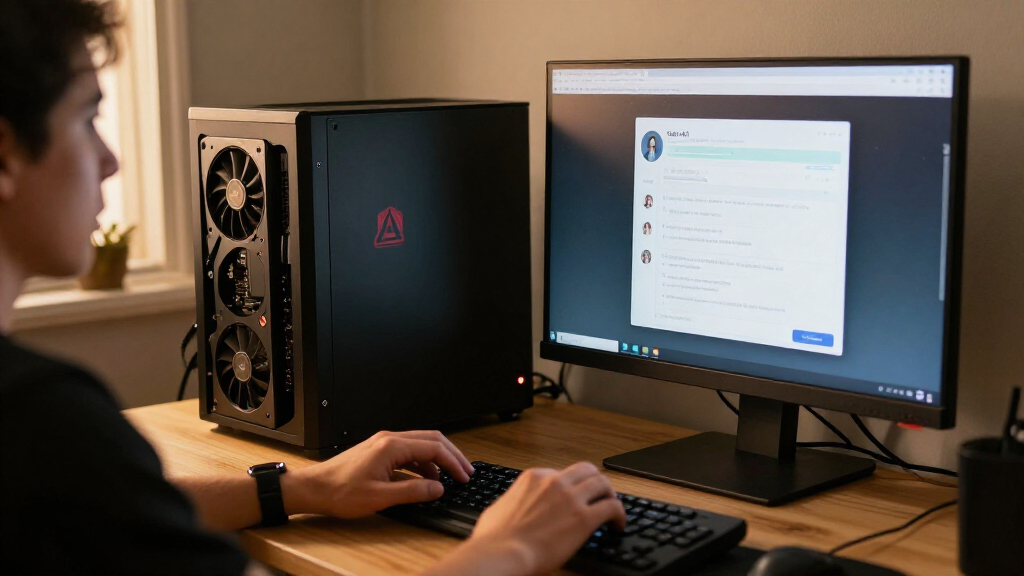
The 12GB graphics-card claim also comes with substantial requirements. According to the developers’ tests, running the model calls for about 46 to 64GB of system RAM, roughly 250GB of downloads and performance of around 5 to 10 tokens per second. The setup relies on Strata keeping much of the model in system memory; the GPU figure does not mean the entire model fits in 12GB of graphics memory or that it will run smoothly on any ordinary PC.
Infographic 01 · From a paper to a gaming PC
“Uncensored” is two years old. The new part is the size.
How a 2024 research finding, an MIT licence, a compression lab and a hobby engine put a 763-billion-parameter model on one 12 GB graphics card.
- 15 Aug 2023China’s generative AI rules take effectServices must “(u)phold the Core Socialist Values”
- Jun 2024Refusal is “a single direction”Shown across 13 open chat models up to 72B; removing it stops refusals
- Sep 2025US evaluators: censorship sits in the weightsNIST CAISI on older DeepSeek models (R1, R1-0528, V3.1), not V4.1
- 10 Sep 2026DeepSeek-V4.1-Flash released under MITFirst uncensored forks within hours, per Tech Insider
- 17 Oct 2026Update V4.1-Flash-1017Weights on Hugging Face and ModelScope; no safety statement
- 24 Oct 2026A free hobby engine adds the modelStrata 0.2.4: one 12 GB GPU, the rest streamed from RAM and SSD
- 3 Nov 202612,613 models tagged “abliterated”Hugging Face tag filter; several V4.1-Flash builds on page one
Hardware figures from the Strata release notes and the ISTA-DASLab model card (publisher figures). “Consumer hardware” here means a well-equipped gaming or workstation PC, not a laptop.
Sources: DeepSeek model card, DeepSeek, 17 Oct 2026, Arditi et al., arXiv 2406.11717 (2024), NIST CAISI, 30 Sep 2025 (older models), FPF on China's Interim Measures, Tech Insider, Strata release notes 0.2.4/0.2.5 (24/25 Oct 2026), ISTA-DASLab model card, Hugging Face model search (3 Nov 2026).
Powered by Thorsten Meyer AI
A Local Model Outside Company Controls
The practical change is the combination of a very large model, a refusal-removing edit and a route to run it locally. If a user runs the software offline, prompts and outputs may not pass through a commercial AI provider’s gateway. That can support privacy and reduce reliance on a platform’s content rules, but it can also put use outside an organization’s usual logging, access controls and policy checks.
For companies, the source article identifies shadow AI as a realistic concern: staff could run a capable model on a desktop without the monitoring used for approved services. Removing refusals also removes one internal restraint, though it does not by itself establish that a model will comply with every harmful request. For individuals, “uncensored” does not mean accurate or politically neutral. The publisher’s stated edit removes refusals broadly, and users remain responsible for how they use the software and for applicable rules.
The source also notes that obligations under the EU AI Act depend on how a system is used, rather than simply on who altered its refusals. That is a general description in the source, not legal advice about a particular deployment. Organizations considering local models still need to evaluate their intended use, safeguards and compliance responsibilities.
Products Worth Considering

Apple MacBook Pro 14 2021 with M1 Max, 64GB RAM, 2TB SSD, Silver

Apple Mac mini Desktop Computer with M4 chip, 10‑core CPU and GPU, 24GB Unified Memory, 512GB SSD, Gigabit Ethernet

Apple MacBook Pro 16-inch (2021) with M1 Max, 64GB RAM, 1TB SSD
As an affiliate, we earn on qualifying purchases.
Three Projects, One Published Build
DeepSeek released V4.1-Flash on September 10, 2026, then issued the 1017 update on October 17. Its announcement described the update as “a Pareto improvement in performance and cost” and, according to the source, did not discuss safety. The model card says the weights are under the MIT License and contains no acceptable-use policy. That licensing information does not establish that every use is lawful or risk-free.
The hardware claim depends on work by ISTA-DASLab, a compression lab at the Institute of Science and Technology Austria, and Strata, a free hobbyist engine. Those tools reduce the resources needed to operate a large mixture-of-experts model by placing much of it in system memory. AtomicChat then applied its separate edit to remove refusals. The repository says its larger expert blocks were left as shipped by ISTA, but the source reports that no outside party had verified this.
Refusal-removing models are not new. The source says a 2024 research paper described refusal behavior as associated with “a single direction,” and that the Hugging Face “abliterated” tag listed 12,613 models on November 3, 2026. Those figures provide a snapshot, not evidence that all listed models work alike. The source also says other modified DeepSeek builds were available, including one with about 366,000 downloads; that count is not a measure of active users or of safety.
““The edit removes refusals across topics; it does not keep a narrower set of them.””
— AtomicChat, in the repository’s model card
Safety Effects Still Unmeasured
The largest unanswered question is whether removing refusals also changes the political slant of the model’s answers. The source says U.S. government evaluators found built-in Chinese Communist Party censorship in older DeepSeek versions, but reports that the political effects of this modification have not been measured. It is not confirmed that the edit removes that slant, preserves it or changes it in another way.
AtomicChat’s benchmark figures and reasoning-score claim remain self-reported. No independent replication is cited, and the source says outside researchers had not checked whether the edit left the compressed expert blocks unchanged. The precise performance on different computers, the model’s behavior across a broad range of prompts and the extent to which the benchmark captures harmful outputs are also not established by the provided material.
The source’s hardware estimates come from developers’ own tests. Actual speed and usability may vary with memory, storage and configuration; the account provides no independent hardware evaluation. Download counts and likes recorded on November 3 are platform observations, not a verified tally of unique users or real-world use.
Independent Tests Are the Next Check
The immediate next step is independent testing of the repository’s JailbreakBench results, reasoning scores and refusal behavior, including checks for refusals that appear later in answers. Researchers would also need to compare the modified model’s political responses with the original and test whether the publisher’s description of the edit matches the files in the repository.
Hardware reviews on different systems could clarify how reliably the model runs with a 12GB GPU and the stated RAM and storage requirements. Until those checks are available, the reported figures remain publisher claims rather than independently confirmed performance. The source material does not identify a scheduled audit, new release or response from DeepSeek about AtomicChat’s modification.
Key Questions
What did AtomicChat publish?
It published a modified DeepSeek-V4.1-Flash-1017 build on Hugging Face, combining DeepSeek’s model with third-party compression tools and AtomicChat’s refusal-removing edit.
Does the whole model fit into 12GB of graphics memory?
No. The developers’ claim is that the model can run using a single 12GB GPU while relying on about 46 to 64GB of system RAM. They also cite roughly 250GB of downloads and speeds of around 5 to 10 tokens per second.
Has the reported zero-refusal result been independently verified?
Not in the source material. The 0.0% refusal figure is AtomicChat’s self-reported JailbreakBench result, down from its reported 85.2% for the original. The source says the figures have not been independently replicated.
Does the edit remove political bias or censorship?
That has not been established. The publisher says the edit removes refusals across topics, but the source says nobody has measured whether DeepSeek’s political slant changes as a result.
Does “uncensored” mean the model is accurate or safe to use?
No. The term describes the publisher’s refusal-removing modification; it does not establish that outputs are true, neutral or safe. The publisher says users are responsible for their use of the model and for following applicable laws.
Source: ThorstenMeyerAI.com