
📊 Full opportunity report: Software-Defined Warfare: How Ukraine’s Delta Turned The Battlefield Into A Shared, Real-Time Map on ThorstenMeyerAI.com — validation score, market gap, and execution plan.

Get business pricing on office and shipping supplies
- Business-only prices and quantity discounts
- Tax-exempt purchasing
- Multiple users, one account, clear invoices
TL;DR
Ukraine’s Delta system employs cloud-native, browser-based technology to fuse battlefield data in real time, enabling faster decision-making and wider troop access. Its deployment marks a shift toward software-defined warfare, emphasizing data and software over hardware.
Ukraine’s military has confirmed the deployment of Delta, a cloud-native battlefield management system that integrates real-time data from drones, satellites, and reconnaissance units, accessible via any standard browser. This development significantly enhances Ukraine’s situational awareness and operational speed, marking a notable shift toward software-defined warfare.
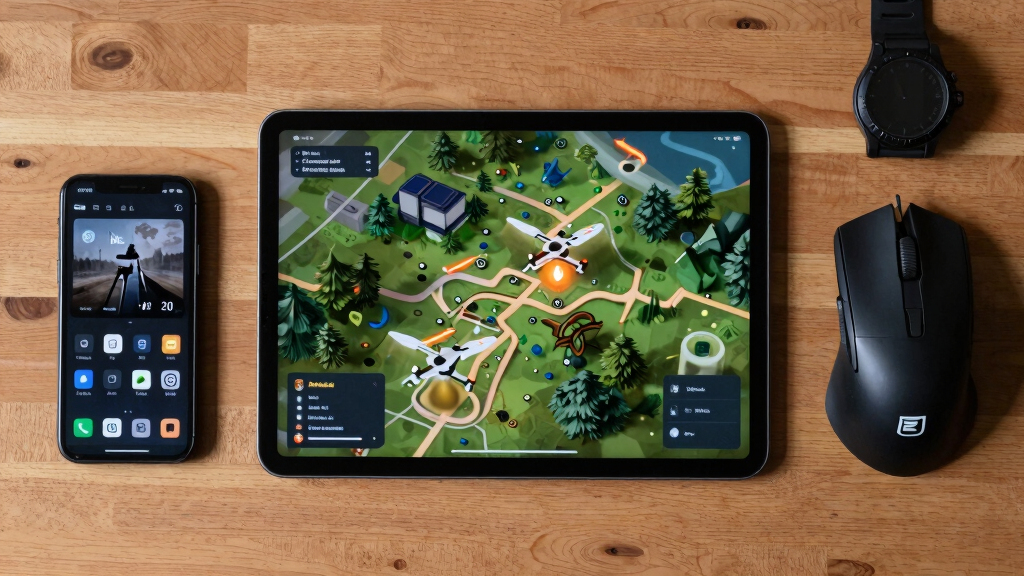
Delta is a collaborative project involving Ukraine’s Ministry of Digital Transformation, the defense-technology innovation center, and NGO Aerorozvidka. It aggregates inputs from diverse sources—military drones, civilian sensors, satellite imagery, and allied intelligence—geolocating and mapping enemy assets in real time. The system’s backend resides in a cloud environment hosted outside Ukraine, protecting it from missile and cyber threats, while front-end access is possible on standard devices like phones and laptops, eliminating the need for specialized hardware.
Ukraine’s Defense Ministry credits Delta with identifying approximately 1,500 enemy targets daily during the early counteroffensive near Kyiv, although these figures are based on self-reporting and lack independent verification. The system’s design emphasizes rapid decision-making by shortening the ‘decision loop’—the time from observation to action—by integrating reconnaissance, targeting, and command functions into a unified digital fabric.
Software-defined warfare: how Ukraine’s Delta turned the battlefield into a shared, real-time map
A soldier opens a browser and sees the fused war — drones, satellites, sensors and vetted reports on one live map. The backend is a cloud deliberately hosted abroad so a missile can’t take it down. The clearest case yet of treating warfare as software.
Optical sensors go blind in cloud & dark; an all-weather SAR radar layer — the kind VigilSAR produces — slots into a picture like this as one resilient, sovereign input. vigilsar.com · And note the paradox: to survive missiles & cyberattack, Ukraine hosted its crown-jewel cloud outside its own borders — trading physical sovereignty for operational survivability. Resilience through distribution.
Delta’s lasting lesson isn’t a piece of software — it’s a model of how to build: commodity clients, cloud backend, open standards, relentless iteration, fusion over hardware, and resilience through distribution. It’s why a wartime NGO out-shipped procurement bureaucracies on a fraction of the budget. The platform mattered less than the picture — and the picture is software. Own the fusion layer, own the sovereign feeds into it, and get it to the edge.
Implications of Cloud-Based, Browser-Accessible Warfare Systems
Delta exemplifies a paradigm shift in military operations, where software and data take precedence over traditional hardware platforms. Its deployment demonstrates how agile, software-driven systems can extend battlefield reach, improve coordination, and enhance resilience against cyber and missile attacks. This approach could influence future military procurement and operational doctrines globally, emphasizing interoperability, rapid iteration, and resilience.
browser-based battlefield management system
As an affiliate, we earn on qualifying purchases.
As an affiliate, we earn on qualifying purchases.
Evolution Toward Software-Defined Warfare in Ukraine
The development of Delta traces back to NATO initiatives aimed at breaking down information silos and promoting horizontal sharing of intelligence among allied units. Since 2017, Ukraine has adopted a startup-like approach—collaborating with NGOs, defense innovation centers, and digital ministries—to rapidly develop and deploy military software. This contrasts with traditional defense procurement, which often involves slow, bespoke systems. Delta’s architecture embodies this shift, leveraging commodity hardware and cloud infrastructure to democratize battlefield data access.
“Delta is a game-changer in how we see and respond to threats on the battlefield. It shortens the decision cycle and empowers frontline troops with real-time intelligence.”
— Mykhailo Fedorov, Ukraine’s Minister of Digital Transformation
As an affiliate, we earn on qualifying purchases.
Unverified Claims and Operational Security Limits
While Ukraine reports high target identification numbers and operational success, independent verification of these figures is lacking. Details about the precise integration of Delta with drone swarms and the full extent of its battlefield impact remain classified or undisclosed. Additionally, the long-term resilience of hosting cloud components outside Ukraine, especially against sophisticated cyber or missile attacks, is still under assessment.
As an affiliate, we earn on qualifying purchases.
Future Deployment, Expansion, and Evaluation of Delta
Ukraine plans to expand Delta’s capabilities, including integrating additional sensors and refining data fusion algorithms. International partners and military analysts will likely observe its impact on battlefield dynamics and interoperability. Ongoing evaluations will determine how other militaries might adopt similar software-centric approaches, and whether Ukraine’s model influences broader defense strategies.
As an affiliate, we earn on qualifying purchases.
Key Questions
How does Delta differ from traditional battlefield management systems?
Delta is cloud-based, runs on standard devices via browsers, and integrates diverse data sources in real time, unlike traditional systems that rely on proprietary, hardware-locked terminals and siloed information.
What are the security concerns with hosting Delta’s cloud outside Ukraine?
Hosting outside Ukraine helps protect Delta from missile and cyber attacks, but it raises questions about sovereignty and vulnerability to foreign cyber threats, which Ukraine is actively managing.
Can other countries replicate Ukraine’s Delta system?
While the software architecture is adaptable, replicating Delta depends on technical, logistical, and political factors, including access to similar data sources, infrastructure, and interoperability standards.
What is the significance of using commodity hardware for battlefield operations?
Using commodity hardware reduces costs, increases accessibility, and allows rapid deployment and updates, making military systems more agile and resilient.
Will Delta’s success influence future NATO or allied military strategies?
Potentially, as Delta exemplifies a shift toward software-centric, interoperable, and resilient battlefield systems, which many militaries are studying for future modernization.
Source: ThorstenMeyerAI.com
Fall Picks
fall essentials
As an affiliate, we earn on qualifying purchases.