
TL;DR

Get business pricing on office and shipping supplies
- Business-only prices and quantity discounts
- Tax-exempt purchasing
- Multiple users, one account, clear invoices
South Korea’s SK hynix warns of a significant memory capacity shortage amid soaring AI demand, with no new capacity planned for 2026. This shortage could impact global AI development and geopolitical stability.
South Korea’s SK hynix has warned that a significant memory capacity shortage is imminent as AI demand accelerates faster than supply can keep up, with no meaningful new capacity expected in 2026. This development raises concerns over the future of AI growth and geopolitical stability, as memory access becomes a strategic issue.
During a press briefing at the Korea Chamber of Commerce and Industry’s Jeju Forum, Chey Tae-won, chairman of SK Group, stated that customers are requesting 60 to 100 percent more AI memory in 2027 than current levels. He estimated overall demand growth at 50–60 percent, driven by AI now accounting for more than half of total semiconductor consumption.
Chey emphasized that no new capacity is expected to come online next year, creating a capacity shortfall that could lead to increased prices, supply chain disruptions, and geopolitical tensions. He highlighted that the imbalance is most acute in high-bandwidth memory (HBM), critical for AI accelerators, which is dominated by three companies, with SK hynix holding a 58 percent share of global HBM revenue.
Despite the demand surge, SK hynix announced investments to expand capacity, including a new clean room scheduled for February 2027 and a shift of its Cheongju plant into a dedicated HBM facility, but these developments will not address the immediate shortfall in 2026. The company projects a 33 percent CAGR for HBM through 2030, but capacity increases are not yet in place.
Implications of Memory Shortage on AI and Geopolitics
The warning from SK hynix underscores a critical bottleneck in AI development—the availability of high-bandwidth memory. As demand outpaces supply, device costs could rise, and access to essential hardware may become a geopolitical tool. The concentration of HBM capacity among three firms amplifies risks of supply disruption, potentially influencing global AI competitiveness and economic security.
Furthermore, the warning suggests that current high memory prices are unsustainable, risking a correction that could slow AI progress and increase costs for device manufacturers and consumers. The situation highlights the importance of diversifying supply chains and investing in capacity to avoid strategic vulnerabilities.
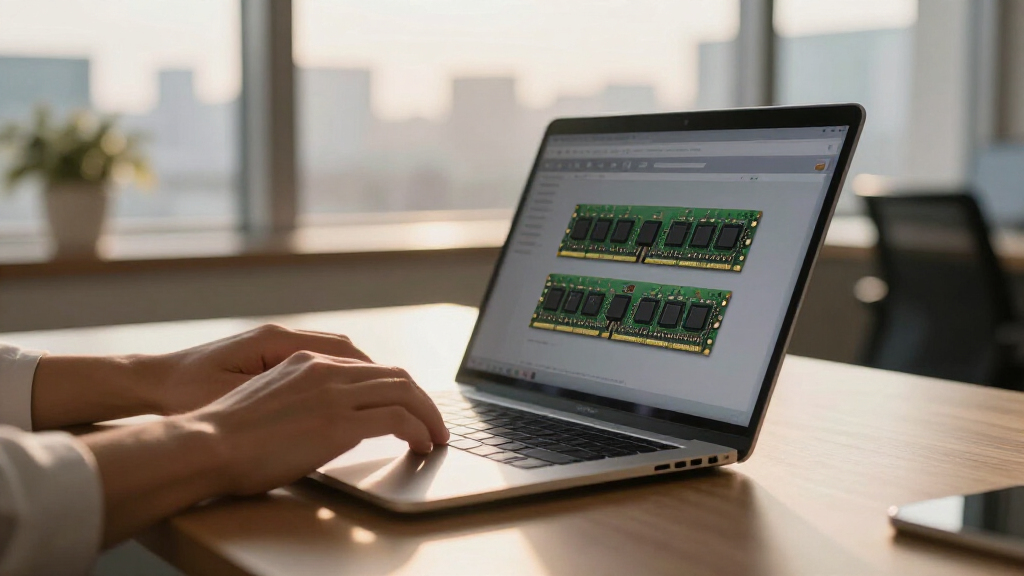
High Bandwidth Memory (HBM) modules
As an affiliate, we earn on qualifying purchases.
As an affiliate, we earn on qualifying purchases.
Memory Industry Concentration and Demand Trends
SK hynix currently controls approximately 58 percent of global HBM revenue, with Micron and Samsung each holding about 21 percent. This oligopoly means that capacity constraints are concentrated in a few firms, making the supply chain vulnerable to disruptions. The demand for HBM has grown rapidly, with industry projections indicating a 33 percent CAGR through 2030.
Meanwhile, the broader semiconductor industry faces a capacity gap, as no significant new memory manufacturing capacity is scheduled to come online in 2026. SK hynix’s investments aim to address this, but the timing suggests a capacity shortfall in the immediate future.
Additionally, the industry faces geopolitical pressures, with some governments viewing memory access as a matter of economic security, further complicating capacity expansion efforts.
“No company has meaningful new capacity coming online next year.”
— Chey Tae-won, SK Group Chairman
As an affiliate, we earn on qualifying purchases.
Uncertainties Surrounding Capacity Expansion and Geopolitical Impact
While SK hynix has announced plans to expand capacity, it remains uncertain whether these investments will sufficiently bridge the 2026 shortfall. The timing of capacity increases suggests a significant gap in 2026, but the full geopolitical implications and potential for government intervention are still developing. It is also unclear how other memory suppliers will respond to the demand surge and geopolitical pressures.
As an affiliate, we earn on qualifying purchases.
Next Steps in Memory Industry and AI Development
Industry stakeholders will closely monitor SK hynix’s capacity expansion efforts and the global response to the memory shortage. Further investments, potential new entrants, and geopolitical developments are expected to influence supply dynamics. Additionally, device manufacturers and governments may prioritize alternative memory architectures or supply chain diversification to mitigate risks. The industry will also watch for any policy measures aimed at alleviating or exacerbating the capacity bottleneck.
As an affiliate, we earn on qualifying purchases.
Key Questions
What is causing the memory shortage for AI?
The rapid growth in AI demand, particularly for high-bandwidth memory (HBM), combined with limited new capacity coming online in 2026, is creating a supply shortfall.
Why is memory capacity so concentrated among a few companies?
SK hynix, Micron, and Samsung dominate the HBM market, with SK hynix holding a majority share, leading to supply chain risks if capacity cannot meet demand.
How could this shortage impact AI development?
The shortage could lead to higher hardware costs, slower deployment of AI models, and increased geopolitical tensions over access to critical memory resources.
What are SK hynix’s plans to address the capacity gap?
The company announced investments including a new clean room scheduled for February 2027 and converting a plant into a dedicated HBM facility, but these will not solve the immediate 2026 shortfall.
Could geopolitical issues worsen the memory shortage?
Yes, governments are increasingly viewing memory access as a matter of economic security, which could lead to restrictions or interventions affecting supply and capacity expansion.
Source: ThorstenMeyerAI.com
Halloween Picks
halloween
As an affiliate, we earn on qualifying purchases.