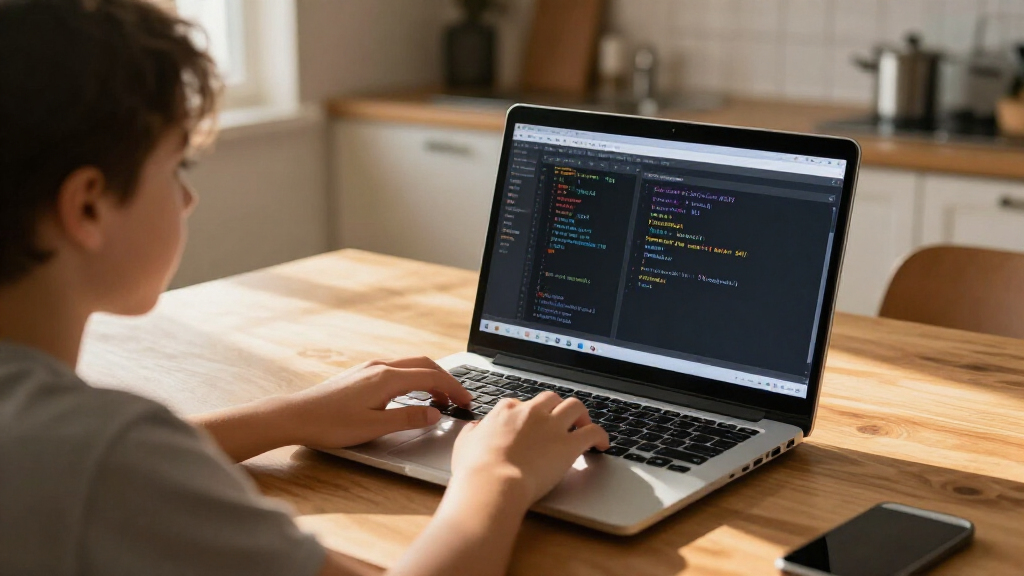

🔍 Read the full analysis: A Student’s Guide To Learning Coding In The Age Of AI on ThorstenMeyerAI.com

Get business pricing on office and shipping supplies
- Business-only prices and quantity discounts
- Tax-exempt purchasing
- Multiple users, one account, clear invoices
TL;DR
AI tools can generate substantial amounts of software code, but evidence does not show that learning programming has become unnecessary. Research cited by ThorstenMeyerAI.com finds mixed productivity results and a difficult entry-level job market, while an Anthropic experiment found weaker learning outcomes among junior developers who relied on AI.
A November 18 report from ThorstenMeyerAI.com argues that students should still learn programming, but pair coding practice with skills in specifying software, testing, debugging and reviewing code. The report points to AI’s growing role in code production, mixed evidence about whether it makes developers faster, and a narrow entry-level job market; it does not establish that programming education is obsolete.
Anthropic said that in May 2026, Claude authored more than 80% of the code merged into the company’s codebase, compared with “the low single digits” before Claude Code launched in February 2025. The company also reported that its typical engineer merged eight times as much code per day in the second quarter of 2026 as in 2024. It cautioned that lines of code measure quantity rather than quality, making the eightfold figure “almost certainly an overstatement” of the productivity gain.
Evidence on speed is less straightforward. In a randomized METR study conducted in early 2025, 16 experienced open-source developers completed 246 real tasks in projects they knew. They expected AI to reduce completion time by 24% and later believed it had reduced time by 20%. The measured result went the other way: developers using AI took 19% longer. METR said a later study offered only “very weak evidence” about how much tools may have improved productivity by early 2026.
The report also describes challenges for new workers and learners. Indeed data show that 4.5% of US software-development job postings were entry-level in the first quarter of 2026, while 69.3% were senior. In an Anthropic experiment, mostly junior developers who used AI while learning a new library scored 50% on a follow-up quiz, compared with 67% among those who coded by hand; debugging showed the largest gap.
The Skills Behind AI-Generated Code
The findings matter because generating code is only one part of building reliable software. Someone still has to define the problem, decide how a change fits into an existing system, test the result and identify security flaws. In the account quoted by the report, Anthropic chief executive Dario Amodei said programmers still need to specify what is being built, how it fits with other code and whether the design is secure.
For students, that suggests a practical distinction: using an AI assistant to produce a working answer is not the same as understanding why it works or whether it is safe. The reported quiz results raise a specific concern about learning by delegation, particularly for debugging. They do not prove that AI always impairs learning, but they support retaining hands-on practice alongside tool use.
The employment figures add a separate concern. A small share of entry-level postings may make it harder for new graduates to get an initial role in which they gain experience. Yet the report says US software-development postings were up about 23% year over year in November 2026, after reaching a low in May 2025. That count indicates a rebound in postings, not a guarantee of hiring or evidence that entry-level opportunities have recovered.
Products Worth Considering

Samsung 32-inch ViewFinity S8 4K UHD IPS Monitor with USB-C and KVM

Logitech MX Master 4 Ergonomic Wireless Mouse with Haptics – Graphite

Samsung 32-Inch ViewFinity S7 4K UHD IPS Monitor
As an affiliate, we earn on qualifying purchases.
From Coding Claims to Measured Results
Amodei made his forecast about AI writing most software code at a March 10, 2025, Council on Foreign Relations event. Anthropic’s later internal figures suggest AI accounts for a large share of code at that company, but they describe a firm that builds AI tools and uses them heavily. The report warns against treating its results as representative of all employers.
Other figures cited are not directly comparable. Google chief executive Sundar Pichai said in October 2024 that AI generated more than a quarter of new code at Google, which engineers then reviewed and accepted. METR cited an estimate in February 2026 that Claude Code authored about 4% of GitHub commits. These figures cover different organizations, periods and measures.
Experiments also test different kinds of work. A 2022 study of 95 professional developers found participants using GitHub Copilot completed a small JavaScript HTTP-server task 55.8% faster. METR’s later trial involved real tasks in large codebases developers already knew. The contrast is a reminder that results from a short, defined exercise may not predict performance on complicated maintenance work.
“The programmer still needs to specify what is being built, how it fits with other code and whether this is a secure design or an insecure design.”
— Dario Amodei, Anthropic chief executive, as quoted in the report from his March 10, 2025, Council on Foreign Relations remarks
What the Evidence Cannot Yet Show
The size of AI’s effect on developer productivity remains unsettled. METR said its follow-up study had an “unreliable signal” as some developers increasingly declined tasks they did not want to do without AI. Its raw estimates suggested tasks took 18% less time for developers from the first study and 4% less for newly recruited developers, but the confidence intervals included no effect. The group described the results as weak evidence about the size of any change.
The available evidence also does not establish how representative Anthropic’s internal code figures are, whether AI-assisted learning has the same effect across subjects and experience levels, or how entry-level hiring will change. The report’s job-posting statistics describe listings, not filled positions, and its November 2026 year-over-year comparison does not show which roles drove the increase.
What Students Should Track Next
The next useful evidence will come from research that compares AI-assisted and unaided work on realistic tasks, measures code quality as well as speed, and follows learners’ understanding over time. Updated labor-market data could also show whether the reported rebound in software-development postings includes more opportunities for new graduates.
For now, the report’s evidence supports a measured approach rather than abandoning programming study: learn to read and write code, practice debugging without relying on generated answers, and use AI tools in ways that leave room to explain and test the result. How employers will weigh those skills, and how quickly entry-level hiring changes, remain open questions.
Key Questions
Does the report say students should stop learning to code?
No. It argues that students should continue learning programming while giving attention to specification, testing, debugging and code review.
How much code did Anthropic say Claude wrote?
Anthropic said Claude authored more than 80% of the code merged into its codebase in May 2026. That is the company’s figure for its own codebase, not a measure of the whole software industry.
Has AI been shown to make developers faster?
Results are mixed. METR’s early-2025 trial found experienced developers took 19% longer with AI on the tested tasks, despite expecting and believing they had worked faster. METR later said its newer data were too weak to establish the size of any subsequent speed-up.
What did the Anthropic learning experiment find?
Mostly junior developers who used AI to learn a new library scored 50% on a follow-up quiz, compared with 67% among developers who coded by hand. The report says the largest gap was in debugging.
Are software-development jobs disappearing?
The figures cited do not establish that. Indeed data showed a small entry-level share of US software-development postings in the first quarter of 2026, while total postings were reported up about 23% year over year in November 2026. Job postings are not the same as hires, and the figures do not settle how demand will change.
Source: ThorstenMeyerAI.com