
🔍 Read the full analysis: How 12 Guides Approach AI Voice Cloning Software For 2027 on ThorstenMeyerAI.com

Get business pricing on office and shipping supplies
- Business-only prices and quantity discounts
- Tax-exempt purchasing
- Multiple users, one account, clear invoices
TL;DR
A comparison published by ThorstenMeyerAI.com lists 12 books and guides for learning AI voice-cloning workflows, from ElevenLabs instruction to Python implementation. The titles are educational resources, not cloning software; readers still need to choose a tool and check its current features, privacy practices and usage rules.
ThorstenMeyerAI.com has published a comparison of 12 guides for people learning AI voice cloning, ranking them by their stated fit for different skill levels and workflows. The titles are books and learning resources, not voice-cloning software, so readers must select and verify a separate service or local model.
The comparison names Mastering ElevenLabs as its leading general learning pick, citing its coverage of cloning alongside generation, dubbing and audio production. It identifies AI Voice Cloning with Python as a closer fit for readers who want to build a local engine, while Clone Your Voice: Easy, No Studio is presented as an accessible option for a first project.
The source also points to ElevenLabs for Beginners 2026 as an accessibility-focused title and says other guides offer broader coverage, including general audio AI, music creation or local AI. The supplied material does not provide a complete, itemized list of all 12 titles or detailed descriptions for each one, so their individual contents cannot be independently compared here.
ThorstenMeyerAI.com says it assessed the titles by how directly they address voice-cloning workflows, how clearly their scope suits a particular skill level and whether they cover practical work beyond creating a sample. The ranking does not assess voice quality, latency, licensing, security or subscription features, which depend on the separate software or model a reader chooses.
The 12 picks
- 1
 Clone Your Voice: Easy, No Studio: The Weekend Guide to AI Voice CloningView on Amazon →
- 2
 Mastering ElevenLabs: A Practical Guide to AI Voice Generation, Voice Cloning…View on Amazon →
- 3
 Suno AI Music Bible: A Guide to Prompt Engineering, Suno Studio, Voice Clonin…View on Amazon →
- 4
 The Complete Guide to ElevenLabs: AI Voice and Audio CreationView on Amazon →
- 5
 AI for Caveman: Build Your Own Forge to Run LLMs, Stable Diffusion, and Voice…View on Amazon →
- 6
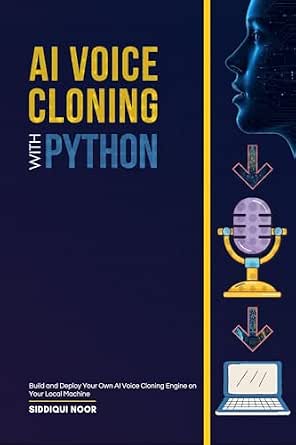 AI Voice Cloning with Python: Build and Deploy a Local Voice Cloning EngineView on Amazon →
- 7
 ElevenLabs: A Complete Guide to AI Voice Generation and CloningView on Amazon →
- 8
 The AI Voice Creator’s Handbook: A Practical Guide to Voice Generation, Cloni…View on Amazon →
- 9
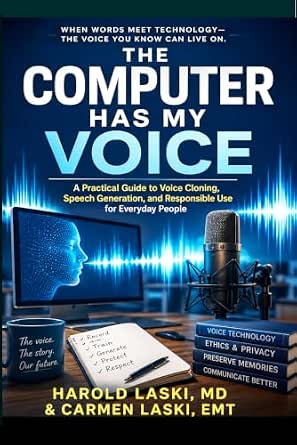 The Computer Has My Voice: An Independent Guide to Voice Cloning, Speech Gene…View on Amazon →
- 10
 AI Voice Cloning: The Complete Guide to ElevenLabs and BeyondView on Amazon →
- 11
 Audio AI for Beginners: Generative AI for Voice Recognition, Text-to-Speech,…View on Amazon →
- 12
 ElevenLabs for Beginners 2026: A Step-by-Step Guide to AI Voice GenerationView on Amazon →
Choosing a Workflow Before a Tool
The comparison distinguishes between learning to use a hosted service and building or running a local voice-cloning workflow. Hosted platforms can reduce setup requirements, while coding-focused approaches may offer more control over the environment and data handling and require users to manage installation, dependencies and troubleshooting.
The guides address different project needs and skill levels. A guide focused on a hosted platform may not cover local deployment, while an introductory guide may not provide the technical detail needed to build a workflow. The source advises readers to check a guide’s scope and examples rather than rely on its title or a list of topics to determine whether it includes step-by-step instruction.
Voice data raises privacy and consent considerations. The comparison recommends obtaining permission from the speaker and reviewing a provider’s rules and data practices before recording or uploading audio. A local workflow can affect where data is processed, but users still need to use a voice responsibly.
Products Worth Considering

Apple iPad Air (4th Generation, 10.9-inch, Wi-Fi, 256GB) – Space Gray

Logitech MX Master 4 for Mac, Ergonomic Bluetooth Mouse with Haptic Feedback, Ultra-Fast Scrolling, USB-C Charging, for MacOS, iPadOS, Windo

Canon imagePROGRAF PRO-1100 17-Inch Professional Wireless Inkjet Photo Printer
As an affiliate, we earn on qualifying purchases.
How the Guide Rankings Were Set
The source says its ordering reflects each title’s apparent usefulness as a learning resource, with beginner accessibility, technical depth and topic fit shaping each guide’s role. It gives credit to material that connects cloning with adjacent tasks such as dubbing, narration, editing, deployment or production, while acknowledging that a narrower book can be more useful for a specific audience.
The comparison is not a current software review. It says platform examples and instructions can age as services change, and readers should separately verify tool availability, account requirements and current documentation. The source material describes the selection approach and several highlighted titles but does not establish the publication date, provide the full ranking, or report independent tests of the books.
“The main tradeoff is between a guided path through a hosted service and the extra control—and setup work—of a local workflow.”
— ThorstenMeyerAI.com comparison
What the Comparison Leaves Open
The supplied source does not name all 12 titles, show their complete order or provide enough detail to verify each guide’s contents. It also does not specify when the comparison was published or confirm that editions and platform instructions will remain current through 2027.
No software products are evaluated for audio fidelity, processing speed, pricing, licensing or security. Those details remain dependent on the chosen provider or model, and the source offers no independent test results or confirmation of current service features. Readers should check current product documentation and terms before choosing a workflow.
Checks Before Starting a Project
Readers can start by identifying whether they need a hosted platform walkthrough, a first-project guide or coding instruction for a local workflow, then reviewing the guide’s contents for relevant setup and production steps. Before using any separate cloning service, they should confirm current availability, account requirements, data storage and deletion practices, and rules for consent and commercial use.
The comparison does not announce a follow-up review or software test. Any later assessment would need to distinguish updated book instructions from changes to the tools themselves; for now, the source’s recommendations should be read as guidance on learning resources, not as confirmation of what a particular voice-cloning product can currently do.
Key Questions
Are the 12 listings voice-cloning applications?
No. The comparison describes them as books and guides that teach workflows. Readers need separate software or a local model to create cloned speech.
Which guide does the comparison recommend for broad learning?
It names Mastering ElevenLabs as its general learning pick, citing coverage of cloning, generation, dubbing and audio production. This is the source’s assessment, not a software performance test.
Which title is aimed at readers who want to code?
AI Voice Cloning with Python is presented as the closer fit for readers seeking implementation skills and a local engine. A coding workflow can require additional setup and troubleshooting.
Does the comparison establish which software is best?
No. It does not rank software by voice quality, latency, cost, security or licensing. Those factors must be checked against the current terms and documentation of the service or model a reader selects.
What should users check before cloning a voice?
Get clear permission from the speaker, review the chosen provider’s rules for consent and permitted use, and understand how recordings are stored and accessed. The source says a local setup does not remove the need for responsible use.
Source: ThorstenMeyerAI.com