
📊 Full opportunity report: Selfie Tracking Brings A Visual Lens To Skincare Routines on IdeaNavigator AI — validation score, market gap, and execution plan.

Get business pricing on office and shipping supplies
- Business-only prices and quantity discounts
- Tax-exempt purchasing
- Multiple users, one account, clear invoices
TL;DR
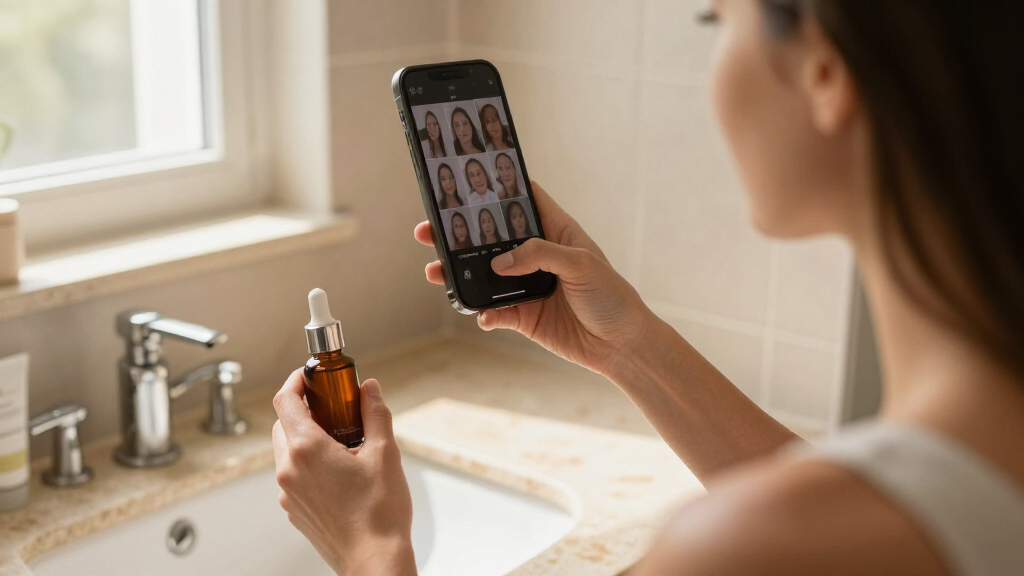
IdeaNavigator AI has proposed testing a skincare app that uses guided weekly selfies to track changes in skin texture, tone and blemishes. The plan calls for a 12-week trial with 500 users, including comparisons with dermatologist photo assessments, but no trial results or validated performance figures are available.
IdeaNavigator AI has proposed a skincare-tracking app that would use guided weekly selfies to measure changes in skin texture, tone evenness and blemishes. The concept includes a proposed 12-week test with 500 users, but the plan is not evidence that the app has been built or that its measurements have been validated.
The proposed app is aimed at people who spend money on skincare products but have difficulty telling whether their routines are helping. The concept describes routines costing $50 to $200 a month and says users may rely on memory and changing bathroom lighting to judge results. That spending range is part of the proposal’s framing, not a reported survey or independently established market statistic.
For its minimum viable product, IdeaNavigator AI proposes a guided weekly photo flow designed to standardize selfie alignment and lighting. The app would then score selected skin measures over time, record when users change their routines and report which changes came before measurable improvement. The plan does not specify the model’s technical design, scoring scale or what level of change would count as meaningful.
The suggested business model combines a paid subscription with affiliate revenue from products associated with user improvement. The proposed validation would recruit 500 users for 12 weeks, compare app metrics with dermatologist assessments of photos for a subset of participants, and track retention. No recruitment details, dermatologist partners, results or commercial launch information are supplied.
Testing Whether Photos Can Track Change
The concept addresses a practical difficulty for skincare users: many changes happen gradually, making it hard to judge a product’s effect from day to day. Standardized images could give users a more consistent record than memory alone, particularly when the same lighting, angle and timing are used. That possibility is the product’s central proposition, not a demonstrated outcome.
Whether the tool is useful depends on more than detecting visual differences. A score would need to remain reasonably consistent across capture conditions and distinguish routine-related changes from other influences, such as natural variation or changes in how a photo is taken. The proposed comparison with dermatologist photo assessments could offer an initial check on the app’s measurements, but the plan does not say how many images would be reviewed or how agreement would be assessed.
The proposed affiliate component also makes transparency relevant. If the app recommends or links products while earning commission, users would need to understand how those commercial relationships affect recommendations. The concept does not describe a recommendation policy or safeguards against treating a correlation as proof that a product caused an improvement.
smart skincare mirror with lighting
As an affiliate, we earn on qualifying purchases.
As an affiliate, we earn on qualifying purchases.
From Selfies to Routine Records
The product idea combines two functions: tracking selected visual features and keeping a timeline of skincare routine changes. Its stated focus is a narrow first use case—helping a skincare buyer judge whether a routine is working—rather than providing a diagnosis or a full dermatology service. No diagnostic role is specified in the plan.
The proposed workflow depends on repeated, comparable images. Guided capture and lighting normalization are intended to reduce some variation between weekly photos, while annotations would give the measurements a record of what products or routines were changed. The concept suggests skin-metric models can assess texture, tone evenness and blemish counts, but it provides no accuracy figures, testing documentation or independent assessment to support that capability.
IdeaNavigator AI frames the opportunity around consumer spending on skincare and the difficulty of observing gradual progress. Its proposal is best read as an early product and validation outline: it identifies a target user, a possible feature set, a revenue approach and a test plan. It does not announce a completed study, a deployed product or a proven method for determining which products work.
guided selfie skincare tracker app
As an affiliate, we earn on qualifying purchases.
As an affiliate, we earn on qualifying purchases.
Accuracy and Trial Status Remain Unknown
No results are reported for the proposed 500-person cohort, and it is not clear whether recruitment has begun or whether the app exists beyond the concept stage. The publication gives no launch date, team or product name, and identifies no participating dermatologists.
Important measurement details are also missing. The plan does not explain how the app would score texture, tone or blemishes, how it would handle different skin tones and skin conditions, or whether users would receive guidance on taking photos consistently. It also provides no sensitivity, error-rate or repeatability results. A comparison with dermatologist assessments is proposed for a subsample, but its size and evaluation method are not stated.
The proposed tracking could show that a change in a routine came before a visual change, but that sequence alone would not establish that the product caused the change. Other factors may contribute, and the outline does not describe how a study would account for them. The claimed potential to identify routine changes associated with improvement remains a hypothesis to test.
dermatologist-approved skin assessment device
As an affiliate, we earn on qualifying purchases.
As an affiliate, we earn on qualifying purchases.
A Cohort Would Test the Proposal
The next stated milestone is a 12-week cohort of 500 users, with app-generated measures compared against dermatologist photo assessments for a subset and retention measured across the group. Those steps could help establish whether participants keep using the tracker and whether its scores align with human review. No schedule or confirmation that the study is underway has been provided.
Before the idea can be judged as a consumer product, further details would be needed on measurement performance, image handling and privacy, the study’s design, and how affiliate links would be disclosed. Until testing produces results, the app’s ability to measure skincare progress—and to connect that progress to a specific routine change—remains unverified.
Source: IdeaNavigator AI
As an affiliate, we earn on qualifying purchases.
Key Questions
Has the selfie-based skincare app launched?
No launch is reported. IdeaNavigator AI describes a product concept and proposed test plan; it does not provide a product release date or say that the app is available.
What would the app measure?
The proposed app would track visual measures of skin texture, tone evenness and blemishes using guided weekly selfies. The scoring method and its accuracy have not been reported.
Has the app been shown to identify products that work?
No evidence of that is provided. The concept proposes recording routine changes and comparing them with later measurements, but a change occurring beforehand would not by itself prove that a product caused the improvement.
What is the proposed validation plan?
The outline calls for a 12-week cohort of 500 users, dermatologist assessments of photos for a subset, and measurement of user retention. Whether the cohort has started, and what its results are, is not stated.
Source: IdeaNavigator AI
Fall Picks
fall essentials
As an affiliate, we earn on qualifying purchases.