You can reduce bottlenecks by deploying medical check-in kiosks carefully, ensuring they’re secure and easy to use. Focus on strong data protection with encryption and secure login steps. Place kiosks thoughtfully to maximize accessibility and perform regular maintenance to keep systems running smoothly. Integrate them seamlessly with your existing systems for real-time updates and fewer errors. To learn how to implement these best practices, explore the full guide for strategies that make a difference.

Get business pricing on office and shipping supplies
- Business-only prices and quantity discounts
- Tax-exempt purchasing
- Multiple users, one account, clear invoices
Key Takeaways
- Proper placement and accessibility ensure quick patient self-check-in, reducing wait times and congestion.
- Seamless integration with existing systems enables real-time updates, minimizing administrative delays.
- User-friendly interfaces and usability testing prevent frustration, speeding up the check-in process.
- Regular maintenance and swift issue resolution maintain system efficiency during peak hours.
- Robust security protocols protect patient data, fostering trust and minimizing disruptions due to security breaches.
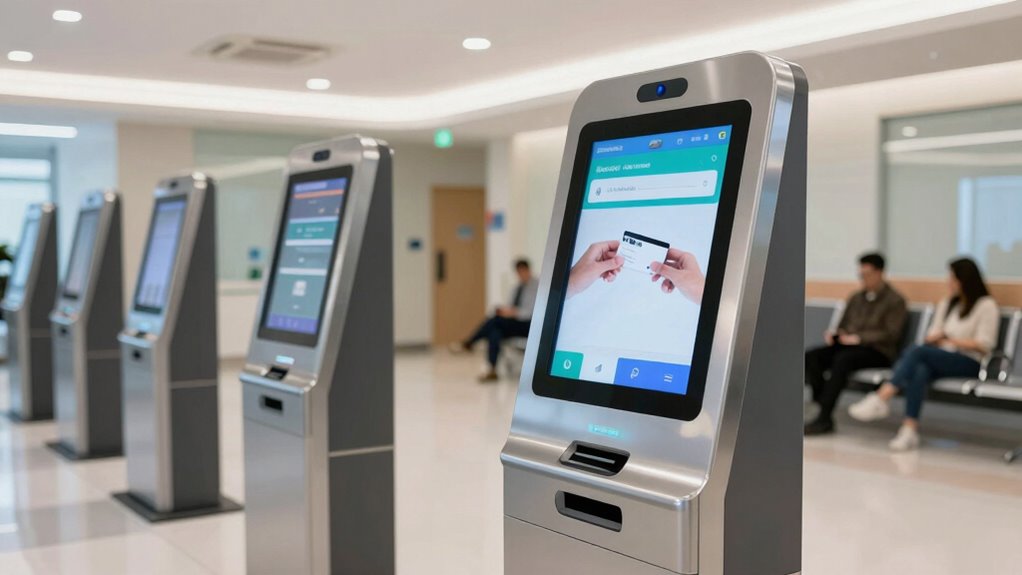
That said, one of the key considerations with check-in kiosks is maintaining patient privacy. As you input sensitive health information, the kiosk must be designed to guarantee confidentiality. This means having privacy screens, sound barriers, or quiet zones around the kiosks so that your data isn’t overheard or seen by others. Healthcare providers need to prioritize security features like encrypted data transmission and secure login procedures to prevent unauthorized access. When patient privacy is protected, you’ll feel more comfortable using the kiosks and trusting the system with your information. Additionally, security features such as multi-factor authentication and regular system audits are essential to safeguard your data against cyber threats. Technology integration plays a crucial role in the success of these kiosks. They should seamlessly connect with your healthcare provider’s existing electronic health record (EHR) systems, appointment schedules, and billing platforms. When these systems work together smoothly, your information is accurately updated in real-time, reducing errors and duplication. For instance, if you arrive for an appointment, the kiosk can automatically pull up your records, confirm your details, and update your check-in status without delay. This integration minimizes the chances of miscommunication and helps the staff focus more on your care rather than administrative tasks. Ensuring proper user interface design can also significantly enhance ease of use and reduce frustration, especially for individuals less familiar with technology. Additionally, conducting user testing prior to deployment can help identify potential usability issues and improve overall functionality. Proper placement and accessibility considerations, such as location planning, are also vital to ensure that the kiosks are easy to find and use, preventing new bottlenecks instead of solving existing ones. Regular maintenance and system updates are also crucial to keep the kiosks secure and functioning optimally, avoiding disruptions during busy times. You should also have protocols in place to handle technical issues swiftly, so delays don’t cascade through the entire process.
medical check-in kiosk with privacy screen
As an affiliate, we earn on qualifying purchases.
As an affiliate, we earn on qualifying purchases.
Frequently Asked Questions
How Do Kiosks Handle Sensitive Patient Information Securely?
You handle sensitive patient information securely by ensuring the kiosks use data encryption, protecting data during transmission and storage. Additionally, you implement strict access controls, so only authorized staff can view or modify patient data. Regular security updates and user authentication protocols further safeguard information. By combining these measures, you reduce risks of data breaches and maintain patient confidentiality, ensuring the kiosks meet privacy standards effectively.
What Training Is Needed for Staff to Operate or Troubleshoot Kiosks?
Imagine walking into a busy clinic, ready to assist patients with confidence. You need staff training that covers operating the kiosks smoothly and troubleshooting skills for quick fixes. This training includes hands-on practice, understanding software features, and recognizing common issues. By mastering these skills, your team can keep the check-in process seamless, reduce delays, and guarantee patients feel cared for, even when technical hiccups happen.
Can Kiosks Be Customized for Different Medical Specialties?
Yes, kiosks can be customized for different medical specialties by creating specialty-specific interfaces and tailored medical workflows. You can adapt the user interface to include relevant questions and forms, ensuring a smoother check-in process for each specialty. This customization allows staff to efficiently manage patient information, reducing errors and wait times. By tailoring these workflows, you enhance patient experience and improve overall clinic efficiency.
How Do Kiosks Accommodate Non-English Speaking Patients?
You’ll find that kiosks often incorporate translation services and multilingual interfaces, making it easier for non-English speaking patients. Studies show that 75% of hospitals now use such features to improve accessibility. These kiosks automatically translate questions, instructions, and options, helping patients understand and complete check-ins confidently. By accommodating diverse languages, you reduce errors and wait times, creating a more inclusive and efficient healthcare experience for everyone.
What Is the Typical Cost Versus Savings With Kiosk Deployment?
You typically see a cost analysis showing initial kiosk investments ranging from $3,000 to $8,000 per unit, with ongoing maintenance costs. The return on investment comes through reduced staffing needs, shorter wait times, and improved patient flow, which can save hospitals thousands annually. While upfront costs are notable, the long-term savings and efficiency gains often outweigh them, making kiosks a financially smart choice if deployed thoughtfully.
As an affiliate, we earn on qualifying purchases.
Conclusion
Implementing medical check-in kiosks can streamline patient flow and reduce wait times, but you must deploy them thoughtfully. For example, a clinic that introduced kiosks without staff support saw confusion and delays, undermining their purpose. Conversely, when paired with staff assistance, kiosks improve efficiency and patient satisfaction. So, plan carefully, train staff, and consider patient needs to guarantee kiosks truly enhance your healthcare experience rather than hinder it.
As an affiliate, we earn on qualifying purchases.
electronic health record integration kiosk
As an affiliate, we earn on qualifying purchases.
As an affiliate, we earn on qualifying purchases.
Halloween Picks
halloween
As an affiliate, we earn on qualifying purchases.