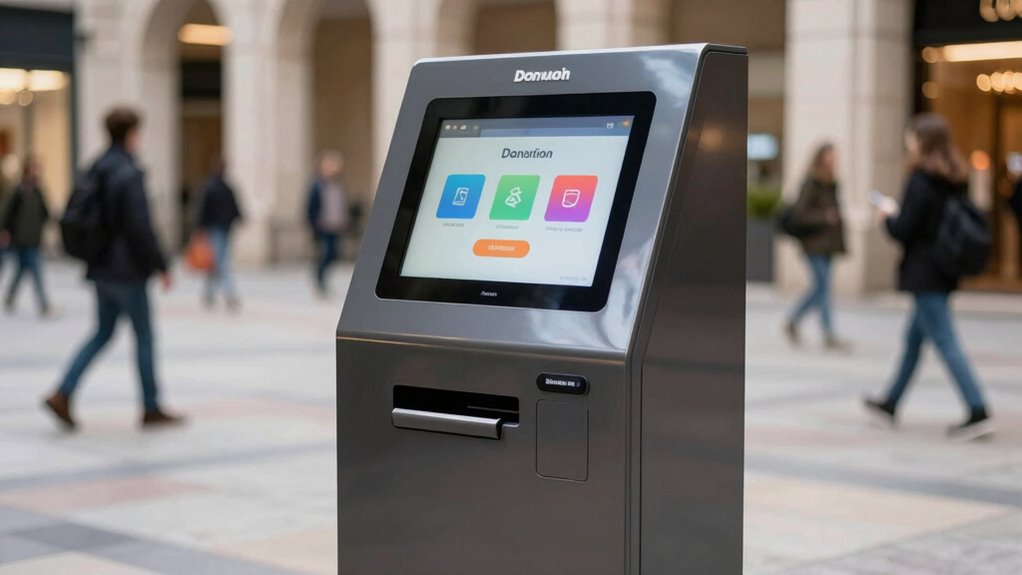

Donation kiosks may seem simple, but they’re actually quite complex. They combine user-friendly layouts with advanced security measures to protect your personal and financial information. Behind the scenes, multiple technical systems work together to guarantee smooth, fast, and safe transactions. These machines are designed to build trust while preventing fraud or hacking. If you want to understand how all these elements come together seamlessly, there’s plenty more to discover.

Get business pricing on office and shipping supplies
- Business-only prices and quantity discounts
- Tax-exempt purchasing
- Multiple users, one account, clear invoices
Key Takeaways
- Donation kiosks integrate intuitive UI design with advanced security features to ensure a seamless and safe user experience.
- They handle sensitive data using encryption, multi-factor authentication, and real-time fraud detection.
- Behind the scenes, complex technical components coordinate to maintain system integrity and quick transaction processing.
- Balancing simplicity and security requires sophisticated systems that protect users without complicating the donation process.
- The overall reliability and trustworthiness of kiosks depend on continuous updates and layered security measures.

While donation kiosks may seem straightforward, they actually involve a complex blend of technology, security, and user experience considerations. When you approach one, you might think it’s just about tapping a card or entering some basic info. But behind the scenes, a well-designed user interface is critical to guarantee you can donate easily and confidently. The interface needs to be intuitive, guiding you smoothly through each step without confusion or frustration. Clear buttons, simple prompts, and accessible language help prevent errors, making the process faster and more comfortable. A cluttered or confusing screen could discourage donations, so developers spend significant effort optimizing the layout to be user-friendly even for those unfamiliar with digital donation systems.
A user-friendly interface is essential for smooth, confident donations without confusion or frustration.
Meanwhile, security protocols are the backbone that protect your personal and financial information. Donation kiosks handle sensitive data—credit card details, personal identifiers, and sometimes even biometric info—so robust security measures are non-negotiable. Encryption is a standard feature, ensuring that your data remains unreadable to anyone intercepting it during transmission. Secure authentication methods, such as tokenization or multi-factor verification, further safeguard against fraud. Regular security updates and compliance with industry standards, like PCI DSS, are essential to prevent breaches and build trust. Without these protocols, your donations could be vulnerable to hacking or data theft, which is a risk no one wants to take. Security measures are an integral part of this process, ensuring that sensitive information remains protected throughout.
Designers and developers must balance simplicity and security, making sure the kiosk is easy to use while also being impenetrable to threats. This often involves integrating biometric verification or secure PIN entry, adding extra layers of protection. They also implement real-time monitoring and fraud detection systems to spot suspicious activity early. All this technical effort creates a seamless experience for you, allowing you to donate quickly without feeling exposed or overwhelmed. It’s a careful dance: making the process accessible and straightforward, yet fortified against risks.
In essence, donation kiosks are more than just machines with screens. They are sophisticated systems that combine thoughtful user interface design with rigorous security protocols. When you use one, you benefit from a carefully crafted experience that combines ease of use with peace of mind. Developers and security experts work behind the scenes to ensure your donations are processed smoothly, safely, and efficiently. So next time you donate via a kiosk, remember the intricate work involved—it’s what makes the process trustworthy and user-friendly, even if it looks simple on the surface.
secure donation kiosk payment terminal
As an affiliate, we earn on qualifying purchases.
As an affiliate, we earn on qualifying purchases.
Frequently Asked Questions
How Secure Are Donation Kiosks Against Cyber Threats?
You might wonder about donation kiosks’ cybersecurity, and they’re generally quite secure. They use robust cybersecurity protocols, including data encryption, to protect your sensitive information. These measures help prevent hacking and data breaches. However, no system is entirely foolproof, so it’s wise to confirm the kiosk is maintained properly and uses updated security features. Staying cautious and checking for security signs can give you added peace of mind when donating.
What Are the Maintenance Requirements for Donation Kiosks?
Maintaining donation kiosks is like tending a garden—you need regular care to keep them thriving. You’ll want to check accessibility features to guarantee everyone can use them easily and regularly clean the hardware to prevent dust buildup. Inspect hardware durability, especially screens and payment components, and update software to stay secure. Routine maintenance keeps your kiosks running smoothly, providing a seamless experience for donors and ensuring they’re always ready to accept contributions.
Can Donation Kiosks Handle Multiple Currencies?
Yes, donation kiosks can handle multiple currencies. They usually feature currency exchange capabilities, allowing donors to select their preferred currency easily. Additionally, they support multi-language options, making it accessible for a diverse range of users. This flexibility guarantees donations can be made smoothly, regardless of the donor’s location or language, ultimately increasing engagement and contributions for your cause.
How Do Kiosks Ensure Donor Privacy During Transactions?
Kiosks guarantee your privacy by enabling anonymous transactions, so you don’t have to share personal info if you prefer. They also use user authentication methods, like PIN codes or biometric verification, to protect your identity during the process. This combination helps keep your donation secure and private, giving you confidence that your information stays confidential while making a difference.
What Are the Customization Options for Donation Kiosks?
You can customize donation kiosks with various branding options, such as logos, colors, and messaging, to align with your organization’s identity. Interface customization allows you to tailor the user experience, making it intuitive and engaging. You can add multimedia elements, language preferences, and donation prompts to suit your donors’ needs. These options help create a seamless, personalized experience that encourages giving and enhances your overall branding efforts.
As an affiliate, we earn on qualifying purchases.
Conclusion
So, next time you see a donation kiosk, remember it’s not just a simple box but a labyrinth of technology and design working behind the scenes. It’s like a well-orchestrated symphony, where each part plays an essential role in making your act of generosity smooth and secure. Behind that sleek interface lies a complex world working tirelessly to make giving easier, safer, and more effective—proving that even the simplest acts can hide extraordinary complexity.
encryption-enabled payment terminal
As an affiliate, we earn on qualifying purchases.
As an affiliate, we earn on qualifying purchases.
multi-factor authentication card reader
As an affiliate, we earn on qualifying purchases.
As an affiliate, we earn on qualifying purchases.
Halloween Picks
halloween
As an affiliate, we earn on qualifying purchases.