
TL;DR

Get business pricing on office and shipping supplies
- Business-only prices and quantity discounts
- Tax-exempt purchasing
- Multiple users, one account, clear invoices
Siemens announced a strategic expansion into industrial AI, partnering with NVIDIA to develop an ‘Industrial AI Operating System’ aimed at transforming manufacturing. The focus is on physical data and domain expertise rather than chat-based AI, with a pilot factory launching in 2026.
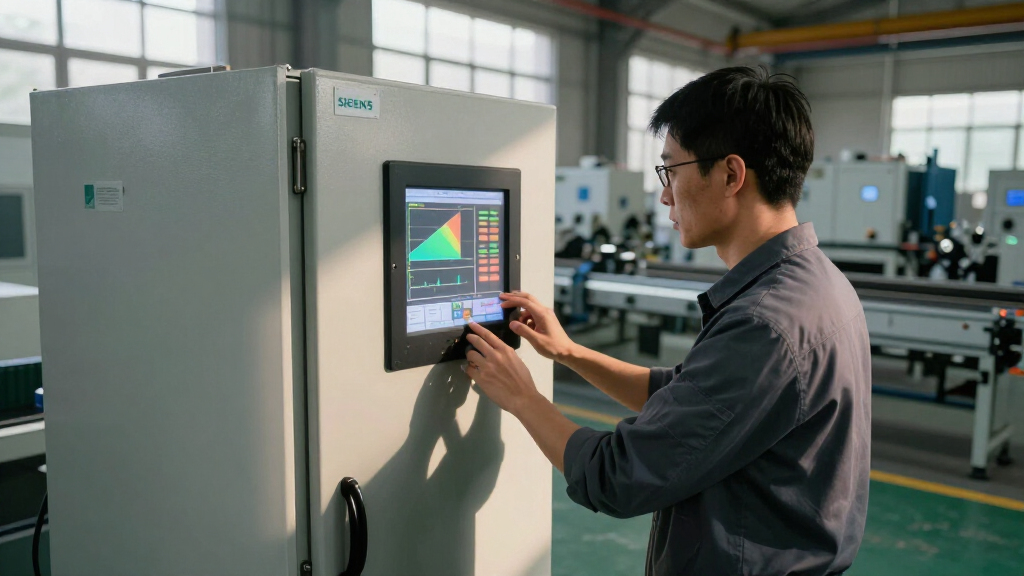
Siemens has announced a major strategic initiative to embed artificial intelligence across its industrial operations, partnering with NVIDIA to develop an ‘Industrial AI Operating System.’ The move aims to transform factory floors by leveraging proprietary physical-world data and domain expertise, rather than relying on traditional language models. This development is significant for manufacturing and industrial automation, as it signals a shift toward AI that directly interacts with physical systems.
At CES 2026, Siemens revealed plans to expand its collaboration with NVIDIA, focusing on GPU-accelerated simulation, generative digital twins, and real-time optimization of manufacturing processes. The core product, the ‘Industrial Foundation Model’ (IFM), is designed to process complex industrial data such as 3D models, sensor telemetry, and automation logic, tailored specifically for the manufacturing domain. Siemens aims to launch its first fully AI-driven, adaptive factory in Erlangen, Germany, in 2026, which will serve as a blueprint for global deployment.
Key features include GPU-accelerated simulation across Siemens’ software suite, support for NVIDIA’s physics-based AI models, and the development of digital twins capable of active engineering and real-time optimization. PepsiCo is cited as an early user of the Digital Twin Composer, with nine industrial copilots planned across the value chain, signaling a broad application of this technology.
Impact of Siemens’ Industrial AI Strategy
This initiative underscores a major shift in manufacturing toward AI systems that directly interact with physical assets, leveraging proprietary data and domain expertise. By focusing on physical-world AI, Siemens aims to improve factory efficiency, reduce downtime, and enable real-time decision-making. The partnership with NVIDIA accelerates this transition but also raises questions about dependency on American silicon and software ecosystems. The move could redefine competitive advantages in industrial automation, especially as digital twins and generative simulation become central to factory design and operation.
As an affiliate, we earn on qualifying purchases.
Background on Siemens’ Industrial AI Efforts
Siemens has long been a leader in industrial automation and digitalization, with decades of experience in factory control systems, engineering models, and operational data. Its announcement at Hannover Messe 2025 of the Industrial Foundation Model marked a strategic shift toward AI tailored for physical systems. The partnership with NVIDIA, announced at CES 2026, builds on this foundation, aiming to embed AI into the entire manufacturing lifecycle. While the industry has seen many AI startups and tech giants entering the industrial AI space, Siemens’ approach emphasizes leveraging its extensive proprietary data and domain knowledge to maintain a competitive edge.
Prior to this, Siemens has collaborated with various partners in automation, drug discovery, and autonomous driving, but its focus on physical AI for manufacturing represents a new frontier. The launch of a lighthouse factory in Erlangen is a key milestone, intended to demonstrate the practical application of these advanced AI tools in a real-world setting.
“Industrial AI is no longer a feature; it’s a force that will reshape the next century.”
— Roland Busch, Siemens CEO
GPU-accelerated manufacturing simulation tools
As an affiliate, we earn on qualifying purchases.
As an affiliate, we earn on qualifying purchases.
Unanswered Questions on Deployment and Performance
Details about the specific hardware configurations, deployment timelines beyond 2026, and validated performance metrics remain undisclosed. It is unclear how quickly the lighthouse factory will demonstrate measurable improvements or how broadly the technology will be adopted across different industries. Dependency on NVIDIA’s infrastructure raises concerns about sovereignty and supply chain resilience, especially for European customers.
AI-powered factory automation systems
As an affiliate, we earn on qualifying purchases.
As an affiliate, we earn on qualifying purchases.
Next Steps for Siemens’ Industrial AI Expansion
Siemens plans to launch its fully AI-driven factory in Erlangen in 2026, serving as a model for global replication. The company will also introduce Digital Twin Composer and expand its industrial copilots across sectors. Monitoring the performance and integration results from the Erlangen site will be critical to assess the technology’s real-world impact. Siemens and NVIDIA will likely continue refining the platform and expanding customer deployments throughout 2026 and beyond.
real-time manufacturing process optimization software
As an affiliate, we earn on qualifying purchases.
As an affiliate, we earn on qualifying purchases.
Key Questions
What is the ‘Industrial Foundation Model’?
The ‘Industrial Foundation Model’ (IFM) is Siemens’ AI model designed to process and contextualize complex industrial data, such as 3D models, sensor telemetry, and automation logic, to optimize manufacturing and engineering processes.
How will this AI platform improve factory operations?
It aims to enable real-time simulation, digital twin optimization, and autonomous decision-making, reducing downtime, increasing efficiency, and allowing faster adaptation to changing conditions on the shop floor.
Is Siemens dependent on NVIDIA for this AI technology?
Yes, much of the AI infrastructure and simulation libraries are supplied by NVIDIA, though Siemens provides domain expertise and integration. This dependency raises questions about reliance on American technology for critical manufacturing processes.
When will the first AI-driven factory be operational?
The lighthouse factory at Siemens Electronics in Erlangen is targeted to launch in 2026, serving as a prototype for future deployments.
What industries will benefit most from this AI approach?
Manufacturing sectors such as electronics, semiconductor fabrication, automotive, and pharmaceuticals are expected to benefit most, given their complex physics and reliance on precise automation.
Source: ThorstenMeyerAI.com
Halloween Picks
halloween
As an affiliate, we earn on qualifying purchases.