📊 Full opportunity report: The Evolution Of Gauge Monitoring In Industry With Phone Photos on IdeaNavigator AI — validation score, market gap, and execution plan.

Get business pricing on office and shipping supplies
- Business-only prices and quantity discounts
- Tax-exempt purchasing
- Multiple users, one account, clear invoices
TL;DR
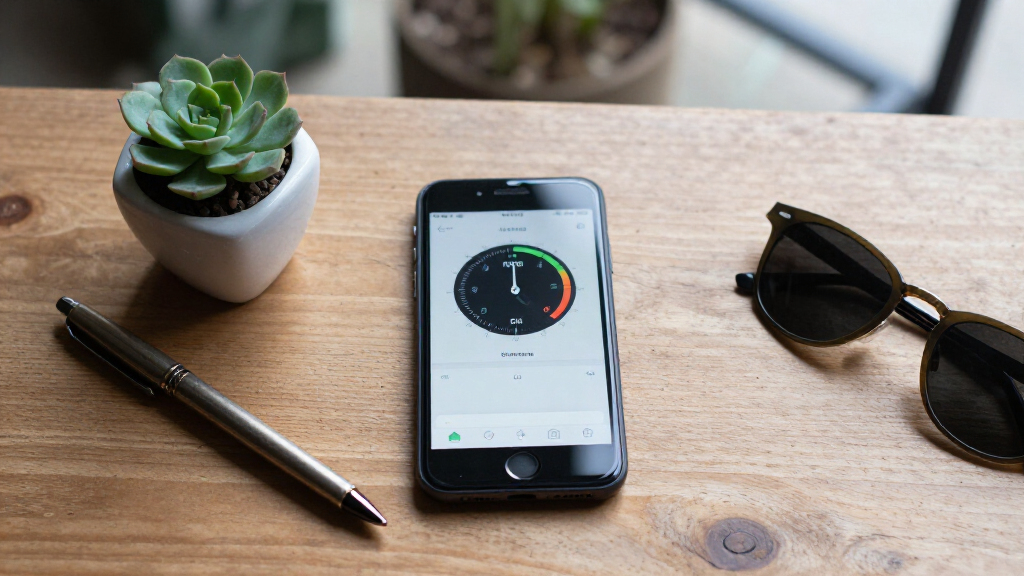
Facilities managers are piloting a new workflow that uses phone photos to record analog gauge readings. This approach aims to reduce errors, improve data trending, and lower retrofit costs. The testing phase involves parallel comparisons at multiple sites.
Facilities managers are trialing a new workflow that uses phone photos to record gauge readings during routine inspections, replacing manual transcription on clipboards. This development aims to improve data accuracy, enable better trend analysis, and reduce costs associated with retrofitting legacy equipment with sensors. The approach is currently in a pilot phase, with three facilities testing the system for one month.
Traditional gauge monitoring in industrial facilities involves technicians manually transcribing analog readings onto paper, which is then filed and rarely analyzed for trends. This process introduces transcription errors and delays in detecting developing failures. Retrofitting legacy equipment with IoT sensors is often prohibitively expensive, especially for older machinery.
The new workflow leverages recent advances in sight-based vision models that can reliably read analog dials, sight glasses, and counters from ordinary phone photographs. This means that every legacy gauge becomes a potential data source without the need for costly sensor installations. During the pilot, technicians photograph each gauge during their rounds; an app then reads the gauge value, compares it to expected ranges, logs the data with timestamps and location tags, and flags anomalies immediately. This process builds a comprehensive trend history that maintenance teams can analyze proactively.
According to an anonymous researcher, the pilot aims to validate whether this method reduces error rates and improves early detection of equipment issues compared to traditional clipboard rounds. The approach is designed to be simple to implement, cost-effective, and scalable across facilities.
Potential Impact on Maintenance and Data Accuracy
This new workflow could significantly improve the accuracy of gauge readings by eliminating transcription errors and enabling real-time anomaly detection. It offers a low-cost alternative to sensor retrofitting, making continuous monitoring feasible for legacy equipment. If successful, this method could lead to more reliable maintenance planning, reduced downtime, and cost savings for industrial facilities. The approach also introduces a scalable, digital-first process that integrates easily with existing workflows, potentially transforming routine monitoring practices across the industry.
As an affiliate, we earn on qualifying purchases.
Legacy Equipment and the Need for Better Monitoring
Many industrial facilities still rely on analog gauges for critical equipment monitoring, despite the increasing availability of digital sensors. Retrofitting these legacy systems with IoT sensors can be expensive and complex, often requiring significant downtime and investment. As a result, many plants continue to depend on manual rounds, which are prone to errors and lack systematic data analysis. Recent advances in computer vision and AI have made it possible to read analog gauges accurately from simple photographs, opening new opportunities for digital monitoring without hardware upgrades. The pilot testing of phone-photo gauge reading represents a step toward integrating AI-driven data collection into routine maintenance processes, aiming to bridge the gap between legacy infrastructure and modern analytics.
“The sight-based AI models now reliably read analog gauges from phone photos, making every legacy gauge a potential data source without additional hardware.”
— an anonymous researcher
As an affiliate, we earn on qualifying purchases.
Uncertainties About Long-Term Scalability and Accuracy
It is not yet clear how well the AI reading accuracy will hold across diverse gauge types, lighting conditions, and operational environments over extended periods. The pilot’s duration is limited, and further testing is needed to confirm reliability and integration with existing maintenance systems. Additionally, questions remain about how this workflow will scale across larger facilities with hundreds of gauges and whether the app can handle high-volume data without performance issues.As an affiliate, we earn on qualifying purchases.
Next Steps in Pilot Expansion and Validation
The current pilot will run for one month at three facilities, with data comparing error rates and anomaly detection efficacy against traditional clipboard rounds. Based on results, developers plan to refine the app’s AI models and user interface. If successful, broader deployment across more sites is expected, alongside integration with existing maintenance management systems. Further studies may also explore automation of photo capture and real-time alerts, aiming to establish this workflow as a standard practice in industrial monitoring.
As an affiliate, we earn on qualifying purchases.
Key Questions
How accurate are AI readings compared to manual transcription?
Preliminary results suggest AI readings are more accurate than manual transcription, which is prone to human error. However, full validation is ongoing during the pilot phase.
Will this system work in all lighting and environmental conditions?
The current AI models perform reliably under typical lighting conditions, but extreme lighting or dirt on gauges may affect accuracy. Further testing is planned to address these variables.
Can this workflow replace all manual rounds?
Initially, it is intended as a narrow, first-win workflow for legacy gauges. Broader replacement would depend on successful validation, scalability, and integration with other systems.
What are the cost implications for facilities adopting this system?
The system operates on a per-facility subscription model, with costs based on gauge count. It promises lower costs than sensor retrofitting and minimal additional hardware requirements.
Source: IdeaNavigator AI
Fall Picks
fall essentials
As an affiliate, we earn on qualifying purchases.