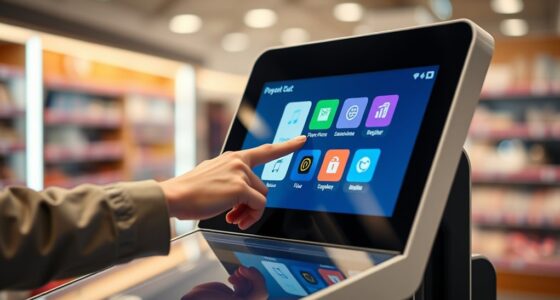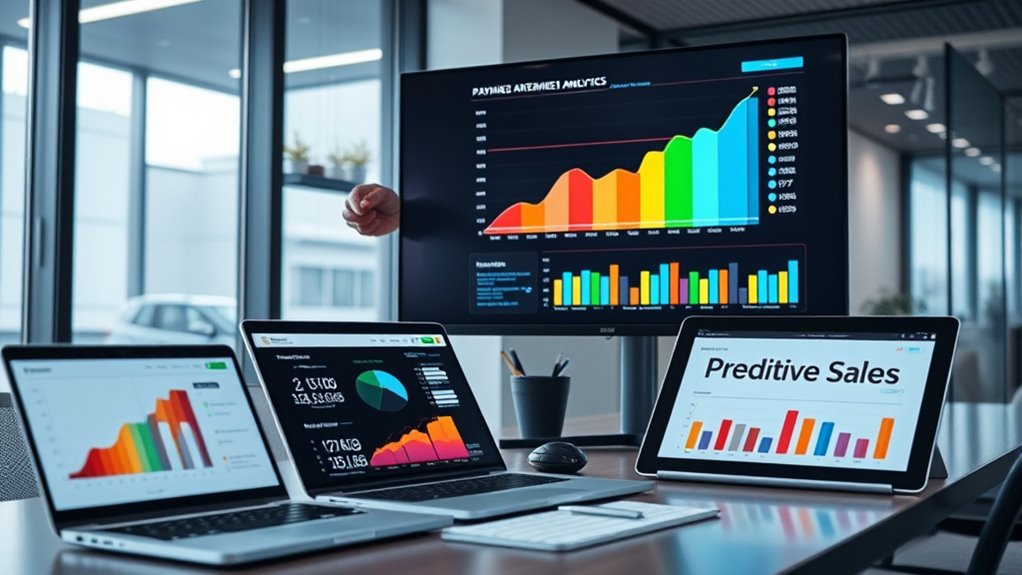

Using payment analytics helps you forecast sales more accurately by revealing customer buying patterns, identifying high-value segments, and spotting shifts in preferences. It also detects suspicious activities early, preventing fraud that could distort your data. By combining these insights, you can optimize marketing efforts and inventory planning for better revenue. Continuing explore how these powerful tools can give you a competitive edge and drive growth.
Key Takeaways
- Payment analytics reveal customer segmentation, enabling targeted sales forecasting based on transaction behaviors and preferences.
- Analyzing payment methods and frequency helps identify seasonal trends and predict future sales patterns.
- Detecting shifts in payment behaviors signals changes in customer engagement, allowing proactive sales adjustments.
- Fraud detection ensures data integrity, providing reliable inputs for accurate sales forecasting models.
- Combining payment insights with customer loyalty data enhances forecast precision and supports strategic planning.

Understanding your customers’ payment behaviors can markedly enhance your ability to predict future sales. When you analyze how different groups of customers make payments, you gain valuable insights into their preferences, spending habits, and loyalty levels. Customer segmentation allows you to categorize your clientele based on their transaction patterns, such as frequency, average purchase size, and preferred payment methods. By doing this, you can identify high-value customers who frequently make large purchases, as well as those who tend to buy during specific seasons or sales events. Recognizing these segments helps you tailor marketing efforts and inventory management, aligning your offerings with customer demand and boosting sales forecasts.
Moreover, payment analytics can reveal subtle behavioral shifts that signal changes in customer engagement. For example, a sudden decrease in transaction volume from a specific segment might indicate dissatisfaction or external factors affecting their purchasing power. Conversely, an increase in certain payment methods, like digital wallets or contactless options, can point to evolving customer preferences. Tracking these patterns enables you to anticipate future buying behaviors more accurately. You can proactively adjust your marketing strategies, such as offering targeted discounts or promotions to specific segments, thereby increasing the likelihood of repeat business and higher sales.
In addition, payment data plays a vital role in fraud detection, which directly impacts your sales forecasts. Fraudulent transactions not only cause immediate financial losses but also erode customer trust and loyalty. By integrating fraud detection mechanisms into your payment analytics, you can identify suspicious activities early. For example, unusual transaction amounts, irregular purchase locations, or rapid successive payments may signal fraudulent attempts. Detecting and preventing fraud ensures that your sales figures remain precise, providing a reliable foundation for forecasting. It also safeguards your brand’s reputation, encouraging legitimate customers to continue shopping confidently.
Furthermore, leveraging high-quality payment data can improve the accuracy of your sales forecasting models by providing more detailed and reliable inputs. As you analyze payment data, combining customer segmentation with fraud detection creates a powerful tool for forecasting sales. You can identify which customer groups are most vulnerable to fraud and implement targeted security measures. Conversely, understanding your most loyal and high-value segments helps you focus retention efforts where they matter most. The ability to distinguish between genuine transactions and fraudulent ones enhances the accuracy of your sales predictions. This holistic approach allows you to optimize your sales strategies, allocate resources efficiently, and ultimately improve your revenue outlook.

Music Software Bundle for Recording, Editing, Beat Making & Production – DAW, VST Audio Plugins, Sounds for Mac & Windows PC
No Demos, No Subscriptions, it's All Yours for Life. Music Creator has all the tools you need to…
As an affiliate, we earn on qualifying purchases.
As an affiliate, we earn on qualifying purchases.
Frequently Asked Questions
How Accurate Are Payment Analytics in Predicting Future Sales?
Payment analytics can be quite accurate in predicting future sales if you use effective predictive modeling and guarantee high data accuracy. You’ll find that analyzing transaction patterns, customer behavior, and payment trends helps you make informed forecasts. While no method is perfect, combining these insights with real-time data improves the reliability of your predictions. Just remember, the more accurate your data, the better your sales forecasts will be.
What Types of Payment Data Are Most Useful for Forecasting Sales?
You might think all payment data is equally helpful, but in reality, customer segmentation and transaction trends are your best bets. These data types reveal who your customers are and how their purchasing behaviors evolve over time. By analyzing these, you can accurately forecast sales, despite the obvious challenge of messy data. Ironically, the most useful insights come from understanding your customers’ habits, not just raw transaction numbers.
How Can Small Businesses Implement Payment Analytics Effectively?
You can implement payment analytics effectively by first focusing on customer segmentation to identify buying patterns and preferences, which helps tailor marketing efforts. Use fraud detection tools to guarantee data accuracy and security. Integrate payment data from various channels and regularly analyze trends. Training staff on analytics tools and setting clear goals will maximize insights. This approach enables you to make informed decisions and forecast sales more accurately.
Are There Privacy Concerns With Analyzing Payment Transaction Data?
Yes, there are privacy concerns when analyzing payment transaction data. You should prioritize data anonymization to protect customer identities and safeguard their privacy. Additionally, you need to follow regulatory compliance standards like GDPR or PCI DSS to avoid legal issues. By implementing these practices, you can analyze payment data responsibly, gaining valuable insights without compromising customer trust or violating privacy laws.
How Often Should Payment Analytics Be Reviewed for Reliable Forecasts?
You should review payment analytics at least once a payment cycle, which typically aligns with your transaction frequency—weekly, monthly, or quarterly. Regular reviews help you spot trends early, adapt forecasts, and improve accuracy. If your transaction volume fluctuates or changes seasonally, consider more frequent analysis. Consistent monitoring guarantees your sales predictions stay reliable, allowing you to make informed decisions and optimize your business strategies effectively.

Fraud Detection in Real-Time Payments with Graph Neural Networks: Architecting for Millisecond Latency.
As an affiliate, we earn on qualifying purchases.
As an affiliate, we earn on qualifying purchases.
Conclusion
By leveraging payment analytics, you can accurately forecast sales and make smarter business decisions. It helps you identify trends, understand customer behavior, and optimize your strategies for growth. Are you ready to harness the power of data to stay ahead of the competition? Don’t wait—start integrating payment analytics today and turn insights into action. Your future success depends on how well you analyze and adapt to your sales patterns now.

The Operational Excellence Library; Mastering Customer Segmentation Tools
As an affiliate, we earn on qualifying purchases.
As an affiliate, we earn on qualifying purchases.

Forecasting Time Series Data with Prophet: Build, improve, and optimize time series forecasting models using Meta's advanced forecasting tool, 2nd Edition
As an affiliate, we earn on qualifying purchases.
As an affiliate, we earn on qualifying purchases.