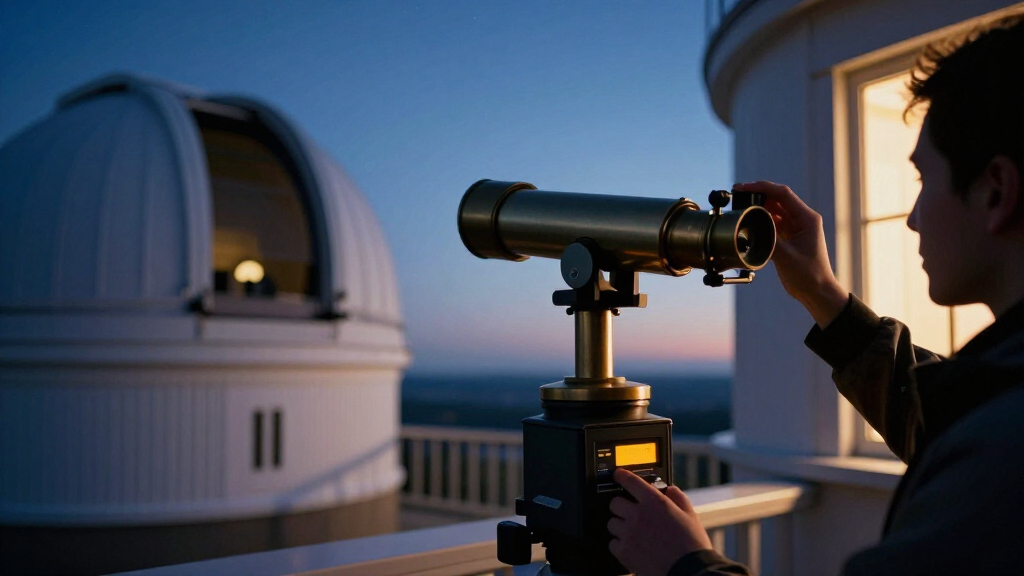

🔍 Read the full analysis: A Few Ways Held Light Works In “OORT — Comet Vigil For P/2043 K1 Vesper” on ThorstenMeyerAI.com

Get business pricing on office and shipping supplies
- Business-only prices and quantity discounts
- Tax-exempt purchasing
- Multiple users, one account, clear invoices
TL;DR
OORT — Comet Vigil for P/2043 K1 Vesper is an AI-built, browser-based exhibition about a fictional comet and an imagined observatory keeping watch for it. Its star trails accumulate with time spent on the page, while scrolling and other controls let visitors interact with the fictional comet’s journey.
OORT — Comet Vigil for P/2043 K1 Vesper, an AI-built online exhibition, turns a visitor’s time on its page into part of the artwork: a seeded star field draws longer trails as seconds pass, as detailed in the original analysis. The project centers on a fictional comet and observatory, using interactive browser elements to present waiting as its subject rather than claiming to document a real astronomical event.
The exhibition’s central feature is a canvas that renders stars in arcs around a point below the visible frame. Those arcs lengthen over time, with a logarithmic progression intended to make the change visible early while allowing the exposure to continue. A repeatable seed keeps the sky consistent on a given device, and local storage preserves elapsed time, so returning visitors can see the accumulated effect. The source does not specify how that persistence behaves across devices or browsers.
A second visualization connects scrolling to the comet’s imagined position along its orbit. The comet and its two tails appear in an inline SVG: the brief describes the ion tail as pointing away from the sun and the dust tail as curving along the fictional orbit. Their geometry, displayed distance and year are tied to the same progress value. A separate range control changes a defocus view and its associated brightness estimate.
Visitors can also hold a control to open a simulated shutter. The site records a timestamp, but the visitor does not see a fabricated comet image or discovery. Instead, the interaction is presented as a record of attention within the fiction. The exhibition is credited to the FABLE/175 pipeline; its footer exposes the art-direction prompt, and an accompanying design guide describes the visual and technical approach.
FABLE/175 · ROOM 170 · DIGITAL EXHIBITION
A Few Ways Held Light Works in OORT
In “OORT — Comet Vigil for P/2043 K1 Vesper,” the visitor’s time becomes part of the artwork. A fictional comet, an imagined observatory, and a slowly changing star field turn waiting into something visible.
01 / TIME AS MATERIAL
How the Page Makes Time Visible
OORT makes duration an input, rather than a pause between pieces of content. Its seeded star field draws longer trails as seconds pass, giving a visit a visible form. Saved elapsed time can carry that exposure into a return visit on the same device.
CANVAS · EXPOSURE
Trails accumulate
Stars arc around a point below the visible frame. Their trails lengthen over time, with a logarithmic progression intended to make the early change perceptible.
SEEDED · PERSISTENT
A returning sky
A repeatable seed keeps the sky consistent on a device. Local storage preserves elapsed time; the source does not specify behavior across devices or browsers.
ATTENTION · RECORD
A shutter without a reveal
Holding the shutter control records a timestamp. It presents no fabricated comet image or discovery: the interaction records attention within the fiction.
02 / A VISITOR’S PATH
From Arrival to Accumulated Light
Scrolling, waiting, and adjusting controls shape what appears on screen. Each interaction remains inside the imagined observatory.
Enter the vigil
Meet the imagined observatory and its fictional comet.
Stay with the sky
Canvas star trails grow as time passes on the page.
Move along the orbit
Scrolling updates the comet’s imagined position and readings.
Leave and return
Stored exposure can make the next visit part of the same vigil.
03 / ORBIT & INTERFACE
A Fiction Built from Browser Elements
The exhibition links movement through the page to a changing display. Its details are elements of the artwork, not independently verified astronomical data.
INLINE SVG · SCROLL PROGRESS
Comet and twin tails
The comet and its ion and dust tails move through an inline SVG. The described ion tail points away from the sun; the dust tail curves along the imagined orbit. Their geometry, displayed distance, and year follow one progress value.
RANGE CONTROL · DEFOCUS
Adjust the simulated view
A separate range control changes a defocus view and its associated brightness estimate. The readings belong to the fictional setting and are not confirmed observations.
04 / THE WORK’S OWN WORDS
Waiting Is the Subject
“Your visit is the exposure; leave for the guide and return, your trails remain.”
ART-DIRECTION BRIEF
05 / WHAT THE SOURCE CONFIRMS
A Guide to What’s Known
Is the comet real?
No. The project describes P/2043 K1 Vesper, its observatory, and its watching community as fictional.
What changes during a visit?
The canvas draws longer star trails as time passes. The source describes a repeatable seed and locally saved elapsed time.
Does the shutter reveal an image?
No. It records a timestamp as a gesture of attention; no comet image or discovery is presented.
How does scrolling affect the display?
It moves the fictional comet through an SVG and updates its tails, distance, and year using the same progress value.
What about device support?
The design brief calls for reduced-motion support, pausing animation when a tab is hidden, and responsive layouts. Independent test results are not provided.
What remains unspecified?
The source gives no launch date, cross-device storage details, technical audit, or performance measurements.
06 / VISIT THE ROOM
Explore OORT and Its Design Guide
The project credits the FABLE/175 pipeline. Its exhibition footer exposes the art-direction prompt, and an accompanying design guide describes the seeded exposure, SVG orbit, palette, and typography. The wider collection is described as containing 175 rooms.
Visit the live OORT exhibition to explore the room and find its guide.
How the Page Makes Time Visible
OORT’s defining choice is to make duration an input, not merely the time a visitor spends before reaching the next piece of content. The growing trails give that duration a visible form, while the saved state lets a return visit extend the same imagined sky. That approach makes the interface itself the medium of the work.
The distinction between a real observation and a fictional one is central to how the project should be read. The comet is invented, and the shutter interaction does not claim to reveal it. By leaving the comet unseen, the work treats waiting and attention as the experience rather than offering a false astronomical result. It also gives readers a concrete example of how code, including canvas animation, SVG and browser storage, can shape an online exhibition’s meaning.
As an affiliate, we earn on qualifying purchases.
Inside the FABLE/175 Exhibition
The source identifies OORT as room 170 of 175 in an exhibition of AI-built works. It describes the site as a single-page showcase with a fictional setting: an observatory community keeping a decades-long vigil for P/2043 K1 Vesper. The available material does not establish an actual comet with that designation; it explicitly calls both the comet and the observatory fictional.
The project’s art direction specifies a dark observatory palette, with cyan for the ion tail and readings, red-orange for instructions, and pale text for longer passages. Display lettering and monospaced coordinates are intended to evoke an instrument log. The brief also calls for reduced-motion support, pausing animation when a browser tab is hidden, and responsive layouts. These are stated design requirements; the source does not provide independent testing results confirming how every feature performs across devices.
“The page makes duration part of the artwork instead of treating it as time spent before the content.”
— OORT exhibition description
As an affiliate, we earn on qualifying purchases.
What the Fiction Does Not Confirm
P/2043 K1 Vesper is fictional, so the displayed orbital progress, dates, distance and brightness estimate should be understood as elements of the artwork, not verified astronomical data. The source supplies no independent scientific validation for the simulated geometry or readings.
The material describes intended behavior, including stored exposure time and reduced-motion handling, but does not report a technical audit or provide performance measurements. It also gives no publication or launch date and does not say how the saved state works across different devices. Those details cannot be confirmed from the supplied information.
As an affiliate, we earn on qualifying purchases.
Visit the Room and Design Guide
The exhibition is available at its live OORT site, and the project points visitors to a design guide explaining the seeded exposure, SVG orbit, palette and typography. Readers can also browse the wider FABLE/175 collection, described as containing 175 rooms. The source does not announce a future release, update schedule or additional comet-related milestone; the next step described is to visit the room and explore its accompanying guide.
As an affiliate, we earn on qualifying purchases.
Key Questions
Is P/2043 K1 Vesper a real comet?
No. The project describes P/2043 K1 Vesper as fictional, along with the observatory and its imagined watching community.
What changes as visitors stay on the page?
A canvas draws longer star trails as time passes. The source says the sky uses a repeatable seed and that local storage preserves elapsed time on the device.
Does the shutter show a comet image?
No image or discovery is presented. Holding the control opens a simulated shutter and records a timestamp as a record of attention.
How does scrolling affect the comet display?
Scrolling moves the fictional comet through an inline SVG. The described ion and dust tails change with the same progress value used for the displayed distance and year.
Where can readers find the exhibition?
The source links to the live OORT room at fable-25-830.netlify.app/sites/oort/ and says a design guide is available from the exhibition.
Source: ThorstenMeyerAI.com
Halloween Picks
halloween
As an affiliate, we earn on qualifying purchases.