
🔍 Read the full analysis: Can Jev Describe My Images? I Put 30 To The Test on ThorstenMeyerAI.com

Get business pricing on office and shipping supplies
- Business-only prices and quantity discounts
- Tax-exempt purchasing
- Multiple users, one account, clear invoices
TL;DR
TypeSafe added opt-in image support to Jev on October 14, 2026, and a test of 30 website images found that both Jev 1.14 and 1.13 could match product photos to headlines. Jev 1.14 identified 9 of 10 products correctly, while results on news and essay images were less conclusive in the available account. The test was small and conducted by the author on his own site, so it does not establish general performance.
TypeSafe added opt-in image input and a new bounding-box response type to its Jev decision model on October 14, and a test of 30 website images found that Jev could match product photos to their headlines. In the test, Jev 1.14 identified 9 of 10 products correctly, but the results come from a small, single-site evaluation and do not establish how the feature performs across other image types or production settings.
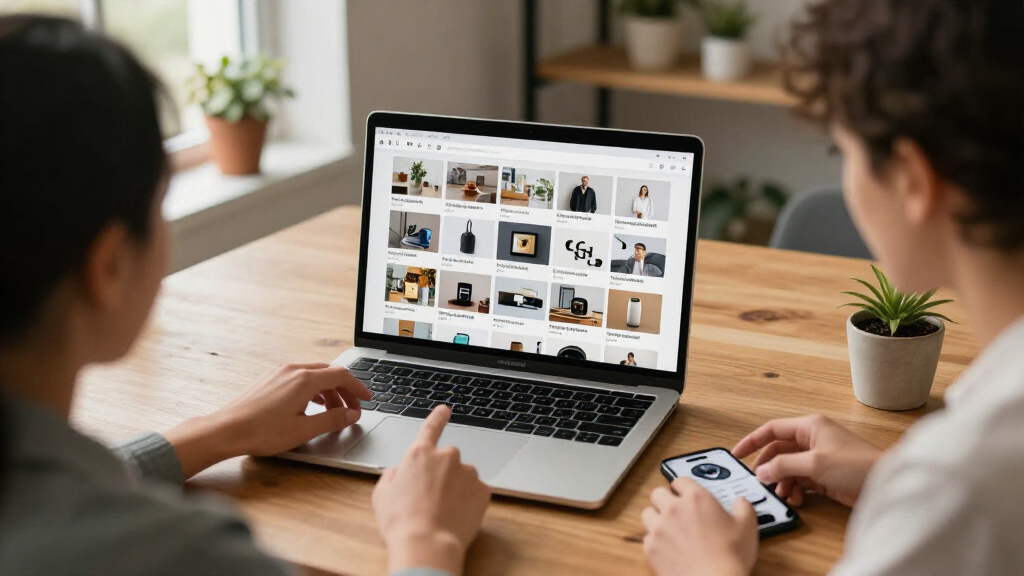
Thorsten Meyer, writing on ThorstenMeyerAI.com on October 15, said he tested the new image feature on the site’s 30 most recent featured images: 10 product roundups, 15 news posts and five essays. He asked each version, Jev 1.14 and Jev 1.13, whether an image suited its own headline, a randomly chosen other headline and an unrelated headline about repotting a monstera plant. The product images also received a multiple-choice question asking which of 10 products each showed.
For the 10 product images, Meyer reported that Jev 1.14 separated matching headlines from mismatches: scores for each image’s own headline ranged from 0.65 to 0.89, with a median of 0.76. Random other headlines scored no higher than 0.18, with a median of 0.06, and the plant headline never scored above 0.10. Those figures describe this test’s model scores, not a general accuracy benchmark.
Jev 1.14 selected the right product in nine of 10 cases. The mistake involved a mesh Wi-Fi photo showing a router with antennas beside a cylindrical mesh unit; the model chose “Wi-Fi 7 router” with 0.60 confidence. Meyer said all correct product selections had confidence scores of at least 0.77. Jev 1.13 selected all 10 products correctly, though two answers had confidence below 0.5. The source account begins to discuss the news-image results but does not provide the full findings, so those results cannot be summarized here.
Jev 1.14 · images + box
Jev can see now. Here is what 30 of my images showed.
I asked about every featured image three times: does it fit its own headline, a random other post’s headline, an off-topic headline? Both Jev versions, about 60 requests.
Does this image fit the headline?
Median “yes” probability on Jev 1.14, by kind of post
- Product roundups10 images0.760.061.13: 0.79 / 0.05
- News posts15 images0.330.161.13: 0.51 / 0.25
- My essays5 images0.510.161.13: 0.62 / 0.33
Off-topic headline (“How to Repot a Monstera Plant”): never above 0.10 on either version, 60 of 60 rejected.
Why news is weak: almost all news images show the same scene, people at desks looking at monitors. Jev could not tell them apart, and it was right not to.
1.14 is stricter than 1.13
Same 30 images, same questions
| Result | 1.14 | 1.13 |
|---|---|---|
| Fits own headline (≥ 0.5) | 15/30 | 23/30 |
| Fits a wrong headline (≥ 0.5) | 1/30 | 4/30 |
| Own beats random other (AUC) | 0.91 | 0.89 |
| Names the product (10 options) | 9/10 | 10/10 |
1.14’s one product miss: mesh system read as “Wi-Fi 7 router”, confidence 0.60. Re-tune thresholds before jev-latest moves.
What shipped on Oct 14
- headerImagesin state, instructions or criteria · 1.13 + 1.14 ·
TypeSafe-Danger-Zone-Images - 1.14 onlyBox typeone bounding box + confidence. 6 of 6 clear targets boxed (0.66–0.90); an absent bicycle still got a box (0.03)
- headerLong context64k / 32k → 262k tokens, slower and less accurate
- opt-inHelp find weaknessesqueries used for testing, not training
now: jev-preview = 1.14~Oct 21: jev-latest → 1.14notice: 60 days (1.13), 30 days (1.14)
Source: own test on October 15, 2026. 30 featured images from ThorstenMeyerAI.com (10 product roundups, 15 news posts, 5 essays), JPEG at up to 1,568 px, jev-1.14.0 and jev-1.13.0 with the image header. Bars show medians. AUC = probability that an image’s own headline scores higher than a random other headline. Features, prices and limits: TypeSafe blog post “Jev 1.14” and docs.typesafe.ai, as of October 15, 2026.
Powered by Thorsten Meyer AI
Image Checks Move Beyond Text
The release extends Jev from text-only inputs to workflows that can include pictures in a state, question instructions or answer criteria. That may let developers ask narrow, repeatable questions about whether an image fits a headline or which object appears in a picture. The test offers an early example of that use, rather than evidence that image review can be automated reliably at scale.
For publishers and other teams with recurring image checks, the appeal is a decision model that returns a structured answer and confidence rather than an open-ended description. But the test also illustrates why confidence and human review matter: Jev 1.14 missed one product identification, and the two versions differed on confidence even when their selections were correct. The 30 images all came from one website, and the available report does not provide complete results for its news and essay groups.
Products Worth Considering

FLEXISPOT 40-Inch Electric Standing Desk Converter with Keyboard Tray

Apple Mac mini with M2 Chip, 16GB Unified Memory, 256GB SSD, Silver (2023)
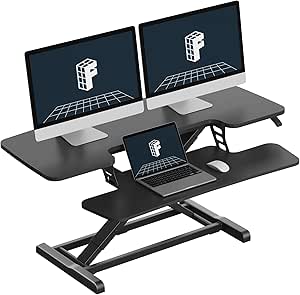
FLEXISPOT Standing Desk Converter 42 – Extra Large Ergonomic Sit-Stand Desk Riser with Keyboard Tray, Black
As an affiliate, we earn on qualifying purchases.
Jev’s Opt-In Release Design
Jev is designed to answer typed questions about supplied information, returning outputs such as yes-or-no probabilities, choices from a list or scores. Before this release, Meyer said, those questions were limited to text. TypeSafe’s October 14 release added image support to both Jev 1.13.0 and 1.14.0; a separate box response type, which returns one bounding box and a confidence for a described target, is limited to Jev 1.14.
TypeSafe placed the new capabilities behind explicit request headers labelled “danger zone.” The company said there was still too much “jaggedness” to recommend them for production use cases. Images must be PNG or JPEG stills, 256 to 1,568 pixels per side, with a 16 MiB limit per image and 32 MiB per request. The release also adds an opt-in long-context setting, raising limits from 64,000 tokens per request and 32,000 per question to 262,000 for both, while TypeSafe advises against the larger limit because reliability can fall on long inputs.
“There is still way too much jaggedness for us to vouch for these for production use cases.”
— TypeSafe, in its Jev release announcement as quoted by Thorsten Meyer
Limits of the 30-Image Test
The reported evaluation covers one site and 30 selected images, and the source material provided here does not include the complete results for the 15 news posts and five essays. It is not clear how the images were selected beyond being the site’s most recent featured images, or whether the questions and scoring method were checked by an independent evaluator. The results therefore should not be treated as a representative measure of Jev’s overall image performance.
TypeSafe itself cautioned against relying on the new capabilities in production. The report also does not establish whether model performance changes across image sizes, subject matter, languages or different ways of placing image references in a request. No comparison with a broader set of image models is provided.
Rollout and Further Testing
TypeSafe made Jev 1.14 available as jev-preview and said the jev-latest alias would move to it about one week after the October 14 release, around October 21. The company also said it would provide 60 days’ deprecation notice for Jev 1.13.0 and 30 days for 1.14.0, with a formal deprecation policy still to come.
For readers considering image-based tasks, the immediate next step is to treat the feature as experimental and test it on their own images and questions, rather than infer performance from Meyer’s product-image results. Further details about the news and essay portions of this test, along with independent evaluations and TypeSafe’s later production guidance, remain pending in the source material.
Key Questions
What changed in Jev 1.14?
TypeSafe added opt-in image input and a new box response type that returns a bounding box and confidence for a described target. Image input also works with Jev 1.13.0, according to the release details reported by Meyer.
How did Jev perform on the product images?
In Meyer’s test of 10 product images, Jev 1.14 chose the correct product in nine cases, while Jev 1.13 chose correctly in all 10. Jev 1.14 also gave higher confidence to every correct choice than to its one mistaken choice, according to the report.
Does the test show Jev is ready for production image analysis?
No. The test was a small evaluation on one website, and TypeSafe said the new capabilities remained too unreliable for it to vouch for production use. The results do not establish performance across other users, image types or tasks.
What image files does Jev accept?
The reported release limits support to PNG and JPEG still images, 256 to 1,568 pixels per side. Each file is limited to 16 MiB, and a request is limited to 32 MiB; WebP and HEIC files need conversion first.
Source: ThorstenMeyerAI.com