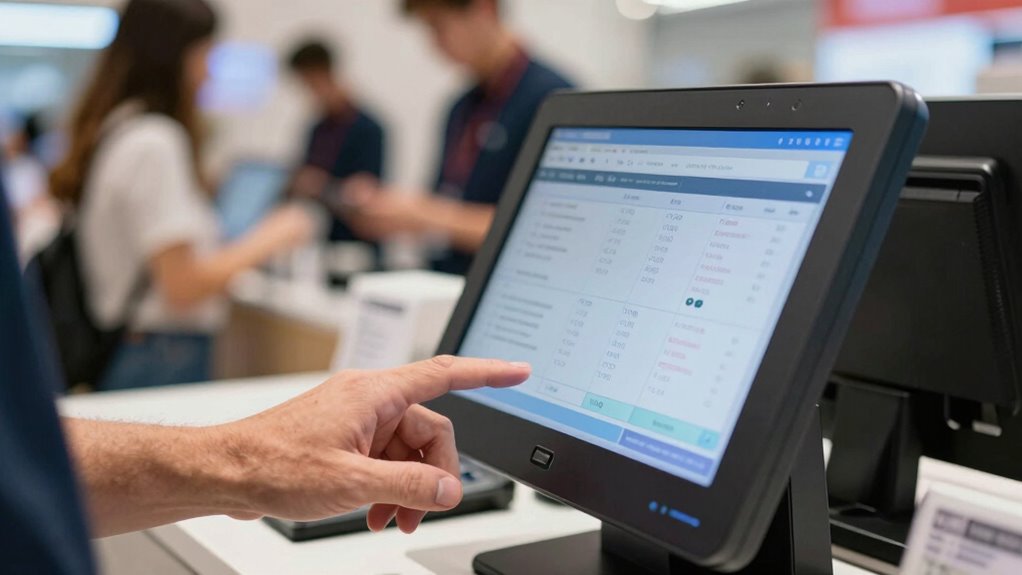

As cyber threats and fraud risks grow, you’re asking tougher questions about payout controls to protect your revenue and reputation. Tightening controls helps you oversee funds, verify transaction legitimacy, and prevent errors or misuse before they impact your business. Enhanced security measures like multi-factor authentication and transaction limits are essential for maintaining trust with clients and partners. If you want to understand why these measures are becoming standard, keep exploring how merchants are strengthening their payout strategies.

Get business pricing on office and shipping supplies
- Business-only prices and quantity discounts
- Tax-exempt purchasing
- Multiple users, one account, clear invoices
Key Takeaways
- Increasing cross-border transactions heighten the need for stricter payout oversight and fraud prevention.
- Evolving cyber threats demand enhanced transaction security and fraud detection measures.
- Regulatory compliance requires detailed monitoring and transparency of payout activities.
- Protecting revenue streams involves implementing controls to prevent errors and misuse.
- Building trust with clients and partners depends on demonstrating robust payout security measures.

As merchants grow more concerned about managing their cash flow, many are asking about payout controls to gain better oversight of their funds. In today’s digital economy, where transactions happen rapidly and across borders, you need to be proactive about safeguarding your revenue streams. Payout controls are no longer just a convenience; they’re a essential part of your overall risk management strategy. They help you determine who gets paid, when, and how, giving you the power to prevent misuse or errors before they impact your bottom line.
One of the main reasons you’re asking tougher questions about payout controls is the increasing threat of fraud. Fraud prevention has become a top priority, especially as cybercriminals develop more sophisticated tactics. Without stringent payout controls, you’re vulnerable to fraudulent claims or unauthorized withdrawals that could drain your cash reserves or tarnish your reputation. Implementing strict rules around payouts helps you verify legitimate transactions, block suspicious activity, and reduce financial losses. This level of oversight becomes critical when handling high-value transactions or working with multiple vendors and partners.
Stringent payout controls are essential to prevent fraud, verify transactions, and protect your business’s financial integrity.
Transaction security is another key concern driving your interest in payout controls. When transactions are processed electronically, ensuring their security is essential to prevent tampering or interception. Payout controls allow you to set limits, approve transactions, or require multi-factor authentication, which markedly decreases the likelihood of unauthorized access. You want to make sure that every payout is legitimate and traceable, giving you peace of mind that your funds are protected from both internal errors and external attacks. As cyber threats evolve, so must your security measures, and payout controls are an effective way to strengthen your defenses.
Additionally, tighter payout controls give you better visibility into your financial operations. You can monitor payout patterns, identify irregularities early, and make informed decisions about cash flow management. This transparency helps you spot potential issues before they become costly problems, ensuring your business remains resilient against financial risks. It also allows for compliance with industry regulations, which often require detailed records of transactions and payouts.
Ultimately, your push for more rigorous payout controls stems from a desire to protect your business’s financial health. You recognize that, in an environment rife with fraud and cyber threats, passive oversight isn’t enough. By asking hard questions now, you’re taking proactive steps to secure your funds, prevent fraud, and guarantee transaction security. This not only safeguards your revenue but also builds trust with clients and partners, reinforcing your reputation as a responsible and secure merchant.
multi-factor authentication device
As an affiliate, we earn on qualifying purchases.
As an affiliate, we earn on qualifying purchases.
Frequently Asked Questions
How Do Payout Controls Impact Customer Experience?
Payout controls directly impact your customer experience by enhancing transaction transparency and building customer trust. When you implement strict payout controls, customers feel more confident that their transactions are secure and transparent, reducing doubts and concerns. Clear, well-managed payout processes show your commitment to security, making customers more comfortable completing transactions. As a result, you foster loyalty and improve overall satisfaction, reinforcing their trust in your business.
Are Payout Controls Standardized Across Industries?
Payout controls aren’t the same across industries—they’re as varied as a rainbow in a storm. You’ll find some sectors with strict regulations, others with tech-driven solutions, all shaped by regulatory compliance and technological advancements. This inconsistency can feel like steering through a maze, where each industry’s payout rules are a different twist. Staying updated is essential, so you don’t get lost in the complex, ever-evolving payout landscape.
What Are the Costs Associated With Implementing Payout Controls?
Implementing payout controls involves costs like software setup, staff training, and ongoing monitoring, which you should evaluate through a detailed cost analysis. While these expenses may seem significant initially, they help you mitigate risks such as fraud and errors, ultimately saving you money. By investing in robust payout controls, you enhance security and compliance, making the costs worthwhile for long-term operational stability and trust with your customers.
How Do Payout Controls Influence Fraud Prevention Strategies?
Ironically, payout controls are your secret weapon for fraud prevention. You actively enhance transaction monitoring and fraud detection by setting strict limits, verifying identities, and scrutinizing suspicious transactions. These measures might seem like hurdles, but they actually create a robust safety net. By making it harder for fraudsters to slip through, payout controls strengthen your defenses, turning what feels like an obstacle into a powerful tool for secure, trustworthy transactions.
Can Payout Controls Be Customized for Different Merchant Types?
Yes, payout controls can be customized for different merchant types. By leveraging merchant segmentation, you can tailor controls to suit specific business needs and risk profiles. Control flexibility allows you to set varying payout limits, approval processes, and monitoring parameters based on merchant categories. This customization helps optimize payout security while accommodating diverse merchant operations, ensuring that your payout controls are both effective and adaptable to the unique requirements of each merchant segment.
As an affiliate, we earn on qualifying purchases.
Conclusion
So, ironically, as merchants become savvier and demand tighter payout controls, the very safeguards meant to protect them could end up creating new hurdles. It’s a classic case of asking for more security, only to find yourself tangled in more regulations. Sometimes, in chasing safety, you might just end up making things more complicated. But hey, at least now you know: asking the tough questions might just be the key to a safer, more transparent payout process.
As an affiliate, we earn on qualifying purchases.
fraud detection tools for merchants
As an affiliate, we earn on qualifying purchases.
As an affiliate, we earn on qualifying purchases.
Halloween Picks
halloween
As an affiliate, we earn on qualifying purchases.