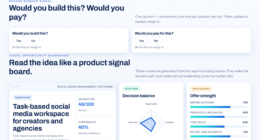
📊 Full opportunity report: Single Digits: The April That Closed the Open-Weight Gap on ThorstenMeyerAI.com — validation score, market gap, and execution plan.

Get business pricing on office and shipping supplies
- Business-only prices and quantity discounts
- Tax-exempt purchasing
- Multiple users, one account, clear invoices
TL;DR
In April 2026, the performance gap between open-weight and closed proprietary AI models narrowed to a single digit across major benchmarks. This development challenges traditional assumptions about AI cost and quality, prompting shifts in enterprise strategies and regulatory outlooks.
In April 2026, open-weight AI models achieved benchmark scores nearly identical to those of closed proprietary models across key evaluation categories, marking a significant shift in the AI landscape and challenging the dominance of paid API models.
Over the course of April 2026, six labs released major open-weight models, including DeepSeek V4-Pro with approximately one trillion parameters, and others like Meta’s Llama 4, Google’s Gemma 4, Mistral Small 4, and Zhipu AI’s GLM-5.1. Benchmark comparisons show the performance gap between open and closed models has narrowed to a single digit percentage across tasks such as reasoning, code generation, multimodal understanding, and tool use. This marks a turning point, as open models now match or surpass many of the capabilities previously exclusive to costly API-based closed models.Experts note that the performance improvements are driven by scalable distillation techniques and access to open base weights, making open-weight models more competitive without the need for extensive proprietary resources. The shift is impacting enterprise economics, with inference costs for large open models now often lower than API fees, and model selection increasingly a question of portfolio management rather than quality alone.
Impact of April 2026 Benchmark Convergence
This development fundamentally alters the economics and strategic considerations for enterprise AI deployment. Companies can now self-host models that perform on par with expensive API services, reducing costs and increasing control over their AI systems. It also challenges the traditional moat of proprietary weights, emphasizing the importance of data, workflows, and trust layers instead of model exclusivity. Additionally, regulatory and licensing considerations are gaining prominence as open models become more capable and widespread, potentially prompting new restrictions on open-weight training and deployment.
Products Worth Considering

Canon IVY 2 Mini Photo Printer Bundle, Pure White

Samsung 27-inch Odyssey OLED G6 QD-OLED QHD Gaming Monitor

Apple iPad Air (2025) 13‑inch Wi‑Fi 256 GB – Space Gray (M3 chip)
As an affiliate, we earn on qualifying purchases.
April 2026 Open-Weight Model Releases and Benchmark Data
Throughout April 2026, multiple AI labs released significant open-weight models, including DeepSeek V4-Pro, Meta’s Llama 4, Google’s Gemma 4, and others. These releases followed a period of rapid innovation, with the benchmark gap narrowing steadily over the past few months. Previously, closed models held a substantial performance advantage, justified by their premium pricing and API-based deployment. The recent convergence indicates that open weights, combined with scalable distillation, are now closing this gap, disrupting the established AI market dynamics.
Prior to this, the industry largely viewed open models as inferior, with the performance gap justifying their lower adoption in enterprise settings. The April data now suggests that open weights can match or surpass closed models in key tasks, prompting a reevaluation of AI procurement and deployment strategies.
“Distillation and open weights are now demonstrably scalable to the frontier, challenging the traditional moat of proprietary models.”
— Industry expert
“The economics now favor self-hosted open models over API-based solutions, especially for large-scale, token-heavy workflows.”
— AI enterprise CTO
Remaining Questions About Long-Term Stability
While benchmark scores have converged, it remains unclear whether open-weight models will sustain this performance in real-world, large-scale deployments. The durability of the performance gap and the potential for closed models to re-advance with next-generation architectures are still under observation. Additionally, regulatory responses to the rapid open-weight proliferation are uncertain, particularly regarding licensing and compute restrictions.
Upcoming Developments and Industry Responses
Expect closed labs to respond by raising the bar with next-generation models like GPT-6, Claude 5, and Gemini 3, likely re-opening the performance gap temporarily. They may also shift focus toward platform features like long memory and tool integration, making the underlying weights less critical. Regulatory measures targeting open-weight training and inference are anticipated, potentially affecting future model development and deployment strategies. Enterprises should prepare to reassess their AI infrastructure investments accordingly.
Key Questions
What does the convergence of open and closed models mean for AI pricing?
The cost advantage of proprietary API models diminishes as open-weight models match performance, allowing enterprises to self-host and reduce expenses significantly.
Will open models fully replace closed API services?
While open models are now competitive, closed API models may still lead in platform features, long-term support, and organizational tools, maintaining a strategic edge for some providers.
How might regulators respond to this shift?
Regulatory bodies could implement restrictions on open-weight training and inference, such as FLOP thresholds or licensing controls, to maintain market balance and security.
What should enterprises do in response to these developments?
Organizations should consider piloting open-weight models, re-evaluate their AI procurement strategies, and focus on building robust data and workflow layers to maintain competitive advantage.
Source: ThorstenMeyerAI.com