
📊 Full opportunity report: The Future Of AI Tech: Particle Geometry Mapping In 'SINGULARITY' on ThorstenMeyerAI.com — validation score, market gap, and execution plan.

Get business pricing on office and shipping supplies
- Business-only prices and quantity discounts
- Tax-exempt purchasing
- Multiple users, one account, clear invoices
TL;DR
The ‘SINGULARITY’ space showcases a novel AI-driven design technique called Particle Geometry Mapping, transforming abstract data into immersive environments. This development highlights a significant leap in AI and design integration, with potential applications across multiple industries, as detailed in the original analysis.
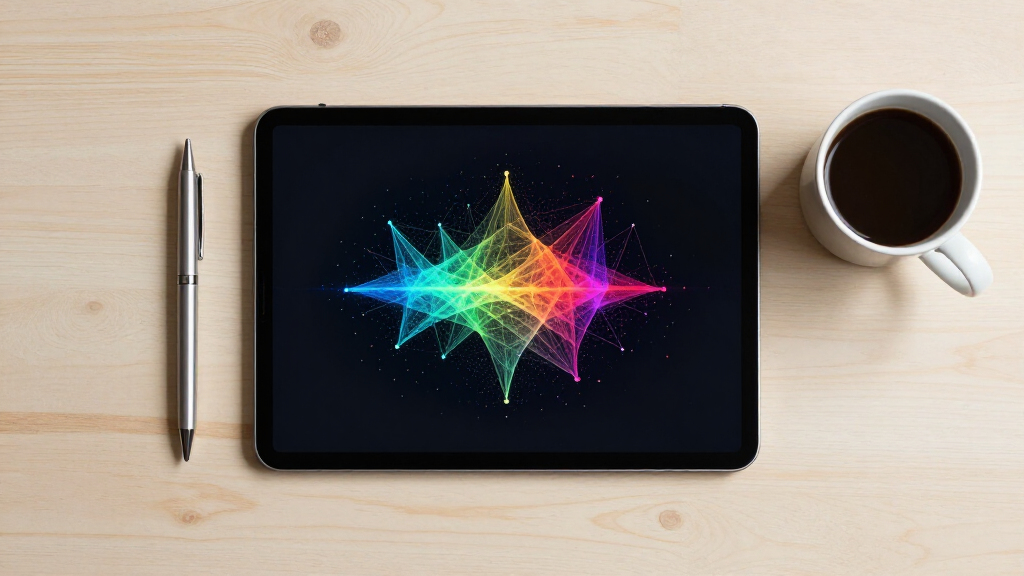
The ‘SINGULARITY’ project, a pioneering AI-driven environment, has introduced Particle Geometry Mapping as a core technique to translate complex data into immersive spatial designs. This development, showcased through a live space, represents a major step forward in how AI can influence physical and virtual environments, marking a significant milestone in intelligent design technology.
Developed as part of a design case study, ‘SINGULARITY’ employs Particle Geometry Mapping to convert abstract data sets into tangible 3D forms that populate a stark black room, transforming it into a dynamic visual environment, as explored in the original analysis. According to Thorsten Meyer, this technique allows for the seamless translation of complex algorithms into immersive spatial experiences, blurring the lines between data visualization and physical space.
The project demonstrates how advanced algorithms can generate intricate geometries that evoke curiosity and engagement, with potential applications in virtual reality, architectural design, and AI interface development. For more details, see the original analysis. The environment is designed to challenge traditional notions of form and function, emphasizing the role of AI in creative processes.
While the technical process behind Particle Geometry Mapping has been detailed in the project’s documentation, experts note that the full scope of its practical applications remains under exploration. The project’s creators emphasize its role as a blueprint for future AI-driven environments, where data becomes a tangible, aesthetic experience.
The future of AI tech · Design intelligence
Particle Geometry Mapping in ‘SINGULARITY’
Abstract data becomes inhabitable space. The SINGULARITY project uses AI-driven particle systems to generate intricate three-dimensional geometries—blurring the boundary between visualization, architecture and immersive experience.
How it works
From signal to spatial experience
The technique converts information into particles, discovers relationships through AI and assembles those relationships into an explorable geometry.
Ingest
Encode the data
Abstract inputs are translated into particles carrying values, positions and behavioral attributes.
Interpret
Model relationships
AI-driven algorithms identify patterns, affinities, tensions and meaningful clusters.
Generate
Form geometry
Particle interactions produce intricate structures that give visible form to hidden information.
Experience
Enter the space
The geometry is rendered as an immersive physical, virtual or interactive environment.
Potential impact
Where mapped geometry could matter
The project suggests a broader future in which AI does more than interpret data: it actively shapes adaptive environments around people.
Virtual reality
Responsive worlds
Datasets could generate explorable landscapes that evolve with user behavior, live signals or narrative context.
Architecture
Data-shaped form
Designers could turn environmental, structural or occupancy information into spatial concepts and visual studies.
Industrial design
Generative structures
Complex requirements could be encoded into forms optimized for function, material use and human interaction.
Interactive media
Living installations
Public spaces, exhibitions and performances could respond visually to audiences or real-time information.
AI interfaces
Spatial intelligence
Users could navigate information through depth, proximity and movement instead of conventional flat screens.
Data storytelling
Information felt
Invisible patterns could become tangible experiences that invite curiosity, interpretation and emotional engagement.
Design comparison
A different relationship with data
Particle Geometry Mapping extends visualization from something people observe into an environment they can potentially occupy and influence.
| Capability | Traditional visualization | Generative 3D design | Particle Geometry Mapping |
|---|---|---|---|
| Represents complex data | ✓Strong | ~Variable | ✓Core purpose |
| Creates inhabitable space | ✗Rare | ✓Possible | ✓Native |
| Adapts to live inputs | ~Limited | ~Configured | ✓High potential |
| AI as creative partner | ✗Minimal | ✓Common | ✓Foundational |
| Commercial maturity | ✓Established | ~Growing | ~Exploratory |
✓ demonstrated capability · ~ partial or emerging · ✗ limited fit
Opportunity map
Potential is high. Readiness is uneven.
These directional indicators summarize the opportunities described by the project—not verified market forecasts or deployment scores.
Indicative application potential
Current maturity
SINGULARITY demonstrates the concept convincingly, but scalability, interoperability and commercial usability still require testing.
Prototype-to-market spectrum
Development horizon
What happens next
The pathway to broader adoption depends on technical documentation, platform integration and evidence that generated environments remain useful at scale.
Now
Live demonstration
The black-room environment establishes the visual and experiential premise.
Next
Technical refinement
Developers test data pipelines, rendering performance and interaction models.
Then
Tool integration
Connections to VR platforms and architectural workflows demonstrate utility.
Future
Adaptive deployment
Commercial environments respond dynamically to users and changing conditions.
Open question 01
Can it scale?
Large datasets and real-time environments may create significant processing and rendering demands.
Open question 02
Can teams integrate it?
Adoption depends on compatibility with established design, visualization and production systems.
Open question 03
Can it prove value?
Future pilots must show that immersive geometry improves decisions, usability or engagement.
Particle Geometry Mapping allows us to transform complex data into immersive spatial experiences, opening new horizons for AI in creative design. — Thorsten Meyer
Traceability chain
The central idea, connected
Each stage preserves a conceptual link between the original information and the final immersive encounter.
Implications of Particle Geometry Mapping for AI and Design
This development signifies a major advancement in AI-driven design techniques that could revolutionize how environments are created across industries. By translating complex data into immersive forms, Particle Geometry Mapping opens new pathways for virtual reality, architectural visualization, and interactive interfaces. It highlights the potential for AI to not only analyze data but to shape physical and virtual spaces in innovative ways, impacting fields ranging from entertainment to industrial design.
The project underscores a shift towards more integrated, data-driven environments where AI acts as a creative partner, not just a tool. As this technology matures, it could enable more personalized, adaptable spaces that respond dynamically to user inputs or environmental changes, enhancing user engagement and functionality.
virtual reality headsets for immersive design
As an affiliate, we earn on qualifying purchases.
As an affiliate, we earn on qualifying purchases.
Technical Foundations and Development Timeline of ‘SINGULARITY’
The ‘SINGULARITY’ project was conceived as a design experiment to explore the intersection of AI, geometry, and immersive space. Developed by a team of designers and technologists, it leverages advanced algorithms to generate complex geometries based on data inputs, which are then rendered into physical or virtual environments.
According to Thorsten Meyer, the technique of Particle Geometry Mapping involves encoding data points as particles that are manipulated through AI-driven algorithms to form intricate structures. This approach builds on prior advancements in data visualization and computational design, pushing these concepts into a more immersive and interactive realm.
While the project was publicly unveiled recently, its conceptual roots date back several years of research into AI-generated environments. The live demonstration offers a glimpse into the future potential of this technology, although detailed technical specifications remain proprietary or under academic review.
“Particle Geometry Mapping allows us to transform complex data into immersive spatial experiences, opening new horizons for AI in creative design.”
— Thorsten Meyer
As an affiliate, we earn on qualifying purchases.
Unanswered Questions About Practical Applications and Scalability
Details remain scarce about how widely Particle Geometry Mapping can be applied outside of the ‘SINGULARITY’ project. It is unclear whether the technique is ready for commercial or industrial deployment or if it remains primarily a conceptual proof of concept. Experts note that further testing and development are needed to assess scalability, integration with existing systems, and real-world usability.
Additionally, the long-term impact on industries such as architecture, entertainment, or virtual environments has yet to be fully evaluated. The project’s creators have not disclosed specific plans for commercialization or broader implementation.
AI-powered architectural design tools
As an affiliate, we earn on qualifying purchases.
As an affiliate, we earn on qualifying purchases.
Next Steps for Development and Broader Adoption
The immediate next step involves further technical refinement and testing of Particle Geometry Mapping in diverse environments. Developers aim to explore its integration with virtual reality platforms and architectural design tools, aiming to demonstrate practical utility.
Industry observers anticipate that subsequent demonstrations and academic publications will clarify its potential for widespread adoption. The creators plan to release more detailed technical documentation and collaborate with industry partners to explore commercial applications.
Overall, the project signals a promising trajectory for AI-driven environment creation, with future developments likely to focus on scalability, user interaction, and real-world deployment.
particle system visualization hardware
As an affiliate, we earn on qualifying purchases.
As an affiliate, we earn on qualifying purchases.
Key Questions
What is Particle Geometry Mapping?
Particle Geometry Mapping is an AI-driven technique that converts complex data sets into intricate 3D geometries, which can be used to create immersive environments or visualizations.
How does ‘SINGULARITY’ demonstrate this technology?
The ‘SINGULARITY’ project uses Particle Geometry Mapping to transform data into a visual environment, turning abstract information into tangible, immersive space.
Is this technology ready for commercial use?
It is not yet clear whether Particle Geometry Mapping is ready for widespread commercial deployment. Further testing and development are needed to evaluate its scalability and practicality.
What industries could benefit from this technology?
Potential applications include virtual reality, architecture, industrial design, and interactive media, where immersive, data-driven environments are valuable.
When will more details about this technology be available?
Further technical details and demonstrations are expected in upcoming academic publications and industry collaborations, but a specific timeline has not been announced.
Source: ThorstenMeyerAI.com
Halloween Picks
halloween
As an affiliate, we earn on qualifying purchases.