
TL;DR

Get office and shipping supplies delivered free — and shop member deals
- Fast, free delivery on millions of items
- Access to Prime Big Deal Days deals on October 6–7
- Prime Video, Amazon Music and more included
A recent test compared Kronos, an AI foundation model, against a traditional Brownian motion model for predicting five-minute Bitcoin price movements. The results showed Brownian motion performed slightly better, with no significant advantage for Kronos in out-of-sample tests. The findings raise questions about AI’s current edge in short-term crypto trading.
Recent testing shows that in five-minute Bitcoin trading, a traditional Brownian motion model outperformed Kronos, a leading open-source foundation model for financial time series, in predicting market direction.
Researchers conducted an offline comparison of Kronos and a Brownian motion baseline using 497 historical Bitcoin trades recorded by a proprietary trading bot. The test involved reconstructing market context from OHLCV data and running the models to forecast whether BTC would close above the opening price within five minutes. The results indicated that Brownian motion achieved a lower Brier score and log-loss than Kronos across the entire sample, suggesting better predictive accuracy.
In the out-of-sample test, which included the last 249 trades not used during model training, the performance difference between Kronos and Brownian was negligible, with a Brier score difference of just 0.0011—statistically insignificant. This suggests that Kronos did not demonstrate a clear advantage over the traditional model when tested on unseen data.
Why It Matters
The findings challenge assumptions that advanced AI foundation models like Kronos can reliably outperform simple, well-understood statistical models in short-term crypto trading. Given the widespread interest in applying AI to financial markets, the results imply that current AI tools may not yet provide a consistent edge over traditional methods in high-frequency trading scenarios, at least within the tested parameters.
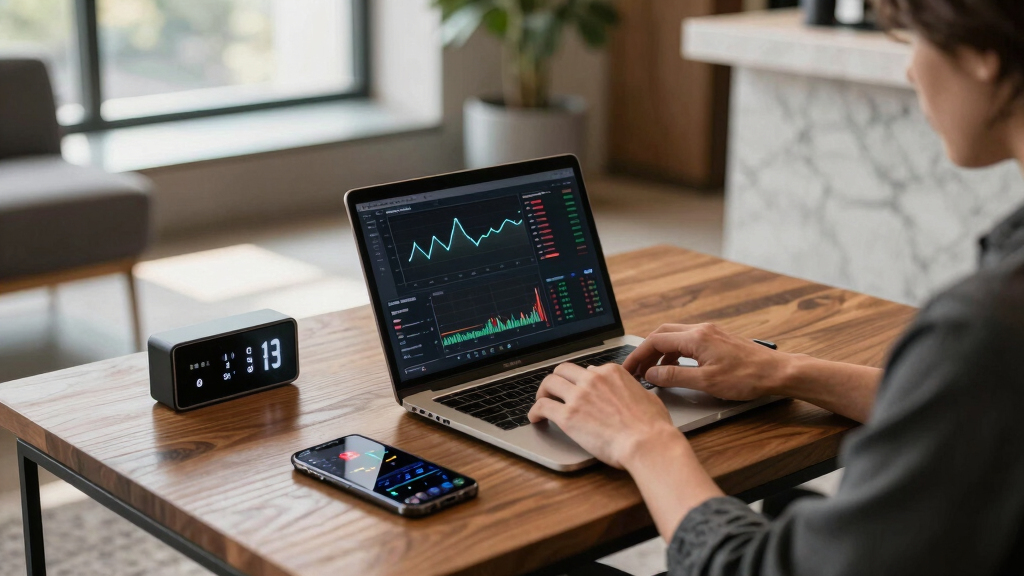
Bitcoin five-minute trading indicator
As an affiliate, we earn on qualifying purchases.
As an affiliate, we earn on qualifying purchases.
Background
Over the past two weeks, the same trading bot tested multiple strategies against Polymarket’s five-minute Up/Down markets, revealing that most ‘edges’ identified by the bot were mechanical artifacts that did not hold up in out-of-sample testing. The bot’s fair-value estimate relies on a geometric Brownian motion model, which assumes independent, normally-distributed returns—an assumption increasingly questioned in modern markets. Kronos, trained on millions of candlesticks from global exchanges, was introduced as a potential improvement over this traditional approach, prompting this comparative analysis.
“Kronos does not outperform the Brownian baseline in out-of-sample testing, indicating that current AI models may not yet have a consistent edge in short-term crypto prediction.”
— Thorsten Meyer
“Kronos is designed as a research tool, not a trading system, and our results reflect its current limitations in live market prediction.”
— Research team behind Kronos
As an affiliate, we earn on qualifying purchases.
What Remains Unclear
It remains unclear whether future versions of Kronos or other foundation models trained on different datasets could outperform traditional models in similar conditions. The current study is limited to five-minute BTC trades and does not account for longer-term or different market conditions. Additionally, the impact of live trading factors such as slippage and transaction costs was not analyzed.
As an affiliate, we earn on qualifying purchases.
What’s Next
Further research is expected to test Kronos and similar models across different timeframes, assets, and market conditions. Developers may also explore integrating these models into live trading systems to evaluate real-world performance, while researchers continue to refine AI architectures for financial prediction.
high-frequency trading analysis software
As an affiliate, we earn on qualifying purchases.
As an affiliate, we earn on qualifying purchases.
Key Questions
Does Kronos outperform traditional models in crypto trading?
Current evidence suggests that Kronos does not outperform traditional Brownian motion models in short-term Bitcoin prediction, especially in out-of-sample tests.
What does this mean for AI in financial markets?
It indicates that AI foundation models, at least in their current form, may not provide a consistent edge over traditional statistical methods for high-frequency crypto trading.
Can Kronos be improved to beat traditional models?
Future versions or different training approaches might enhance Kronos’s predictive power, but current results show no significant advantage.
Is this testing relevant to live trading?
This study was conducted offline with historical data; real-time trading involves additional factors that could influence performance.
Source: Thorsten Meyer AI
Halloween Picks
halloween
As an affiliate, we earn on qualifying purchases.