Small business inventory management software ranges from accounting suites with stock tracking to retail POS systems built around sales and inventory control. CashFootprint Retail POS is my best overall pick for shops that need inventory tied closely to checkout, while Inventoria stands out for focused stock control and Sage 50 Premium for businesses that want inventory alongside broader accounting functions. The main tradeoff is whether you need retail selling tools, accounting depth, or straightforward stock management—and these options do not all cover those needs equally. I compare their workflows, likely fit, and limitations so you can match the software to your operation. Read on for the full breakdown and guidance on choosing without paying for tools your business will not use.

Get business pricing on office and shipping supplies
- Business-only prices and quantity discounts
- Tax-exempt purchasing
- Multiple users, one account, clear invoices
Key Takeaways
- CashFootprint leads for a retail-first workflow because its POS and inventory focus better matches shops that update stock as they sell.
- Inventoria is the clearest fit when stock control is the main job and a full accounting suite would add unnecessary complexity.
- Sage 50 Premium is the accounting-led pick, while Sage 50 Pro editions suit businesses seeking a narrower Sage accounting setup.
- The Sage 50 options are not interchangeable: the Premium edition adds a higher-tier accounting package, while Pro listings differ by delivery format.
- MRBOSS iPOS and NWIQ POS offer shop-oriented POS alternatives, but buyers should verify device, setup, and workflow compatibility before committing.
| Sage 50 Pro Accounting 2024, U.S. Retail Edition (Boxed Version) |  | Best for Bookkeeping-First Inventory | Edition: 2024 U.S. Retail Edition | Users: 1 | Format: Boxed version | VIEW LATEST PRICE | See Our Full Breakdown |
| CashFootprint Retail Point of Sale and Inventory Control Software, Standard Edition |  | Best for Windows Retail POS | Edition: Standard | Platform: Windows 7, 8, 8.1, and 10 | License requirement: One license per computer | VIEW LATEST PRICE | See Our Full Breakdown |
| Inventoria Software for Stock Control and Inventory Management (Download) |  | Best for Straightforward Stock Control | Product type: Downloadable inventory management software | Stock tools: Stock monitoring, warnings, and reports | Purchasing: Purchase order creation and emailing | VIEW LATEST PRICE | See Our Full Breakdown |
| Sage 50 Premium Accounting 2024 U.S. Retail Edition (1-User, PC Download) |  | Best Premium Accounting and Inventory | Software name: Sage 50 Premium Accounting | Version: 2024 | Edition: U.S. Retail | VIEW LATEST PRICE | See Our Full Breakdown |
| MRBOSS iPOS Point of Sale Software for iOS |  | Best for iPad-Based Retail and Food Service | Platform: iOS, including iPad | Software installation: Not required | Core features: Order management, customizable receipts, and tax calculations | VIEW LATEST PRICE | See Our Full Breakdown |
| Sage 50 Pro Accounting 2024 U.S. Retail Edition – PC Download | 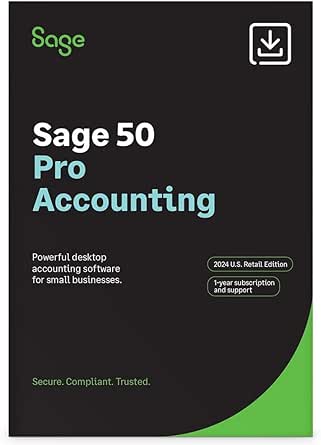 | Best for Accounting-First Inventory Management | Edition: 2024 U.S. Retail Edition | Platform: PC | Delivery: Download | VIEW LATEST PRICE | See Our Full Breakdown |
| NWIQ POS Inventory and Retail Software for Small Shops |  | Best for Offline Small-Shop Checkout | Software type: Point-of-sale and inventory software | Compatible devices: PC, laptop, or desktop | Operating system: Windows | VIEW LATEST PRICE | See Our Full Breakdown |
| small business inventory management software | Edition |
|---|---|
| Sage 50 Pro Accounting 2024 | 2024 U.S. Retail Edition |
| CashFootprint Retail Point of | Standard |
| Inventoria Software for Stock | — |
| Sage 50 Premium Accounting 202 | U.S. Retail |
| MRBOSS iPOS Point of Sale Soft | — |
| Sage 50 Pro Accounting 2024 U. | 2024 U.S. Retail Edition |
| NWIQ POS Inventory and Retail | — |
More Details on Our Top Picks
Sage 50 Pro Accounting 2024, U.S. Retail Edition (Boxed Version)
Sage 50 Pro suits a small business that wants inventory records tied closely to its accounting, invoicing, bills, and cash flow. Its job costing and customizable reports also help owners connect stock and expenses to project profitability, a broader accounting focus than the stock-control tools in Inventoria. Compared with Sage 50 Premium, Pro is the simpler fit when advanced budgeting is not a priority. The tradeoff is its single-user desktop setup: it is less suited to teams that need shared, cloud-based access, and the boxed format may be less convenient than a download. I would choose it when bookkeeping and inventory need to live in one workflow, not when point-of-sale speed or multi-user collaboration is the main need.
Pros:- Combines inventory tracking with invoicing, bill payment, and cash-flow management.
- Job costing helps connect business expenses and inventory to project profitability.
- Customizable financial reports and chart of accounts support tailored bookkeeping.
- Includes one year of Sage Business Care access to online support.
Cons:- A one-user license limits collaboration as a business adds staff.
- Desktop software is less suited to owners who need cloud access across locations.
- Its accounting emphasis may be more than needed for a shop seeking standalone stock control.
Best for: A solo owner of a small business who needs inventory alongside invoicing, bill payment, job costing, and financial reporting.
Not ideal for: Retail teams that need multiple staff to access live inventory or owners who want cloud-first, multi-user workflows.
- Edition:2024 U.S. Retail Edition
- Users:1
- Format:Boxed version
- Software type:Desktop accounting software
- Support plan:One-year Sage Business Care plan with online support
- Inventory and accounting features:Bookkeeping, invoicing, bill payment, inventory management, and cash-flow tracking
- Additional business tools:Job costing and financial reporting
Our verdict“Choose Sage 50 Pro if you want a single-user desktop accounting system that keeps inventory and bookkeeping together.”
CashFootprint Retail Point of Sale and Inventory Control Software, Standard Edition
CashFootprint Standard is built around the daily retail transaction: sales update quantities, while stock alerts, refund tracking, discounts, and multiple tax rates help staff manage common checkout tasks. That makes it a more POS-centered choice than Inventoria, which focuses on stock monitoring and purchase orders rather than the broader register workflow described here. Configurable employee permissions and manager override give owners a way to separate staff access. Its main appeal is the no recurring software license or subscription fees, but each computer needs its own license, and the listed platform support is limited to older Windows versions. Credit card processing is optional, so buyers should check payment needs before choosing it. I’d favor it for a Windows-based shop that values local retail controls over broader cloud access.
Pros:- Automatically adjusts inventory quantities as sales are recorded.
- Stock alerts can help staff spot replenishment needs before items run out.
- Includes discounts, refund tracking, and support for multiple sales tax rates.
- Configurable employee permissions and support are included without recurring software fees.
Cons:- Requires a separate license for each computer.
- The listed platform compatibility is limited to Windows 7, 8, 8.1, and 10.
- Credit card processing is optional rather than a standard included feature.
Best for: An independent shop using a compatible Windows computer that needs POS-linked stock updates, employee permissions, and refund tracking.
Not ideal for: Businesses using Mac, iOS, or newer unlisted platforms, or shops that need a shared license across multiple computers.
- Edition:Standard
- Platform:Windows 7, 8, 8.1, and 10
- License requirement:One license per computer
- Recurring software fees:No recurring software license or subscription fees
- Inventory features:Stock alerts, inventory importing, and automatic quantity updates
- Sales features:Discount management, refund tracking, and multiple sales tax rates
- Employee access:Configurable permissions and manager override
- Support and updates:Email, phone, and remote desktop support; free software updates
- Credit card processing:Optional
Our verdict“Pick CashFootprint if your shop runs on a compatible Windows PC and needs inventory control tied to everyday POS transactions.”
Inventoria Software for Stock Control and Inventory Management (Download)
Inventoria keeps its focus on inventory rather than combining stock tools with a full accounting or checkout system. Stock warnings and reports help owners monitor quantities, while purchase orders can be created and emailed directly to vendors—useful when replenishment is the main task. It also supports barcode scanning for adding items and keeps customer and supplier records. Compared with Sage 50 Pro, it does not offer the same listed mix of bookkeeping, bill payment, and job costing; compared with CashFootprint, its description does not center on POS transactions or employee permissions. That narrower scope can be a benefit for a business that wants a focused stock tool, but buyers should check whether its unspecified platform, licensing, and integration details fit their operation before committing.
Pros:- Stock warnings and reports help owners monitor inventory levels.
- Purchase orders can be created and emailed directly to vendors.
- Barcode scanning supports item entry.
- Customer and supplier records keep basic trading contacts in the software.
Cons:- The supplied product details do not specify accounting or POS transaction features.
- Platform compatibility and licensing details are not provided in the product data.
- Businesses needing richer financial workflows may need a separate accounting system such as Sage 50 Pro.
Best for: A small wholesaler, studio, or stockroom that needs basic quantity monitoring, vendor purchase orders, and barcode-assisted item entry.
Not ideal for: Retailers that need a built-in checkout workflow, or businesses seeking accounting, payroll, or clearly specified POS integrations in one system.
- Product type:Downloadable inventory management software
- Stock tools:Stock monitoring, warnings, and reports
- Purchasing:Purchase order creation and emailing
- Contacts:Customer and supplier database
- Item entry:Barcode scanning
- Delivery format:Download
Our verdict“Choose Inventoria when stock monitoring and vendor reordering matter more than an all-in-one accounting or POS system.”
Sage 50 Premium Accounting 2024 U.S. Retail Edition (1-User, PC Download)
Sage 50 Premium is the more feature-rich accounting choice for businesses that want inventory tied to budgeting, job costing, bills, and customized financial reports. Its advanced budgeting tools give owners more room to plan than Sage 50 Pro, making Premium a stronger fit when financial analysis matters alongside stock control. Like Pro, it is a one-user desktop product, so the extra accounting depth does not solve collaboration or cloud-access needs. Compared with Inventoria, Premium covers a wider financial workflow but is less focused on a lightweight stock-control-only setup. The listed support plan lasts one year, and continued support and updates require a subscription model. I’d choose it for a business with more involved budgeting and cost tracking, not for a shop that mainly needs fast checkout and replenishment.
Pros:- Combines inventory management with invoicing, bill payment, and expense tracking.
- Job costing helps track project costs and profitability.
- Advanced budgeting and customizable reports support closer financial planning.
- Includes one year of Sage Business Care with online support access.
Cons:- The one-user license can limit collaboration as the business grows.
- Desktop-based access is less flexible than a cloud-first system.
- Continued support and updates require a subscription model.
Best for: A single-user small business that needs inventory connected to job costing, advanced budgeting, bill payment, and detailed financial reports.
Not ideal for: Growing teams that need simultaneous access, or retailers looking primarily for cloud-based POS and stock replenishment tools.
- Software name:Sage 50 Premium Accounting
- Version:2024
- Edition:U.S. Retail
- License type:1-user
- Platform and format:PC download
- Support plan:One-year Sage Business Care
- Inventory and accounting features:Inventory management, invoicing, bill payment, and expense tracking
- Planning and costing:Advanced budgeting and job costing
- Former name:Peachtree Accounting
Our verdict“Choose Sage 50 Premium if your inventory decisions need to sit alongside detailed budgets, job costs, and financial reporting.”
MRBOSS iPOS Point of Sale Software for iOS
MRBOSS iPOS makes the most sense for a shop, cafe, or restaurant that wants to run orders from an iOS device and connect checkout with QR code ordering and delivery platforms. Its Uber Eats and DoorDash integrations set it apart from CashFootprint, which is described as Windows POS software with retail-focused employee controls and stock alerts. MRBOSS also offers cloud backup, mobile reports, and cloud printing, while compatible scanners and cash drawers can support a more familiar counter setup. The tradeoff is that its listed inventory capabilities are less specific than CashFootprint’s automatic quantity updates and stock alerts. It is also iOS-only, and the included remote support and iCloud service are specified for one month, so buyers should confirm what continued service entails.
Pros:- Supports QR code ordering and integrations with Uber Eats and DoorDash.
- Cloud backup, mobile reporting, and cloud printing support mobile operations.
- Works with compatible cash drawers, barcode scanners, and printers.
- Does not require software installation and includes free updates.
Cons:- Designed for iOS devices, limiting its fit for businesses on other platforms.
- Remote support and iCloud service are specified for one month.
- The supplied details describe POS and order tools more clearly than inventory tracking functions.
Best for: An iPad-based cafe, restaurant, grocery, or small retailer that needs order handling, QR ordering, and delivery-platform connections.
Not ideal for: Businesses running Windows or Android, or inventory-led retailers that need clearly specified stock alerts and automatic quantity updates.
- Platform:iOS, including iPad
- Software installation:Not required
- Core features:Order management, customizable receipts, and tax calculations
- Ordering and delivery:QR code ordering; Uber Eats and DoorDash integrations
- Cloud tools:Cloud backup, mobile reporting, and cloud printing
- Compatible devices:Cash drawers, barcode scanners, and printers
- Support:One month of remote support
- Cloud service:One month of iCloud service
- Software updates:Free updates
Our verdict“Choose MRBOSS iPOS if your business runs on iOS and needs mobile ordering and delivery connections more than detailed stock controls.”
Sage 50 Pro Accounting 2024 U.S. Retail Edition – PC Download
Sage 50 Pro suits a small business that wants inventory tied to its day-to-day accounting rather than a standalone stock tool. Alongside inventory management, it handles invoicing, bills, expenses, cash flow, and job costing, so owners can connect stock activity with broader financial records. Customizable reports add flexibility for tracking business performance. Compared with NWIQ POS, which is centered on checkout, returns, and shop-floor sales, Sage is the stronger fit when bookkeeping and job costs matter as much as stock counts. The tradeoff is its single-user, PC-only setup: it is less suited to a team sharing inventory updates or a retailer that needs POS-led workflows. The included one-year online support plan may help buyers who want assistance getting started.
Pros:- Combines inventory with invoicing, bill payment, and expense tracking
- Job costing can connect stock and costs to specific work
- Customizable financial reports support tailored business tracking
- Includes one year of Sage Business Care with online support
Cons:- Limited to one user, which can constrain shared workflows
- Requires a PC, limiting device flexibility
- Accounting-focused workflow may be less suited to fast retail checkout than NWIQ POS
Best for: A PC-based owner-operator who manages inventory alongside invoicing, expense tracking, and job costing.
Not ideal for: Retail teams that need multiple staff to update stock, businesses using non-PC systems, or shops that prioritize checkout and offline POS functions.
- Edition:2024 U.S. Retail Edition
- Platform:PC
- Delivery:Download
- User limit:1 user
- Software type:Desktop accounting software
- Inventory and accounting features:Inventory management, invoicing, bill payment, expense tracking, and cash flow management
- Additional features:Job costing and customizable financial reporting
- Support plan:One-year Sage Business Care plan with online support
Our verdict“Choose Sage 50 Pro if one PC user needs inventory management closely linked to accounting, expenses, and job costing.”
NWIQ POS Inventory and Retail Software for Small Shops
NWIQ POS is the more checkout-focused choice for small shops, booths, counters, and food vans that need sales and inventory functions in one Windows setup. It supports billing, held sales, returns, receipts, promotions, payment types, and reports; offline operation can keep transactions moving when connectivity is unavailable. Touchscreen and keyboard input give shops a choice of checkout style, while GST-ready functionality may suit businesses that need it. Compared with Sage 50 Pro, NWIQ puts more emphasis on point-of-sale tasks, while Sage links inventory to accounting, expenses, and job costing. That focus comes with limits: the license covers one PC, one setup, and one business, hardware is not included, and refunds or returns are not accepted. Buyers should confirm the setup fits before ordering.
Pros:- Built around sales and inventory workflows for small retail setups
- Supports holds, returns, receipts, promotions, and multiple payment types
- Offline transactions can keep checkout available without a connection
- Offers touchscreen or keyboard input plus sales summaries and reports
Cons:- License is restricted to one PC, one setup, and one business
- POS hardware is not included
- Refunds and returns are not accepted
Best for: Owners of a single-location convenience shop, market booth, counter, or food van who need Windows-based checkout and inventory that can work offline.
Not ideal for: Businesses needing multi-PC licensing, included POS hardware, flexible returns, or accounting and job-costing tools like Sage 50 Pro.
- Software type:Point-of-sale and inventory software
- Compatible devices:PC, laptop, or desktop
- Operating system:Windows
- Functions:51 modules and key reports
- Input:Touchscreen and/or keyboard
- Connectivity:Offline operation
- License:One PC, one setup, one business
- Delivery:Download link; product key emailed
- Hardware and returns:Hardware not included; refunds and returns not accepted
Our verdict“Pick NWIQ POS for a single Windows-based shop that needs offline checkout and inventory functions, provided its license and no-return terms fit your setup.”

How We Picked
I ranked these products by how directly they address the day-to-day inventory needs of a small business: recording stock, tying sales to inventory, supporting retail workflows, and fitting into accounting routines. I gave more weight to a clear operational fit than to a long feature list. A small shop selling at a counter benefits from POS-linked stock changes; a business that mainly needs stock records may be better served by dedicated inventory software; and an owner managing books alongside inventory may prefer an accounting suite.
The order also reflects usability and the tradeoffs suggested by each product’s focus. Retail-centered options rank ahead for checkout-led shops, while Sage editions rank higher for buyers who value accounting integration over a specialized retail workflow. I treated edition differences and delivery formats as separate buying decisions, and factored in practical questions such as platform fit and whether the software’s scope may exceed a small operation’s needs. These listings provide limited detail on some compatibility and support points, so buyers should confirm those directly before choosing.
Factors to Consider When Choosing Small Business Inventory Management Software
Before choosing software, map how inventory moves through your business—not just how many products you sell. The best fit depends on where stock enters the system, how sales are recorded, and who needs accurate counts. These broader decisions can prevent a mismatch that a feature checklist alone may not reveal.
Match the system to the way you sell
A counter-service shop needs inventory updates that follow each sale, so POS linkage can matter more than advanced accounting tools. A business that sells mainly by invoice or manages stock in a back office may care more about receiving, adjustments, and records than checkout speed. Write down every sales channel before choosing: in-store, phone orders, online marketplaces, or a mix. A common mistake is buying a POS-centered system for a business where most orders happen elsewhere. Ask how each channel changes on-hand quantities and whether staff must enter sales twice. The more manual syncing required, the more likely stock records will drift.
Decide how much accounting should live in the same system
An integrated accounting and inventory package can reduce duplicate entry, but it may bring more menus and setup work than a stock-focused tool. Separate systems can be easier to learn, yet they require a dependable process for reconciling sales, purchasing, and inventory values. List the reports your bookkeeper or accountant actually uses before paying for a higher-tier package. Do not assume that an accounting label means every inventory workflow is covered in the way your business needs. Confirm how inventory transactions flow into bookkeeping and whether that matches your existing process. Paying for integration makes most sense when it replaces repeated work rather than adding another system to maintain.
Check platform and deployment fit before importing data
Software that depends on a particular computer, operating system, or mobile device can shape how staff access records each day. Verify supported devices, operating-system versions, installation requirements, and whether multiple users can work at once. A download or boxed edition may not behave like a cloud service, so check how backups, updates, and access away from the main workstation work. Do this before entering product lists or customer records; moving data later can take more effort than expected. If employees need to check stock from a sales floor or another location, test that exact workflow with the vendor. Device fit is not a minor technical detail when it determines who can keep counts current.
Plan for product complexity and stock accuracy
Count more than the number of items: variants, bundles, units of measure, and supplier-specific identifiers can make a modest catalog surprisingly complex. Ask whether the software can represent your products and purchasing process without workarounds. Set a realistic routine for receiving deliveries, recording damaged goods, and performing cycle counts before launch. A system cannot correct stock records if staff skip those steps or use inconsistent product names. Many small businesses benefit more from a clear count process than from a large set of unused features. Choose a tool your team can keep accurate during a busy week, not just one that looks capable in a demonstration.
Compare ownership effort, not just the feature list
Setup, staff training, data cleanup, backups, and ongoing support all add to the work of adopting inventory software. Ask who will maintain the catalog and what happens when the person responsible is away. Before selecting a system, confirm the help options, update process, data export path, and whether you can test the workflow with sample records. A feature that saves time only after extensive configuration may be a poor fit for a very small team. On the other hand, a simple tool can become limiting if you expect more locations or sales channels soon. Favor a system whose current workflow is manageable and whose growth path is clear enough for your plans.
Frequently Asked Questions
Should I choose POS inventory software or accounting software with inventory features?
Choose POS-led software when most transactions happen at a retail counter and staff need sales to update stock as they work. Choose an accounting-led package when inventory records need to sit close to bookkeeping and purchasing routines. If your business sells through several channels, check whether every sale can update the same stock record rather than relying on manual reconciliation. The product names alone do not confirm how well a workflow fits, so ask for a walkthrough of a typical sale and restock. This comparison favors CashFootprint for retail-first needs and Sage 50 for buyers seeking a broader accounting environment.
Is a Sage 50 Pro edition enough, or should I choose Sage 50 Premium?
Start with the accounting and inventory tasks you need today, then compare the specific edition capabilities with those tasks. Premium is the higher-tier Sage option in this group, while Pro is the narrower choice; a higher tier is only useful if its added capabilities solve a real operating problem. Confirm edition details with the seller or vendor, since the listings and delivery formats do not by themselves explain every feature difference. Also check the number of users, device requirements, and how your current records can be brought in. If your priority is retail checkout rather than accounting depth, a POS-focused option may suit you better than either Sage edition.
Can a small shop use inventory software without a dedicated IT person?
Often, but ease depends on the shop’s device setup, catalog complexity, and staff routines. A focused tool such as Inventoria may be a more direct starting point for stock control than an accounting suite with broader workflows. Before choosing, check installation steps, backup responsibilities, help availability, and whether staff can learn the key tasks without specialist support. Ask for a trial or demonstration using a realistic product list, including receiving and correcting stock. If the system requires frequent manual fixes, a simpler workflow may serve the business better even if it has fewer features.
What should I verify before choosing iOS or shop-focused POS software?
Confirm that the software supports the exact devices and operating-system versions your staff use, and ask whether it can run across the number of devices you need. Check how product records, stock counts, and sales data are backed up and whether you can export them if you change systems. For a POS setup, test what happens when the internet or a device is unavailable, if those conditions matter to your shop. Also verify how taxes, product variants, returns, and staff permissions fit your daily process. MRBOSS iPOS and NWIQ POS are retail-oriented alternatives here, but their specific compatibility and workflow details should be confirmed directly.
How do I avoid choosing software that is too limited or too complicated?
Write down the five inventory tasks that consume the most time, then use them as a practical test rather than comparing every available feature. Include a normal sale, a delivery, a return or damaged item, a stock count, and a report you need to act on. A product that handles these tasks cleanly is a stronger fit than one with capabilities your team will not use. At the same time, ask whether your likely next step—such as adding another sales channel or employee—would force a quick replacement. This approach helps balance a simple stock-control tool against the broader Sage or POS systems in this roundup.
Conclusion
Best overall: I recommend CashFootprint for a small retail shop that wants sales and stock control centered in one POS workflow. Best value: Inventoria is my pick for businesses whose main need is straightforward stock management rather than a broader accounting suite. Best premium: Sage 50 Premium suits buyers who want a higher-tier accounting package alongside inventory, while Sage 50 Pro is the more restrained Sage choice. Best for beginners: Inventoria is the clearest starting point when stock tracking is the priority, though buyers should confirm setup and support needs. Best for specific needs: MRBOSS iPOS is worth checking for an iOS-based retail workflow, and NWIQ POS for small shops seeking retail-focused software. Choose based on how you sell, where staff work, and whether accounting or checkout is the center of your inventory process.