

A firearms store compliance POS setup needs dependable records, but these three products are paper record books, not electronic point-of-sale systems. I rank the SHIQIKEJIPTY 200-page logbook first for its documented layout and dedicated privately made firearm fields, the Value Plus book as the more compact, specified alternative, and the inventory, maintenance, and transfers book as a broader but less documented option. The main tradeoff is between clearer physical recordkeeping details and portability or flexibility; none of these listings establishes that a book alone meets every federal, state, or local requirement.

Get business pricing on office and shipping supplies
- Business-only prices and quantity discounts
- Tax-exempt purchasing
- Multiple users, one account, clear invoices
Key Takeaways
- The SHIQIKEJIPTY logbook has the most fully described compliance-oriented layout, including privately made firearm fields and a printed retention notice.
- The Value Plus book specifies 882 transaction entries in a 10-by-7-inch hardcover format, giving buyers a clearer capacity and size reference.
- The inventory, maintenance, and transfers book may fit a broader tracking routine, but its listing provides no layout, capacity, or material details.
- All three options rely on paper records; none is a digital POS platform or a substitute for checking current recordkeeping rules.
- Choose based on documented fields, handwriting workspace, record volume, and how the book will fit into your store’s recordkeeping process.
| FFL Firearm Acquisition and Disposition Log Book, 200 Pages, Hardcover, 8.5 × 11 Inches |  | Best Overall for a Documented Paper Recordkeeping Workflow | Format: 8.5 × 11 inches | Layout: Landscape | Pages: 200 | VIEW ON AMAZON | See Our Full Breakdown |
| FFL Firearms Acquisition and Disposition Record Book |  | Best Compact Pick with a Stated Transaction Capacity | Format: Hardcover, spiral-bound | Dimensions: 10 × 7 inches | Pages: 130 | VIEW ON AMAZON | See Our Full Breakdown |
| Firearms Record Book for Inventory, Maintenance, and Transfers |  | Best for Broader Tracking, with the Least Product Detail | Recordkeeping scope: Inventory, maintenance, and transfers | Format: Not provided | Pages: Not provided | VIEW ON AMAZON | See Our Full Breakdown |
| firearms store compliance po | Format | Pages | Capacity |
|---|---|---|---|
| FFL Firearm Acquisition and Di | 8.5 × 11 inches | 200 | — |
| FFL Firearms Acquisition and D | Hardcover, spiral-bound | 130 | 882 transaction entries |
| Firearms Record Book for Inven | Not provided | Not provided | Not provided |
More Details on Our Top Picks
FFL Firearm Acquisition and Disposition Log Book, 200 Pages, Hardcover, 8.5 × 11 Inches
I put this logbook first because its listing gives the clearest picture of what a dealer receives and how it may work at a stationary recordkeeping desk. The landscape 8.5-by-11-inch pages and stated 12 mm row height give handwriting a defined workspace, while dedicated acquisition and disposition fields include coverage for privately made firearms. Compared with the Value Plus book, its standout advantage is not a stated number of transaction entries but the more detailed description of layout, paper, and retention labeling.
The sewn binding that opens flat may make repeated writing easier than a book that does not specify how it lies on a desk. Double-sided acid-free paper, a ribbon bookmark, and a printed permanent-retention notice add practical recordkeeping cues. The notice references 27 CFR §§ 478.121 and 478.129, but I would not treat printed wording as proof that the book is suitable for every store or that it explains all current legal obligations. Buyers should check applicable rules and whether the format fits their procedures.
The compromise is its size. At 8.5 by 11 inches and 1.54 pounds, it is a desk-oriented logbook, not the easiest choice to carry around a shop. Its PU leather cover is synthetic, and the listing does not state transaction capacity, so a high-volume dealer cannot compare its longevity directly with the Value Plus book’s 882-entry figure. I rank it above that smaller alternative for a buyer who values described fields and page construction more than portability or a disclosed capacity.
Pros:- Dedicated acquisition and disposition fields include privately made firearms.
- Landscape pages and stated row height offer a defined handwriting area.
- Sewn binding is designed to open flat, with a ribbon bookmark for locating entries.
- A permanent-retention notice is printed on the title page and page footers.
Cons:- The large format and 1.54-pound weight are less convenient to carry.
- The cover is synthetic PU leather rather than genuine leather.
- No transaction-entry capacity is specified.
Best for: Dealers who keep a stationary paper log and want clearly described acquisition, disposition, and privately made firearm fields.
Not ideal for: Stores that need a compact carry-around log, a known transaction capacity, or electronic POS functions.
- Format:8.5 × 11 inches
- Layout:Landscape
- Pages:200
- Paper:80 gsm acid-free offset paper
- Binding:Sewn; designed to open flat
- Cover:Black litchi-grain PU leather
- Printing:Double-sided
- Retention notice:Printed on title page and page footers; references 27 CFR §§ 478.121 and 478.129
Our verdict“I rank this first for stores prioritizing a well-described, desk-based paper log, while its unstated capacity and large format warrant checking before purchase.”
FFL Firearms Acquisition and Disposition Record Book
The Value Plus book is my second pick because it offers a useful, clearly stated scale: 882 transaction entries in a hardcover, spiral-bound book measuring 10 by 7 inches. That makes capacity and footprint easier to plan around than with the SHIQIKEJIPTY logbook, which lists 200 pages but no entry count. For a store deciding how much shelf or desk space to set aside, the smaller dimensions are a practical distinction.
Its two-page transaction spread includes fields for firearm type, model, serial number, PMF, caliber, names, addresses, and acquisition and disposition dates. That detail helps keep each transaction’s information together rather than scattering it across an unspecified layout. The spiral binding and hardcover construction are described as intended for daily use, and the book is also positioned for collectors or personal inventory. That broader use may appeal to a small operation that wants one physical record book for more than a dealer-only workflow.
The tradeoff is that it remains entirely handwritten. Unlike the first-ranked option, its listing does not mention a retention notice, acid-free paper, or a binding designed to lie flat, so buyers seeking those documented details get less assurance from the description. Its 882-entry limit also means a busier store may need to plan for replacement or additional record volumes. I would choose it over the larger logbook when known capacity and a smaller footprint matter more than page-construction details or a stated retention cue.
Pros:- States capacity of 882 transaction entries.
- Two-page spreads include detailed firearm and transaction fields, including PMF.
- The 10-by-7-inch hardcover format is more compact than the 8.5-by-11-inch logbook.
- Can support dealer records or personal inventory tracking.
Cons:- Entries must be handwritten; it is not a digital POS tool.
- The stated 882-entry capacity may be limiting for a busy store.
- The listing does not describe a retention notice or paper composition.
Best for: Small dealers, collectors, or inventory managers who want a specified entry capacity and a more compact physical book.
Not ideal for: High-volume stores seeking electronic records, unlimited capacity, or a documented retention notice and page-material details.
- Format:Hardcover, spiral-bound
- Dimensions:10 × 7 inches
- Pages:130
- Capacity:882 transaction entries
- Fields:Type, model, serial number, PMF, caliber, name, address, acquisition date, disposition date
- Weight:14.4 ounces
- Manufacturer:Value Plus
- Model:FireArmsBook1
Our verdict“I recommend this book when a smaller footprint and known entry count matter more than the first-ranked option’s extra documented layout and retention details.”
Firearms Record Book for Inventory, Maintenance, and Transfers
This book earns a distinct place for stores that want a recordkeeping tool described as covering inventory, maintenance, and transfers, rather than only acquisition and disposition entries. That broader scope could suit a shop that wants to keep service and transfer notes in a related paper workflow. The first two books provide more concrete acquisition-and-disposition details, though, so I would not rank this one higher for a buyer whose main task is maintaining a clearly specified dealer transaction log.
The central drawback is the information gap. The product data provides no format, page count, entry capacity, materials, binding, or specific fields. Compared with the Value Plus book’s 882-entry capacity and the SHIQIKEJIPTY logbook’s disclosed layout and binding, the practical fit is difficult to judge. A buyer cannot tell from the supplied information whether there is room for handwritten notes, whether maintenance records have dedicated sections, or how the book will hold up to frequent use.
I would treat this as a possible fit only after checking the actual listing details or inspecting the book’s layout through reliable product information. Its stated subject matter is broader than the other two picks, but breadth alone does not make it a stronger compliance record. It is not a digital POS system, and the description does not confirm any regulatory retention language or required field set. In this roundup, it ranks third because the first two choices offer a firmer basis for comparing store workflows.
Pros:- The stated scope includes firearm inventory.
- The description also includes maintenance tracking.
- Transfers are identified as a supported recordkeeping use.
Cons:- No page count, capacity, format, or material details are provided.
- The specific fields and layout are not described.
- The available description does not establish a retention notice or regulatory fit.
Best for: A buyer who wants one paper record book described as covering inventory, maintenance, and transfers and can verify the layout before relying on it.
Not ideal for: Dealers who need a known entry count, confirmed acquisition and disposition fields, or documented materials and binding.
- Recordkeeping scope:Inventory, maintenance, and transfers
- Format:Not provided
- Pages:Not provided
- Capacity:Not provided
- Layout and fields:Not provided
- Materials:Not provided
Our verdict“I would shortlist this only for broader tracking needs after verifying its actual layout, since the other two books are much easier to evaluate from the supplied details.”
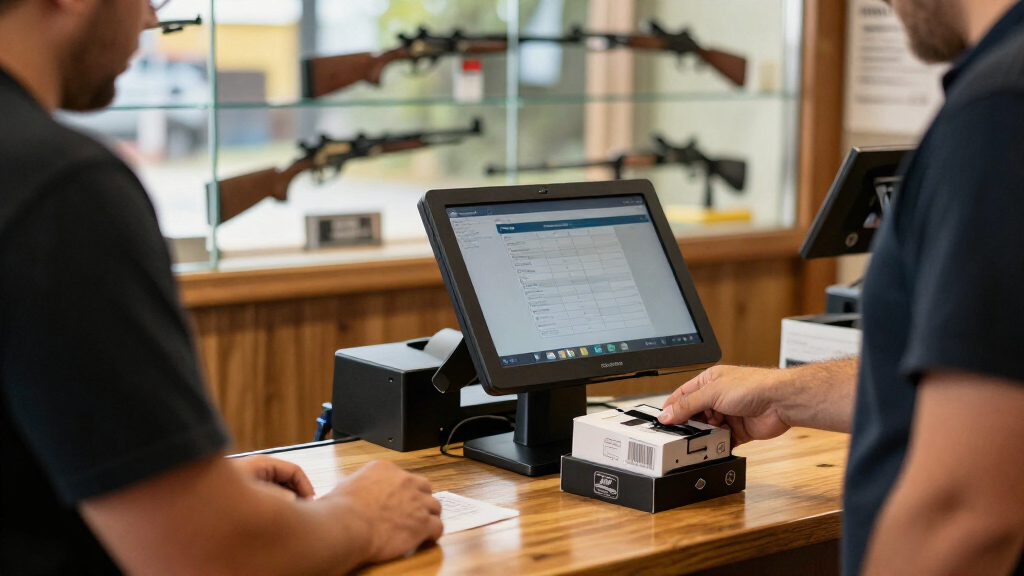
How We Picked
I ranked these products by how clearly the provided information supports a firearms-store recordkeeping workflow, rather than by claims that cannot be verified from the listings. I looked for acquisition and disposition fields, disclosed capacity, usable page format, binding details, and any information relevant to privately made firearms or record retention. I also treated missing specifications as a real drawback: a book with no stated layout or capacity gives a buyer less basis for judging whether it fits their process.
This is a comparison of paper record books, not electronic POS software. A physical log can provide a structured place to write entries, but the available descriptions do not establish that any option satisfies every requirement applicable to a particular dealer. I give the first position to the book with the strongest combination of described fields and recordkeeping cues, the second to the compact book with a stated entry count, and the third to the option whose wider tracking scope is offset by sparse product details. Before relying on any book for regulated records, I would verify current rules and confirm that its fields and retention approach match the store’s obligations.
Factors to Consider When Choosing Firearms Store Compliance Pos
I would choose a firearms record book by matching its documented fields and physical format to the store’s process. These options do not provide electronic sales processing, inventory synchronization, or a complete POS workflow; they are paper books with different levels of detail in their listings.Start with the recordkeeping job
First, distinguish transaction logging from broader shop records. If your immediate need is to record acquisitions and dispositions, look for clearly described fields for firearm details, parties, and dates. The SHIQIKEJIPTY and Value Plus books both describe that core purpose, while the third book is framed around inventory, maintenance, and transfers but does not disclose its specific fields. I would not assume a title alone guarantees the exact sections your store needs.
A book can support a recordkeeping process, but it is not a complete compliance POS system. It does not, based on the provided descriptions, automate sales, validate entries, connect to a bound book database, or explain a store’s legal responsibilities. Check current requirements with an appropriate source and compare them with the actual pages before depending on any logbook.
Compare layout, capacity, and handwriting space
Capacity is explicit only for the Value Plus option: 882 transaction entries. That number gives a buyer a planning reference, although actual replacement timing depends on transaction volume. The SHIQIKEJIPTY book lists 200 pages but does not say how many transaction entries it contains, so its capacity cannot be directly compared. The third product supplies no page count or capacity at all.
Format affects day-to-day handling. The 10-by-7-inch Value Plus book takes less room than the 8.5-by-11-inch landscape logbook, while the latter specifies a 12 mm row height for writing. A larger page can be more comfortable at a desk but less convenient to carry. Consider where staff will make entries, how often the book moves, and whether handwriting space matters more than a smaller footprint.
Look for durable construction without overreading claims
The SHIQIKEJIPTY listing gives the most construction detail: sewn binding designed to open flat, double-sided 80 gsm acid-free paper, a bookmark, and a synthetic PU cover. Value Plus specifies a hardcover and spiral binding but gives less information about paper and page behavior. The third listing does not state materials or binding. These details help compare a book’s physical setup, but they do not prove how it will perform under a particular store’s workload.
For frequent desk use, I would give weight to a binding that stays open and pages suited to handwritten records. For a log kept in a smaller office or carried between work areas, dimensions and weight may matter more. Choose based on the actual handling routine rather than assuming that a particular cover material or binding automatically makes one book more suitable for regulated records.
Treat retention language as a prompt to verify
The SHIQIKEJIPTY book advertises a permanent-retention notice referencing 27 CFR §§ 478.121 and 478.129. That is a useful point of comparison because the other descriptions do not mention a similar notice. Still, printed wording is not a substitute for checking the current rules that apply to your license, records, and jurisdiction. I would confirm whether the notice and book format match the store’s procedures before selecting it for official use.
The Value Plus listing describes detailed transaction fields but does not mention a retention notice. The third listing provides no retention information. If your decision depends on a particular legal citation, record field, or retention procedure, verify it directly rather than inferring compliance from a product title or general description.
Decide whether paper-only is enough
All three products are physical books. That makes them unsuitable as direct replacements for a digital POS platform if your store needs searchable records, automated transaction workflows, user permissions, or integration with other business systems. Paper may still have a role in a store’s recordkeeping process, but the supplied details do not describe scanning, software access, backup, or electronic search.
If you want a paper log, the first two products are easier to compare because their fields and physical characteristics are described. If your requirement is an integrated compliance POS, use this roundup only to evaluate possible paper record books and separately assess software that addresses your operational needs.
Frequently Asked Questions
Are these products firearms store compliance POS systems?
No. The supplied product information describes three paper record books, not electronic POS software. They do not claim to process sales, automate records, connect to other systems, or replace a full store workflow. I would treat them as possible paper recordkeeping tools and evaluate any separate POS requirements on their own.
Which book provides the clearest acquisition and disposition layout?
The SHIQIKEJIPTY 200-page logbook gives the most detail about its physical layout, including landscape pages, 12 mm row height, and dedicated acquisition and disposition fields that include privately made firearms. Value Plus also lists detailed transaction fields and has a stated 882-entry capacity. The third option does not provide a field list.
Which option has a known transaction capacity?
The Value Plus FFL Firearms Acquisition and Disposition Record Book is listed for 882 transaction entries. The SHIQIKEJIPTY book specifies 200 pages but not its entry capacity, and no capacity is supplied for the inventory, maintenance, and transfers book. I would use the stated figure as a planning aid, not as a substitute for checking whether the book’s layout fits your record volume.
Does the printed retention notice establish that a book meets my legal requirements?
No. The SHIQIKEJIPTY product description says its notice references 27 CFR §§ 478.121 and 478.129, but that alone does not establish that the book meets every requirement that may apply to a particular dealer. Rules and store circumstances can differ, so verify current obligations with an appropriate source and compare them with the actual record format.
Which product should I choose for a small store?
For a small store that wants a compact book with a disclosed capacity, I would start with the Value Plus option. If the book will stay at a desk and you prefer more documented page and binding details, the larger SHIQIKEJIPTY logbook is a stronger fit. A small operation that needs maintenance and transfer tracking in the same book could investigate the third product, but should first confirm its layout and capacity.
Conclusion
For a desk-based acquisition and disposition log with the most clearly described page setup and a printed retention notice, I would choose the SHIQIKEJIPTY book, while verifying its suitability and capacity before relying on it. For a smaller format with a stated 882-entry capacity, the Value Plus book is the clearer choice. If your priority is bringing inventory, maintenance, and transfers into one paper record, the third book may be worth checking—but its missing specifications make verification a prerequisite. None of these is an electronic compliance POS, so stores seeking automated or integrated workflows should assess a separate system.
Black Friday Picks

Vari Pro Plus 36 Standing Desk Converter, Black
As an affiliate, we earn on qualifying purchases.