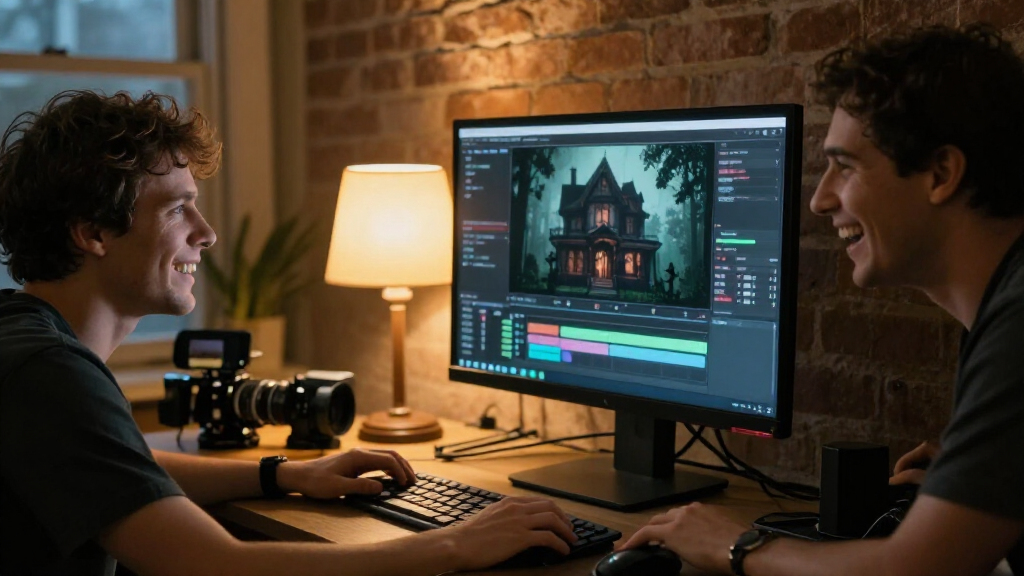

🔍 Read the full analysis: Hollow House: The Ups And Downs Of Making An AI Horror-Comedy Overnight on ThorstenMeyerAI.com

Get business pricing on office and shipping supplies
- Business-only prices and quantity discounts
- Tax-exempt purchasing
- Multiple users, one account, clear invoices
TL;DR
Thorsten Meyer says he made Hollow House, a 97-second AI-generated horror-comedy, between the evening of Oct. 27 and about 1:30 a.m. the next day. The creator describes three versions, saying the first looked polished but felt boring; the final version used three 30-second segments and cost 2,220 Higgsfield credits across the attempts.
Filmmaker Thorsten Meyer says he created Hollow House, a 97-second AI-generated horror-comedy, overnight from Oct. 27 to Oct. 28 after discarding two earlier versions. In a behind-the-scenes account published Oct. 28, Meyer said the short’s first cut looked good but was “terribly boring,” and that changing its pace and production method—not simply improving the images—made the final version work.
The short imagines a ghost joining the staff of an extreme haunted attraction, where workers treat the supernatural newcomer as a workplace problem. When guest Derek calls the safe word “cotton candy” and the scare does not stop, the crew realizes the tall figure is not one of their performers. Shift lead Ray responds by asking whether the new arrival signed a waiver; later, a popcorn seller in a priest costume is recruited to attempt an exorcism.
Meyer says the production involved three versions in one night. The first used 20 shots and ran 2 minutes 15 seconds. The second comprised 66 fast cuts and ran 2 minutes 21 seconds. For the final 1:37 cut, he generated three roughly 30-second segments with one model using references for the full cast. Meyer reports spending 2,220 Higgsfield credits across all three versions, which he valued at about $95 at his plan price, plus roughly 2,100 ElevenLabs characters for music and sound effects.
Before generating video, Meyer created reference images for eight characters using Google’s Nano Banana 2 image model through Higgsfield. He then used the images as references for frames and clips, with Veo 3.1 generating video and audio for the first version. Meyer says the reference sheets helped keep characters and costumes consistent, while speech recognition with Whisper helped identify dialogue that differed from the script, including a shouted “HEY!” rendered as the separate letters.
Overnight production log · October 27–28, 2026
Hollow House: The Ups and Downs of Making an AI Horror-Comedy Overnight
Filmmaker Thorsten Meyer says he built a 97-second short between one evening and about 1:30 a.m. The breakthrough, in his account, came from reshaping the rhythm and workflow—not simply polishing the images.
A workplace problem from beyond the grave
The premise · The punchlineAt an extreme haunted attraction, a ghost joins the staff—and the crew treats the supernatural as an operations issue. When guest Derek says the safe word “cotton candy” and the scare continues, the team realizes the tall figure is no performer.
The scare won’t stop
Derek calls “cotton candy,” but the figure keeps going. The crew’s routine suddenly has a real threat outside its script.
Policy meets paranormal
Ray’s response is workplace-minded: “Did you even sign the waiver?” The supernatural arrival becomes a staffing concern.
Bring in the priest
A popcorn seller in a priest costume is recruited to attempt an exorcism, keeping the film’s horror and workplace comedy in the same frame.
Three cuts, one overnight
Meyer’s production accountMeyer says the first version looked polished but played slowly. He tried a faster cut, then changed the generation approach and assembled the final short from three longer segments.
Polished, but slow
A shot-by-shot workflow: generate a start image for each shot, then animate it. Meyer liked the costumes and red-and-teal corridor lighting, but said the pacing and lack of score weakened the comedy.
20 shots · 2:15 · 5.6 sec averageMore cuts, faster pace
The second version increased the number of cuts, pursuing a quicker rhythm. It ran longer overall, showing that more cuts alone did not make a shorter film.
66 cuts · 2:21Three generated segments
For the final 1:37 cut, Meyer says he used one model with references for the full cast, then edited the segments and applied the colour grade himself.
3 × ~30 sec · final 1:37Why rhythm mattered
Shot duration comparisonMeyer compared his first cut with the short that inspired the project. His own estimate put the inspiration at roughly 1.8 seconds per shot, against 5.6 seconds in his initial version.
These are Meyer’s cut-count and timing estimates, not an independent analysis. They help explain his judgment that the first version felt slow despite its visuals.
From character sheets to final grade
Reported workflowReference images, generation tools, speech checks and human editing each played a part in the production described by Meyer.
Nano Banana 2
Meyer says he created reference images for eight characters through Higgsfield before generating video.
Veo 3.1
Used for video and audio in the first version; later workflow changes used full-cast references for the final segments.
Whisper
Speech recognition helped flag lines that differed from the script, including a shouted “HEY!” rendered as separate letters.
ElevenLabs + edit
About 2,100 characters were used for music and effects, alongside human pacing choices and a final colour grade.
Design cast
Eight character reference images
Generate shots
Images, clips, audio and attempts
Check dialogue
Compare speech with the script
Shape rhythm
Select, cut and refine timing
Finish the look
Apply the final colour grade
What generation couldn’t do on cue
Limits in this production logMeyer also described physical actions that did not come back as planned. These examples are his observations from this film, not a general benchmark of the models.
A planned 180-degree turn did not work as intended.
An attempt to show Derek being lifted was blocked; Meyer rephrased the action as floating.
A planned physical gag returned as a hunched crawl.
“What if something in the house doesn’t care about the safe word?”Meyer, describing the central premise
What the account leaves open
Evidence & limitsThe timings, credit total and roughly $95 plan-price estimate come from Meyer’s account and are not independently verified in the supplied material.
The account does not break down costs by version or tool, or detail every editing and retiming step after generation.
The report describes this overnight production. It does not establish that another project would take the same time, cost or workflow.
Key questions
Hollow House at a glanceWhat is Hollow House?
A 97-second horror-comedy about a ghost joining the staff of an extreme haunted attraction. Meyer says the characters, voices and sets were AI-generated.
How long did it take?
Meyer says work ran from early evening on October 27 until about 1:30 a.m. on October 28, 2026.
How many versions were made?
Three: a 20-shot, 2:15 cut; a 66-cut, 2:21 version; and the final 1:37 short assembled from three roughly 30-second segments.
What did generation cost?
Meyer reports 2,220 Higgsfield credits across the attempts, estimated at about $95 under his plan pricing, plus roughly 2,100 ElevenLabs characters for music and effects.
What changed in the final cut?
He changed the generation approach, accelerated the pacing, edited the material and applied the colour grade. He describes rhythm as the main challenge.
Where can viewers see it?
Meyer published the short with his October 28 account, which includes behind-the-scenes material such as character sheets, frame examples and failed attempts.
Source: ThorstenMeyerAI.com · Figures and production details attributed to Thorsten Meyer’s behind-the-scenes account.
Why Editing Shaped the Final Short
Meyer’s account presents editing and rhythm as the main production challenge. He counted about 74 cuts in the short that inspired the project, averaging roughly 1.8 seconds per shot, compared with 20 shots averaging 5.6 seconds in his first version. Those figures come from Meyer’s own comparison, not an independent analysis, but they explain why he judged the longer cut slow despite liking its visuals.
The production also shows how a short made with generative tools still depended on human decisions. Meyer says he rejected the first cut, changed how the cast was supplied to the video model and applied the final colour grade himself. The account is useful for readers interested in AI-assisted filmmaking because it describes both the speed of generating material and the work needed to select, check and shape it. It does not establish that the same schedule, cost or result would apply to other projects.
Products Worth Considering

Dell XPS 13 9350 Laptop, 13.4 FHD+ Display, Intel Ultra 7 256V, 16GB DDR5, 1TB SSD

Logitech MX Master 4 for Mac, Ergonomic Bluetooth Mouse with Haptic Feedback, Ultra-Fast Scrolling, USB-C Charging, for MacOS, iPadOS, Windo

Samsung 27-inch Odyssey OLED G6 QD-OLED QHD Gaming Monitor
As an affiliate, we earn on qualifying purchases.
From Character Sheets to Three Cuts
Meyer says work began in the early evening of Oct. 27 and continued until about 1:30 a.m. on Oct. 28. He describes the story’s premise as a haunted attraction with a safe word and an HR-minded shift lead, then credits the structure to an AI horror-comedy short shared on X. Meyer says the script, characters and jokes in Hollow House are his own.
His first workflow followed a shot-by-shot approach: generate a start image for each of 20 shots, then animate each image. Meyer says the result maintained the desired costumes and red-and-teal corridor lighting, but the relatively long shots and lack of a score weakened the comic timing. The next attempt increased the pace to 66 cuts. The final approach instead used three longer generated segments with the full cast represented to one model, followed by editing and colour grading.
The production log also records limits Meyer encountered. He says the model did not produce a planned 180-degree head turn as intended, and that an attempt to show Derek being lifted was blocked before he rephrased the action as floating. Another planned physical gag, a character bending backwards, came back as a hunched crawl. These are Meyer’s observations from this project, not a broad test of the models.
“Terribly boring and amateurish.”
— Thorsten Meyer, creator of Hollow House
What the Production Log Leaves Open
The account is Meyer’s first-person production report; the supplied material does not include independent verification of the timings, credit totals or stated plan-price value. The exact contribution of each model to the final edit is not fully detailed, and the report does not provide a separate itemized cost for every version or tool.
It is also unclear how much editing, retiming or other post-production was required after the generated segments were made. Meyer identifies the final colour grade and changes to pacing as human decisions but does not describe every editing step. His comparison with the short that inspired him is his own cut count and timing estimate, and the source does not identify that other film by title.
Where Viewers Can See the Short
Meyer published Hollow House alongside his Oct. 28 account, which includes a link to the 1:37 short and behind-the-scenes material such as character sheets, frame examples, failed attempts and a contact sheet of the final cut. The source does not announce a sequel, further release plan or additional production milestones. For now, the published film and production account are the available record of the project.
Key Questions
What is Hollow House?
Hollow House is a 97-second horror-comedy short about a ghost who joins the staff of an extreme haunted attraction. Its creator says the characters, voices and sets were AI-generated.
How long did it take to make?
Thorsten Meyer says production ran from early evening on Oct. 27 until about 1:30 a.m. on Oct. 28, 2026. That is his reported schedule for the project.
How many versions were made?
Meyer describes three versions: a 20-shot, 2:15 cut; a 66-cut, 2:21 version; and the final 1:37 short assembled from three roughly 30-second generated segments.
How much did the AI generation cost?
Meyer reports using 2,220 Higgsfield credits across the three versions, which he estimates at about $95 under his plan pricing. He also reports using roughly 2,100 ElevenLabs characters for music and sound effects. The figures are his estimates, not independently verified costs.
What changed between the first version and the final cut?
Meyer says the first cut had longer shots and weak comic timing. He moved to faster cutting and a different generation approach, then made human choices about the final edit and colour grade. He describes the images as less of a problem than the film’s rhythm.
Source: ThorstenMeyerAI.com