
🔍 Read the full analysis: Why The Luddites Feared The Social Effects Of New Machines on ThorstenMeyerAI.com

Get business pricing on office and shipping supplies
- Business-only prices and quantity discounts
- Tax-exempt purchasing
- Multiple users, one account, clear invoices
TL;DR
The Luddites were skilled workers who used knitting frames and targeted some machines amid unemployment, reduced piece rates and disputes over product quality. Their protests were met with troops and a 1812 law making frame-breaking a capital felony; the episode offers historical context for current debates over workplace technology, but does not make the disputes identical.
A historical report published November 5, 2026, examines why framework knitters in early 19th-century England smashed some of the machines they used for work: contemporary evidence points to disputes over low pay, unemployment and the quality of goods, not simple opposition to machinery. The movement prompted a forceful state response, including a law that made frame-breaking a capital felony in 1812.
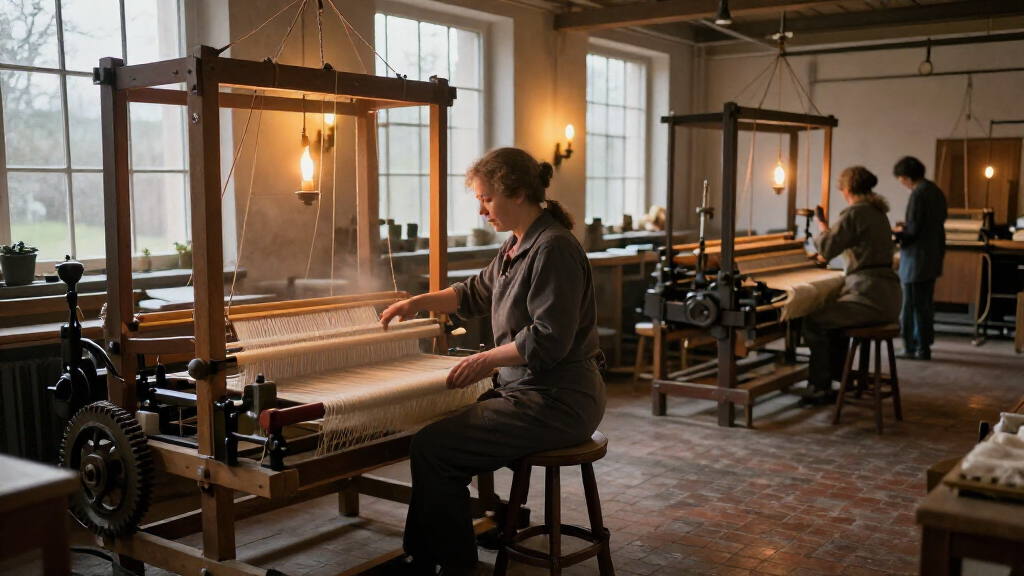
The first major Luddite actions described in the report took place among framework knitters near Nottingham. These workers operated stocking frames, mechanical knitting machines worked by hand and foot, often in their homes or small workshops. Many did not own the equipment: they rented frames and received piece-rate work from hosiers, merchants who supplied work and sold the finished goods.
A February 6, 1812, letter by Nottingham magistrate Robert Baker to the Home Office said that in many places about a fifth of frame workers were out of work. Baker reported that some hosiers responded by offering work at reduced prices. He described the first resentment as directed at employers paying what he called “the under-price,” and said that protesters also targeted wider frames that made cheaper, lower-quality stockings.
The movement spread beyond Nottinghamshire, reaching Yorkshire and Lancashire in 1812, where workers in different textile trades also protested machinery. The government sent 900 cavalry and 1,000 infantry into Nottingham by December 1811, according to the supplied account. Parliament passed the Frame-Breaking Act on March 20, 1812; 17 men were executed in 1813, the source reports.
Pay and Control Behind the Attacks
The evidence complicates the modern shorthand “Luddite,” often used for someone hostile to new technology. The framework knitters were machine workers, and the report describes their actions as selective: they attacked particular frames associated with reduced prices or cheaper production. That pattern suggests that their conflict involved who benefited from new production methods and who bore the costs, not just whether machines should exist.
The stakes were also shaped by limited legal routes for collective action. Trade unions were prohibited under the Combination Acts of 1799 and 1800, while Parliament had rejected a minimum wage for weavers in 1808, according to the source. This does not establish that every attack had the same motive, but it helps explain why disputes over pay and working conditions could take a confrontational form.
The historical comparison is relevant to current workplace debates over artificial intelligence, from writers’ contracts in Hollywood to works-council rights and the EU AI Act. The shared questions include pay, quality and worker input. The technologies, laws and conditions differ; the comparison is useful as a set of questions, not proof that today’s disputes will follow the same course.
Products Worth Considering

Canon imagePROGRAF PRO-1100 17-Inch Professional Wireless Inkjet Photo Printer

Logitech MX Master 4 Ergonomic Wireless Mouse with Haptic Feedback, Graphite

Apple MacBook Neo 13-inch Laptop with A18 Pro Chip, 8GB Memory, 256GB SSD, Liquid Retina Display, and 1080p FaceTime HD Camera – Blush
As an affiliate, we earn on qualifying purchases.
How the Nottingham Protest Spread
The report dates a major early attack to March 1811 in Arnold, near Nottingham. Historian Kevin Binfield, editor of a collection of Luddite writings, identifies an attack on wide knitting frames there as opening the movement’s most intense period, which ran from 1811 to 1813. The National Archives describes the disturbances as spreading from Nottinghamshire to Yorkshire and Lancashire, as well as Leicestershire and Derbyshire.
Letters from protesters were signed “General Ned Ludd” or “King Ludd.” The National Archives describes Ludd as a mythical figure; the source says there is no reliable evidence that a historical Ned Ludd led the movement. The name gave separate protests a shared identity, but stories about an apprentice who began the tradition by smashing a frame are legend rather than established fact.
The legal and economic setting matters to the story. The frame knitters often worked for merchants rather than controlling the machines or the market for finished goods. The source cites economist Robert Allen’s estimate that British real wages rose 12% from 1780 to 1840, while output per worker rose 46%. Those figures cover a long period and are an estimate, not a direct measure of every textile worker’s earnings; the source notes that later research narrows, but does not eliminate, the gap.
““Resentment against the hosiers who paid the under-prices” was the leading feature of the unrest, Baker wrote.”
— Robert Baker, Nottingham magistrate, in a February 6, 1812, letter to the Home Office
What the Records Cannot Establish
The source relies in part on official reports, parliamentary statements and government records. These documents provide evidence about attacks and how authorities interpreted them, but they do not give a complete account of what every participant believed. Threatening letters were written to intimidate, and officials had their own reasons for describing the unrest in particular ways.
The report also says the targeting was not always precise: a January 1812 reward poster concerned five frames whose workers said they were operating at the full price. That example cautions against assuming every damaged frame was selected because its owner underpaid workers. The available material does not establish the motives behind every attack or the full extent of public support for the movement.
How the Historical Comparison Applies
The report places the Luddite episode alongside current debates about workplace AI, including contract terms, consultation rights and safeguards around work quality. These are contemporary policy discussions, not events with a single next milestone established by the historical evidence. Their outcomes will depend on negotiations, laws and decisions by employers and workers.
For the historical record, the clearest next step is to read the surviving sources with their limits in mind: compare magistrates’ reports and parliamentary proceedings with accounts of workers’ conditions, and distinguish the documented figure of General Ned Ludd from the legend. The available material does not support a prediction that modern technology disputes will repeat the violence or legal response of 1811–13.
Key Questions
Were the Luddites opposed to all machines?
The evidence in the report points to selective attacks. Framework knitters used stocking frames themselves, and magistrate Robert Baker said protesters focused on frames associated with reduced prices and wider, lower-quality production. That does not establish the motives of every participant.
Who was General Ned Ludd?
The National Archives describes General Ned Ludd as a mythical figure used in protest letters. The source says there is no reliable evidence that a real Ned Ludd led the movement.
What happened to people who broke frames?
The Frame-Breaking Act of March 20, 1812, made frame-breaking a capital felony. The supplied report says 17 men were executed in 1813.
Why is the Luddite movement compared with workplace AI debates?
The comparison concerns recurring questions about pay, work quality and worker influence when technology changes production. The historical circumstances and today’s technologies differ, so the comparison does not mean the events are equivalent.
Source: ThorstenMeyerAI.com