📊 Full opportunity report: Austin’s Health And Safety Signal Monitor: The Speedway Medical Response on IdeaNavigator AI — validation score, market gap, and execution plan.

Get business pricing on office and shipping supplies
- Business-only prices and quantity discounts
- Tax-exempt purchasing
- Multiple users, one account, clear invoices
TL;DR
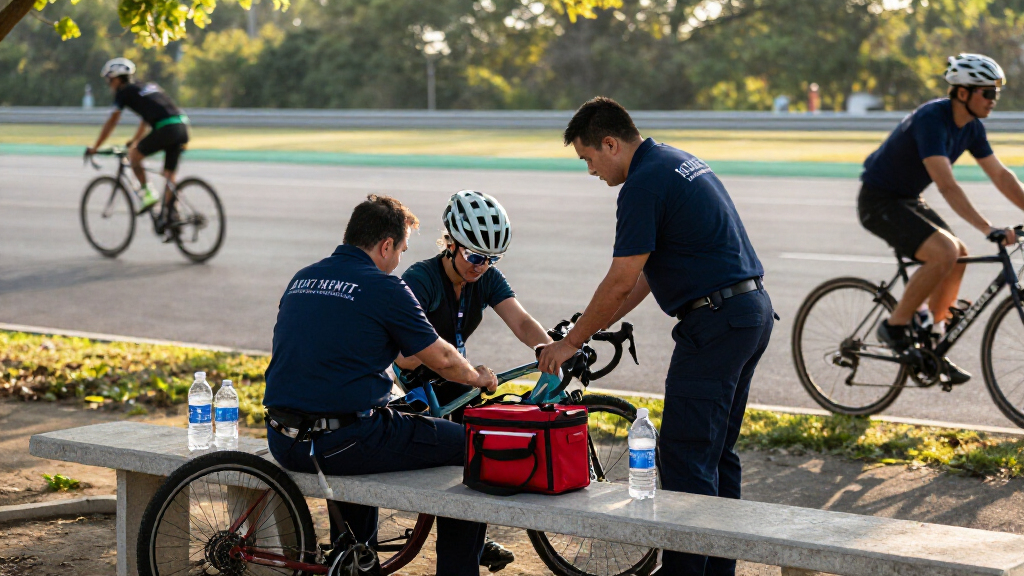
UT Austin police confirmed that activity on Austin’s Speedway was a medical emergency response, according to a report identified by KEYE. The available information does not specify when it occurred, who needed help, or whether anyone was injured.
UT Austin police confirmed that activity on Austin’s Speedway was a medical emergency response, according to a report identified as KEYE. The available details do not say when the response took place, what prompted it, or whether anyone was injured, leaving the nature and outcome of the incident unclear.
The reported confirmation establishes a limited but important point: police characterized the activity on Speedway as a medical emergency response. It does not, by itself, explain whether officers were assisting medical personnel, responding to a call, or managing activity around a patient. No information supplied here identifies the person who may have needed care or describes the patient’s condition.
The incident is presented in connection with KEYE, but the details available do not include a publication time, police statement text, a precise location, or a response timeline. There is also no reported account of whether the response disrupted traffic or campus activity. Those details should not be inferred from the police characterization alone.
The wording distinguishes a medical response from other possible explanations for visible police activity, but it is not a full account of what happened. The confirmed information is therefore narrow: UT Austin police said the activity was medical in nature. The circumstances and outcome remain unreported in the available account.
Speedway response what is confirmed
UT Austin police characterized activity on Speedway as a medical emergency response, according to a report identified by KEYE. The available account leaves the circumstances and outcome unclear.
What police confirmed
The confirmation explains the reported activity as medical in nature.
Medical response
Police described the Speedway activity as a medical emergency response.
KEYE
The account identifies KEYE as the outlet reporting the police confirmation.
What remains unclear
The report does not provide details needed to reconstruct the incident.
What readers can conclude
The confirmation is limited to the nature of the reported activity.
- Police characterized it as a medical emergency response.
- The account does not identify a continuing threat.
- Whether anyone was injured or transported for care.
- How serious the event was or whether it affected campus access.
What the Police Confirmation Establishes
For people trying to understand reports of police activity near the University of Texas at Austin, the confirmation offers a basic explanation: authorities described the Speedway activity as a medical emergency response. That can help prevent the event from being mistaken for a crime or another type of emergency when no such claim is established in the available details.
The limits matter as much as the confirmation. Without a date, precise location, or account of the outcome, readers cannot tell how recent the response was, whether it affected a particular building or route, or whether further action is expected. The report does not establish a continuing threat to campus or the public. It also does not provide enough information to assess the seriousness of the medical event.
For campus community members and nearby residents, the most useful takeaway is to separate the confirmed description from unanswered questions. Police have identified the activity as medical; no further conclusion about a patient, injury, or ongoing risk is supported by the information provided.
Products Worth Considering

Vari Ergo Electric Standing Desk, 54×26, Light Wood/White

Samsung ViewFinity S7 27-Inch 4K UHD Monitor

Apple MacBook Air 13-inch with M5 Chip, 16GB Memory, 512GB SSD, Liquid Retina Display, and 12MP Center Stage Camera – Midnight
As an affiliate, we earn on qualifying purchases.
The Speedway Incident Report
The development is framed as a local public-safety update, with UT Austin police as the authority confirming the nature of the activity and KEYE identified as the news outlet reporting it. The available account does not provide the original police notice or additional reporting that would allow a fuller reconstruction.
A separate description associated with the item proposes a monitoring service for safety and compliance staff at consumer-health or food companies. It argues that organizations may benefit from receiving fast, role-specific alerts about health and safety developments. That is a product opportunity, not a finding about the Speedway incident, and it does not add facts about the emergency response.
The description assigns the item a signal score of 88 out of 100 but gives no scoring method, comparison group, or time period. The number should be understood only as a score presented in that product concept, not as a measure of the incident’s severity or public risk.
“The activity on Speedway was a medical emergency response.”
— UT Austin police, as characterized in the KEYE-referenced report
Details Still Missing From the Account
The available details do not specify the date or time of the response, its exact location on Speedway, or what prompted the call. They do not identify anyone involved, say whether a person was transported for care, or describe the person’s condition. No information is provided about the duration of the response or any effect on campus access.
It is also unclear whether police released further information or whether KEYE published additional details beyond the summary presented here. The police characterization confirms the response was medical, but it does not establish that there was no injury, that the incident posed no wider risk, or that the matter has been fully resolved. Those points cannot be answered from the information available.
Further Police and News Updates
A fuller account would require a dated police statement or additional reporting from KEYE that clarifies the location, timeline, and outcome. Until those details are available, readers should treat the reported description as the extent of the confirmation and avoid drawing conclusions about the patient or severity of the event.
The separate proposal for a health-and-safety monitoring service suggests testing its briefs with five safety or compliance professionals at consumer-health or food brands and tracking whether the information changes a decision or is shared with a colleague. That is a proposed validation step, not evidence that a service has launched or that customers have adopted it. The immediate unresolved issue remains the lack of more detailed information about the Speedway response itself.
Source: IdeaNavigator AI
Key Questions
What did UT Austin police confirm?
Police described activity on Speedway as a medical emergency response, according to a KEYE-referenced report.
When did the response happen?
The available details do not give a date or time.
Was anyone injured or taken to a hospital?
The account does not say whether anyone was injured, received treatment, or was transported. Those details remain unconfirmed.
Does the report indicate an ongoing threat?
No ongoing threat is identified in the available details. The report confirms a medical response but does not provide enough information to assess broader risk or the incident’s outcome.
Source: IdeaNavigator AI