Facial recognition terminals raise serious concerns beyond just efficiency. They often collect personal data without your explicit consent, risking privacy breaches and persistent tracking. These systems can lead to misuse, bias, and wrongful accusations, especially against marginalized groups. Without clear regulations, they threaten civil liberties and may enable mass surveillance and social control. To understand the full scope of these risks and what’s at stake, explore further how these technologies impact society and human rights.
Key Takeaways
- Facial recognition terminals pose significant privacy risks through unauthorized data collection and persistent tracking without consent.
- They raise ethical concerns by enabling mass surveillance, social profiling, and potential misuse for social control.
- Regulatory gaps allow deployment without adequate oversight, risking civil liberties and individual rights.
- Bias in algorithms can lead to wrongful identification, disproportionately impacting marginalized communities.
- Constant surveillance can erode societal trust and create a climate of pervasive monitoring and loss of anonymity.
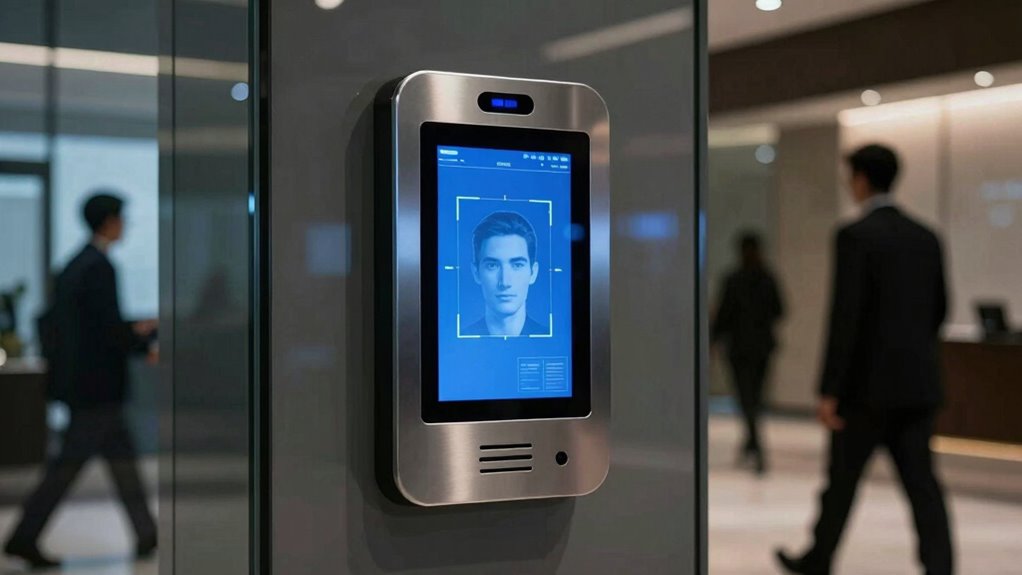
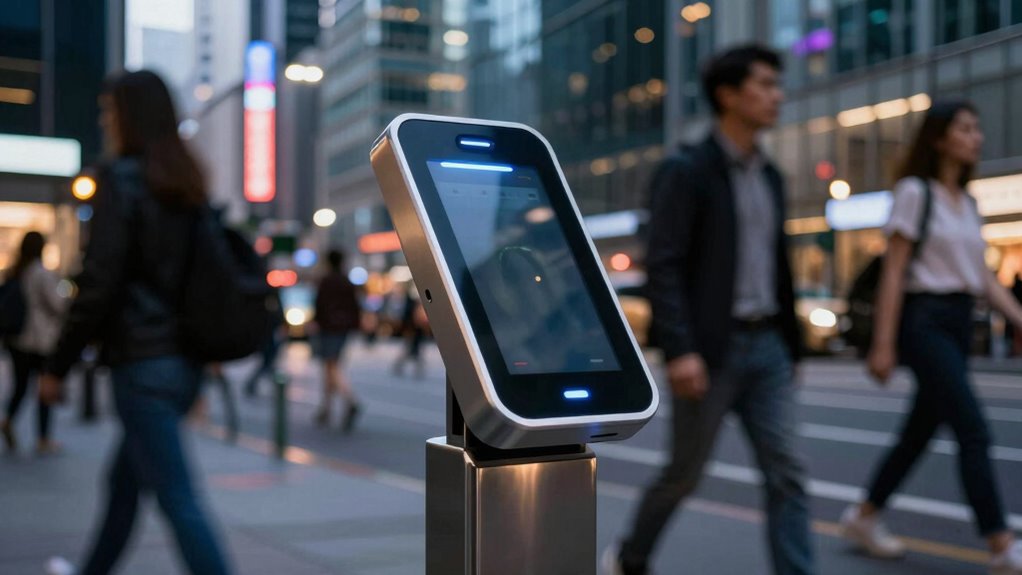
As facial recognition terminals become more widespread, they’re touted for boosting efficiency, but they also raise serious concerns beyond just speed. You might find these devices helpful for quick access and streamlined security, but they come with significant privacy concerns that can’t be ignored. Every time a face is scanned, personal data is collected and stored, often without your explicit consent. This persistent tracking can lead to a loss of anonymity in public spaces, making you feel constantly watched. The collection of biometric data also raises questions about how securely that information is stored and whether it could be vulnerable to hacking or misuse. When you consider the potential for data breaches or unauthorized surveillance, the privacy implications become even more alarming. Additionally, the biometric data collection process itself can be invasive, especially when individuals are unaware that their images are being captured and stored without clear oversight. It’s crucial to recognize that the biometric data itself is highly sensitive and can be exploited if not properly protected. Moreover, the lack of clear regulations can exacerbate these risks, leaving room for misuse and abuse of this data.
Facial recognition scans collect personal data without consent, risking privacy, security breaches, and constant surveillance in public spaces.
Beyond privacy issues, ethical implications come into focus. You might wonder who controls the data and how it’s used. Facial recognition technology doesn’t just identify individuals; it can also be employed for mass surveillance, profiling, or even social control. If used improperly, it can lead to unfair treatment, especially toward marginalized communities. For example, misidentification rates tend to be higher for people of color, which can result in wrongful accusations or unwarranted scrutiny. This raises questions about bias and fairness, challenging the ethical standards of deploying such technology. As a user, you could be subject to decisions made by algorithms that lack transparency, leading to distrust and concern over accountability. It’s also important to consider how algorithmic bias can perpetuate existing inequalities and injustices.
Furthermore, the deployment of facial recognition terminals often moves faster than the development of comprehensive regulations. You might feel that policies lag behind technological advancements, leaving individuals vulnerable to unchecked data collection and surveillance practices. This regulatory gap can enable organizations to prioritize efficiency and profit over individual rights, risking a future where privacy becomes a rare commodity. The ethical implications extend to how companies and governments justify the use of facial recognition. Are they balancing safety with respect for personal freedoms? Or are they prioritizing security at the expense of privacy and civil liberties? Without proper oversight, these surveillance practices can erode civil liberties and create a climate of constant monitoring.
In the end, while facial recognition terminals offer undeniable benefits, the questions they raise aren’t just about convenience—they touch on fundamental issues of privacy, ethics, and human rights. You should be aware of both the potential advantages and the profound risks involved, so you can advocate for responsible use and better safeguards against misuse. Technology doesn’t exist in a vacuum; it shapes society, and it’s up to you to stay informed and demand accountability.

Drive Medical 13508 Medical Privacy Screen, White
3-Panel Screen: Panel partition provides complete privacy by adjusting the panels for countless placement options; measures 56 inches…
As an affiliate, we earn on qualifying purchases.
As an affiliate, we earn on qualifying purchases.
Frequently Asked Questions
How Accurate Are Facial Recognition Terminals Across Diverse Populations?
Facial recognition terminals often struggle with accuracy across diverse populations, mainly due to bias in algorithms. You should know that bias mitigation efforts are essential to improve fairness. Transparency in algorithms helps you understand their limitations and helps developers address disparities. While these terminals can be quite effective for some groups, you must remain cautious, as inaccuracies can lead to misidentification, especially among underrepresented communities, raising ethical concerns.
What Are the Privacy Rights of Individuals With Facial Recognition Tech?
You have the right to privacy, but with facial recognition tech, that right faces new challenges. Studies show 60% of users are unaware their images are captured, raising concerns about consent implications. In corporate surveillance, companies often collect data without explicit approval, risking violations of privacy rights. You should be aware that laws are evolving, but currently, your rights depend on regional regulations and whether you’ve given informed consent.
Can Facial Recognition Systems Be Hacked or Manipulated?
Yes, facial recognition systems can be hacked or manipulated. Biometric vulnerabilities, like spoofing photos or videos, can trick the system, while algorithm bias may cause misidentifications. Hackers can exploit these flaws to access sensitive data or manipulate results. To protect yourself, stay aware of these risks, and advocate for stronger security measures and unbiased algorithms to reduce vulnerabilities and guarantee your privacy is better safeguarded.
How Do Companies Ensure Data Security for Facial Recognition Databases?
Ever wonder how companies keep your biometric data safe? They implement robust data encryption methods and secure biometric authentication protocols to protect facial recognition databases. Do you think these measures are enough to prevent hacking? By combining advanced encryption with strict access controls, companies aim to safeguard your sensitive information. Regular security audits and compliance with privacy standards further strengthen defenses, ensuring your data remains private and secure.
What Regulations Govern the Use of Facial Recognition Technology?
You need to follow regulations like GDPR in Europe and CCPA in California, which govern biometric authentication and protect individual privacy. These rules restrict how businesses can use facial recognition, especially with surveillance expansion. You must guarantee transparency, obtain consent, and safeguard data. Compliance helps prevent misuse, data breaches, and legal issues, making it essential to stay informed about evolving laws that impact facial recognition technology use.

eLinkSmart Fingerprint Gym Locker Lock, Keyless Biometric Padlock, Weatherproof Electronic Digital Bluetooth App Smart Combination Pad Lock for Outdoor Fence Gate Storage Unit Pool Shed – Black
🔐【ADVANCED FINGERPRINT READER】: The fingerprint padlock uses advanced biometric technology, touch your finger to unlock within 0.2s, the…
As an affiliate, we earn on qualifying purchases.
As an affiliate, we earn on qualifying purchases.
Conclusion
So, as you consider deploying facial recognition terminals, remember that technology’s not just about speed or convenience—it’s about trust and privacy too. Coincidentally, just when you think you’ve streamlined processes, new questions about ethics and security emerge. You might find that in trying to save time, you’re also opening doors to unforeseen challenges. Sometimes, the very tools meant to simplify life end up prompting you to think twice about what’s truly at stake.
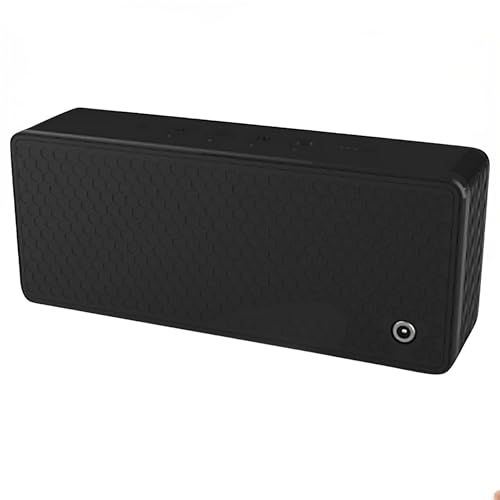
Spy Associates Ultrasonic Privacy Protector – Portable Acoustic Masking Device, Voice Privacy Tool for Secure Conversations in Meetings, Offices, Cars & Travel
ULTRASONIC SPEECH PRIVACY: Uses ultrasonic acoustic output (above 25 kHz, inaudible to humans) to help protect speech privacy…
As an affiliate, we earn on qualifying purchases.
As an affiliate, we earn on qualifying purchases.

Windows Hello Fingerprint Reader for Windows 11 10, Offline Physical Security Vault for PC, USB Biometric Fingerprint Scanner, 360° Touch Secure Login & Data Encryption Device for Laptop Sliver
🔐 【Offline Physical Vault: Zero Cloud, Zero Risk】 Secure your digital life with this windows hello fingerprint reader…
As an affiliate, we earn on qualifying purchases.
As an affiliate, we earn on qualifying purchases.