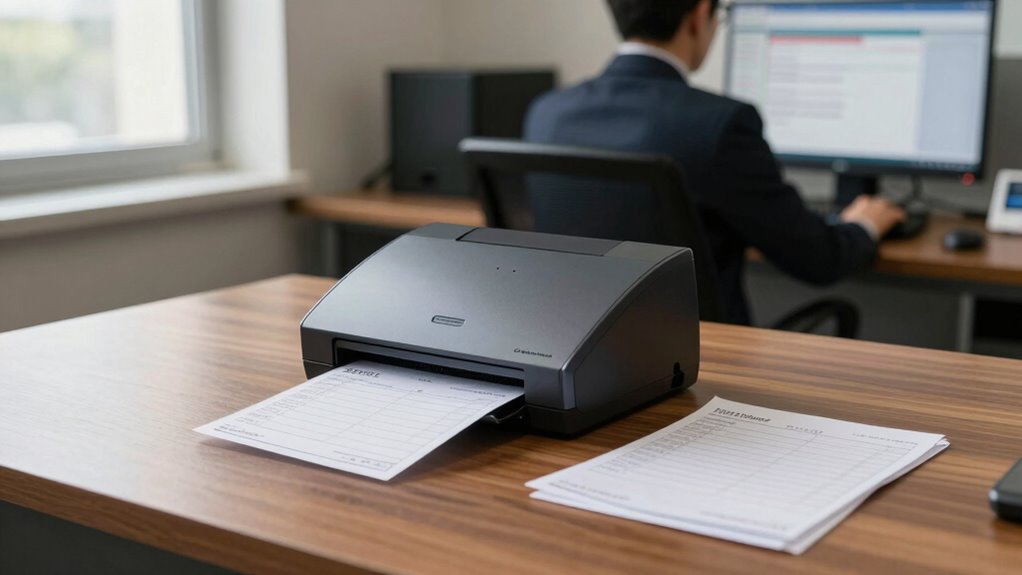

Using check scanners for deposits isn’t just about owning the hardware; you need process discipline to guarantee security, accuracy, and compliance. Clear procedures help prevent errors, fraud, and delays while integrating scanners smoothly into your operations. Proper staff training, security protocols, and ongoing monitoring are essential to maintain control. Focusing solely on hardware leaves risks unmanaged—learn how disciplined processes can make your deposit system more reliable and secure.
Key Takeaways
- Effective check deposit processes prevent errors, fraud, and delays beyond hardware capabilities.
- Standardized procedures ensure consistent scanner use and deposit accuracy.
- Staff training on process discipline enhances security and error detection.
- Continuous monitoring and audits help identify vulnerabilities and maintain controls.
- Integrating process discipline with technology maximizes scanner benefits and deposit integrity.

Are you looking for a faster, more efficient way to handle check deposits? Check scanners for deposits can streamline your banking process, but simply having the hardware isn’t enough. Success depends on the process discipline you establish around their use. While these scanners can quickly capture check images, the real challenge lies in guaranteeing the entire deposit process is accurate, secure, and compliant. Relying solely on hardware can lead to mistakes, fraud vulnerabilities, or delays in processing if procedures aren’t clearly defined and followed consistently. To truly maximize the benefits, you need a well-structured approach that integrates with your overall banking operations.
Effective check deposit processes are essential for accuracy, security, and compliance beyond just hardware.
In today’s digital landscape, mobile banking plays a vital role in deposit management. Many customers prefer depositing checks remotely using their smartphones, which puts additional pressure on your internal processes. Check scanners complement mobile banking by allowing deposits to be processed swiftly and securely within your institution. However, this integration demands strict process discipline. For instance, you must establish clear guidelines for verifying check images, confirming the authenticity of deposits, and reconciling scanned items with bank records. Without these procedures, errors can slip through, resulting in customer dissatisfaction or even financial loss. Consistent training on how to operate scanners properly and how to handle exceptions is essential to prevent mishandling or overlooking details.
Fraud prevention is another vital aspect that hinges on process discipline. Check scanners can reduce manual handling errors, but they also create potential fraud risks if not managed carefully. Implementing routines such as multi-factor authentication, detailed audit trails, and regular system checks helps safeguard against fraudulent activities. You should also develop policies for identifying suspicious checks, such as alterations or mismatched information, and ensure staff are trained to recognize red flags. Relying purely on the scanner’s technology isn’t enough; you need disciplined procedures to verify the legitimacy of deposits before finalizing them. Additionally, understanding the security vulnerabilities associated with check scanners is crucial to maintaining a safe deposit environment. Incorporating proper controls and continuous monitoring further enhances your security posture. Recognizing the importance of process discipline is essential in creating a resilient deposit environment that minimizes risk and maximizes efficiency. Establishing standardized procedures and ongoing staff training ensures these safeguards are consistently applied, reducing the chance of human error or oversight.

Digital Check TellerScan TS250-55IJ Check Scanner
Make sure this scanner model is supported by your financial institution or software provider before buying Scan speeds…
As an affiliate, we earn on qualifying purchases.
As an affiliate, we earn on qualifying purchases.
Frequently Asked Questions
How Do I Train Staff on Proper Check Scanning Procedures?
You should start with thorough check training, emphasizing scanning accuracy to guarantee deposits process smoothly. Demonstrate proper check positioning, handling, and scanning techniques, then supervise staff as they practice. Use real checks for hands-on experience and provide clear feedback. Reinforce the importance of discipline in following procedures consistently, and schedule periodic refreshers. This approach helps staff develop confidence and accuracy, reducing errors and improving overall deposit efficiency.
What Are Common Errors That Cause Deposit Delays?
Did you know that 35% of deposit delays stem from check processing errors? To improve deposit accuracy, you should watch for common mistakes like incomplete endorsements, misaligned checks, or blurry images. These errors slow down deposit processing and cause delays. By training staff to follow precise scanning procedures and verify images before submission, you guarantee smoother deposit workflows and minimize processing errors.
How Often Should Check Scanners Be Calibrated?
You should calibrate your check scanner regularly, ideally every 1 to 3 months, depending on usage and manufacturer recommendations. Consistent calibration guarantees peak scanner performance and accurate deposit processing. Incorporate routine scanner maintenance into your process discipline to prevent errors and delays. By adhering to calibration frequency guidelines, you maintain smooth operation, reduce misreads, and improve overall efficiency, helping you avoid costly deposit delays caused by hardware inconsistencies.
What Security Measures Protect Digital Check Images?
Imagine digital check images as secret recipes guarded by digital bodyguards. You protect them with strong encryption protocols that scramble data, making it unreadable without a key. Access controls act like gatekeepers, ensuring only authorized personnel get through. Together, these measures create a fortress around your images, preventing unauthorized viewing or theft—because, in the world of banking, security isn’t just a feature; it’s the secret sauce.
How to Handle Failed or Misread Check Scans?
When a check scan fails or is misread, you should promptly review the image quality and check scanner calibration to identify issues. Re-scan the check if necessary, ensuring the deposit process automation system flags errors for manual review. Consistently monitor scanner performance and implement routine checks to prevent future errors. This disciplined approach helps maintain accuracy and efficiency, minimizing deposit delays and safeguarding your deposit process integrity.

ABC Quick Books Compatible Laser Deposit Tickets, 1 Part (Set of 250)
COMPATIBILITY: Designed specifically for Quick Books accounting software, ensuring seamless integration with your financial records
As an affiliate, we earn on qualifying purchases.
As an affiliate, we earn on qualifying purchases.
Conclusion
While check scanners are essential tools, relying solely on hardware overlooks the importance of process discipline. Without consistent procedures, even the best scanner can’t prevent errors or fraud. Think of the scanner as a talented musician—without practiced discipline, its potential is wasted. You need both the right instrument and the discipline to play it well. Only then can your deposit process truly be secure, efficient, and resilient against mistakes and threats.

How To Use Automotive Diagnostic Scanners: A Step-by-Step Guide to Reading OBD-II Codes, Diagnosing Vehicle Problems, and Troubleshooting Like a Professional (The Complete How-To Use Series Book 9)
As an affiliate, we earn on qualifying purchases.
As an affiliate, we earn on qualifying purchases.

FOXWELL HD301 Heavy Duty Truck Scanner, Full System Diesel Scan Tool with 6/9/16 Pin, 2 in 1 Code Reader for Trucks & Car Engine, Diesel Diagnostic Tool for Cummins, Paccar, Caterpillar
【One Tool, Total Fleet Coverage: 6/9/16 Pin Ready】Featuring an integrated 16-pin OBD2 connector and professional-grade 6-pin & 9-pin…
As an affiliate, we earn on qualifying purchases.
As an affiliate, we earn on qualifying purchases.