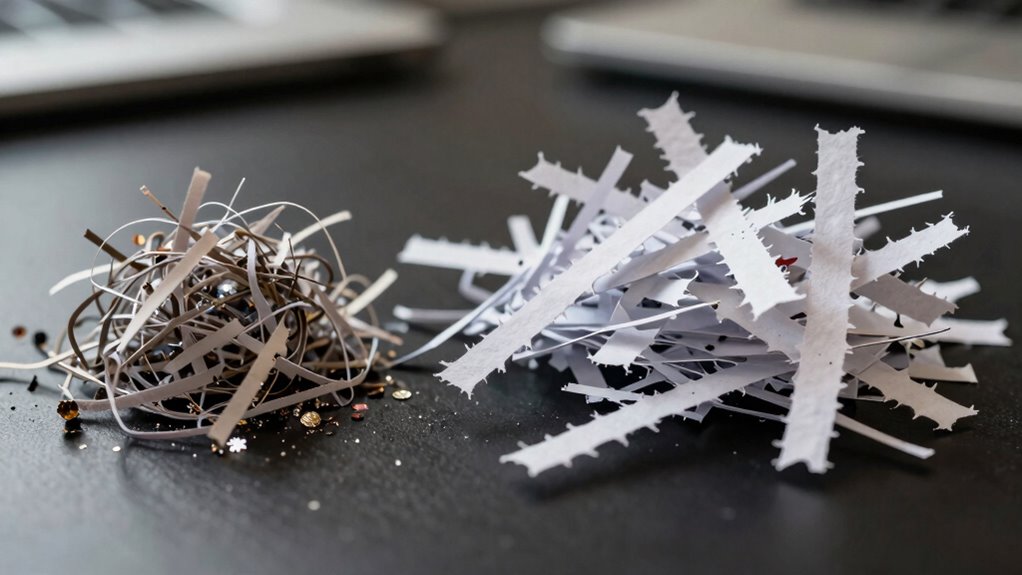

If security matters, choosing a micro-cut shredder over a strip-cut makes a big difference. Micro-cut shreds documents into tiny particles, making it nearly impossible to reassemble sensitive info. Strip-cut creates long strips that could be pieced back together, risking confidentiality. While micro-cut models cost more upfront, they offer higher protection against theft or misuse. To learn more about how these options impact your office’s security, keep going—you’ll find insights that could shift your decision.

Get business pricing on office and shipping supplies
- Business-only prices and quantity discounts
- Tax-exempt purchasing
- Multiple users, one account, clear invoices
Key Takeaways
- Micro-cut shredders produce tiny particles (<0.08 inches), significantly reducing reassembly risk compared to strip-cut's long strips.
- Higher security levels of micro-cut protect sensitive information better than strip-cut, preventing data theft.
- Micro-cut shredders are more costly but offer enhanced confidentiality and long-term reliability for secure document disposal.
- They handle larger workloads efficiently, minimizing jams and ensuring consistent security during high-volume shredding.
- Proper maintenance of micro-cut shredders sustains security standards over time, unlike strip-cut models that may require more frequent repairs.
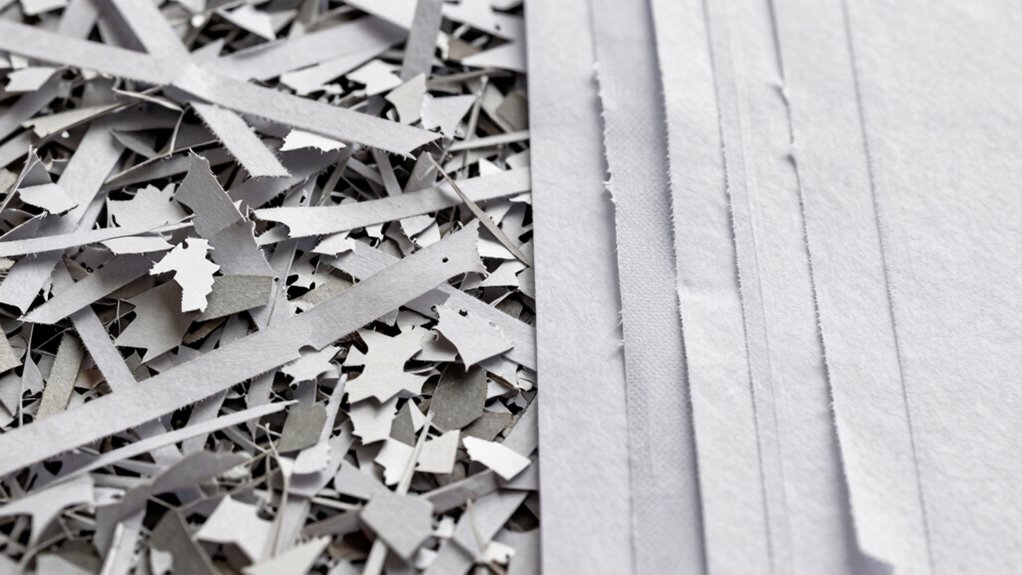
When it comes to office security, understanding the differences between micro-cut and strip-cut shredders is essential. Both machines serve the purpose of paper shredding, but they do so in very different ways, impacting how securely you dispose of sensitive documents. If you’re handling confidential information regularly, choosing the right shredder isn’t just about convenience—it’s about protecting your business and clients from potential data breaches. Micro-cut shredders slice paper into tiny particles, often measuring less than 0.08 inches, creating a nearly impossible-to-reassemble mess. This level of detail makes them ideal for confidential disposal because they significantly reduce the risk of someone reconstructing shredded documents. Strip-cut shredders, on the other hand, cut paper into long, narrow strips, typically around 1 to 2 inches wide. While they’re faster and often more affordable, they don’t offer the same security level. Someone with enough time and patience could potentially piece together strips, making them less suitable for sensitive information.
The primary difference lies in the security level, which directly impacts how you approach paper shredding for confidential disposal. When you’re dealing with financial records, personal data, or proprietary business information, micro-cut shredders provide peace of mind. They transform your documents into tiny confetti, making theft or misuse highly unlikely. Strip-cut shredders may be sufficient for general waste or non-sensitive documents, but relying on them for confidential disposal leaves a gap in your security. You might think you’re saving time by choosing a strip-cut shredder, but in reality, you’re risking exposure of sensitive data. For businesses that prioritize security, micro-cut shredders are the smarter investment, even if they cost more upfront. Additionally, the security level of a shredder plays a crucial role in how well it protects sensitive information from potential breaches. It’s also important to consider the shredding capacity to ensure the shredder can handle your daily workload without sacrificing security. Proper maintenance and blade durability are equally important to sustain high security standards over time. A comprehensive understanding of these factors can help you select a shredder that best meets your security needs and operational demands.
Another important factor to consider is the volume of paper you need to shred regularly. If your office produces a high volume of confidential documents, micro-cut shredders tend to handle larger workloads more efficiently because they often come with higher capacity bins and more durable blades. This means less downtime and more consistent security. In addition, the maintenance requirements of each shredder type can influence long-term operational costs and reliability. This means less downtime and more consistent security. Conversely, strip-cut shredders might clog or jam more frequently under heavy use, which could compromise the integrity of your confidential disposal process. Ultimately, while both types of shredders are useful, understanding their differences helps you make informed decisions about how to best safeguard sensitive information, ensuring your office’s security standards stay intact.
As an affiliate, we earn on qualifying purchases.
Frequently Asked Questions
Can Micro-Cut Shredders Handle Large Volumes Efficiently?
Yes, micro-cut shredders can handle large volumes efficiently. They typically have a higher shredding speed, allowing you to process more paper quickly. However, they usually support smaller paper sizes, so you might need to feed paper in batches. While they’re secure, keep in mind that their slower shredding speed compared to strip-cut models might affect efficiency during heavy-duty tasks.
What Are the Maintenance Differences Between Micro-Cut and Strip-Cut Shredders?
You might worry about maintenance hassle, but micro-cut shredders actually require less frequent cleaning due to finer, more consistent shredding, reducing paper jams. They tend to have slightly higher energy consumption due to their shredding speed, but overall, maintaining them is straightforward. Strip-cut shredders need more frequent blade checks and cleaning, making micro-cut models a smarter, more efficient choice for ongoing office upkeep.
Are There Specific Security Standards for Office Shredder Classifications?
Yes, there are specific security standards for office shredder classifications. You should look for shredders certified according to confidentiality standards like DIN 66399 or NSA/CSS, which specify security levels based on shred size and effectiveness. These certifications ensure your shredder meets rigorous security requirements, helping you protect sensitive information. Selecting a shredder with proper certification guarantees your office maintains compliance and keeps confidential data safe.
How Do Shredder Noise Levels Compare Between Micro-Cut and Strip-Cut Models?
Think of shredding noise levels as a gentle whisper versus a roaring engine. Micro-cut shredders tend to be quieter, thanks to better noise reduction, making them ideal for open offices. Strip-cut models often produce more noise due to higher shredding speed, creating a constant hum. If you prioritize a peaceful environment, micro-cut models will serve you better, blending security with quieter operation, while strip-cut units may add to the office’s soundtrack.
Can Shredders Be Locked or Secured to Prevent Unauthorized Use?
Yes, shredders can be locked or secured to prevent unauthorized access. Shredder locking features, such as built-in locks or padlock attachments, help you secure the shredder’s lid or power switch. By using these locks, you restrict access to sensitive documents and guarantee that only authorized personnel can operate the shredder. Implementing shredder locking is a simple yet effective way to enhance your office’s security and protect confidential information.
As an affiliate, we earn on qualifying purchases.
Conclusion
Ultimately, choosing between micro-cut and strip-cut shredders is like selecting the right key for a delicate lock—you want to guarantee your secrets stay safe. While both offer their charm, the micro-cut whispers a little more privacy, making it ideal for sensitive documents. Think of it as a gentle dance of security, where a small step can make a big difference. Trust your instincts, and you’ll find the perfect partner to keep your office’s secrets softly tucked away.
As an affiliate, we earn on qualifying purchases.
As an affiliate, we earn on qualifying purchases.
Halloween Picks
halloween
As an affiliate, we earn on qualifying purchases.