
📊 Full opportunity report: How An Audio Walking App Brings Routes To Life With Narration And Reactions on IdeaNavigator AI — validation score, market gap, and execution plan.

Get business pricing on office and shipping supplies
- Business-only prices and quantity discounts
- Tax-exempt purchasing
- Multiple users, one account, clear invoices
TL;DR
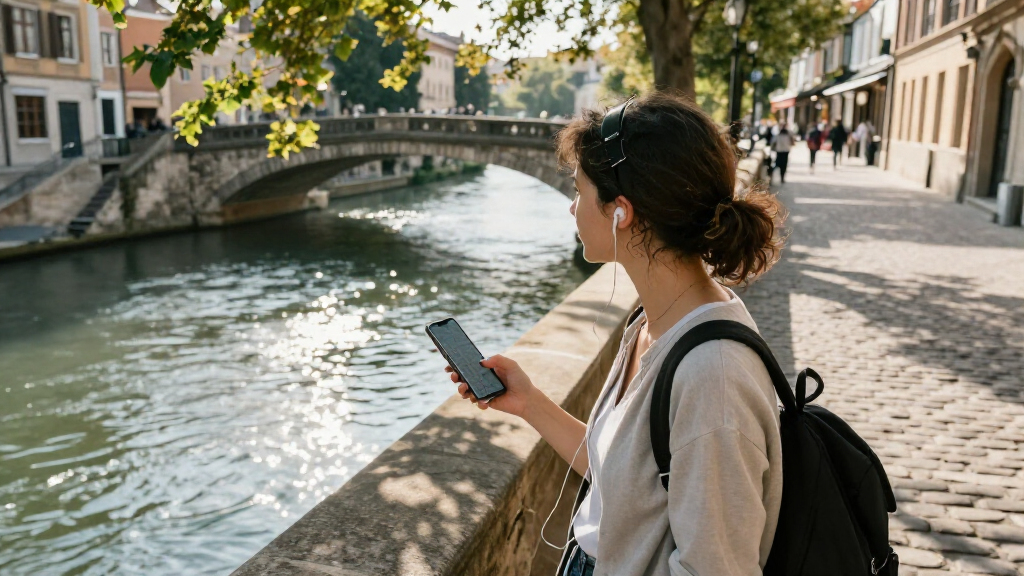
IdeaNavigator AI has outlined a location-reactive audio walking app concept, not a launched product. The proposal calls for testing route-based narration in two cities, measuring whether users return by week four and checking the accuracy of generated accounts.
IdeaNavigator AI has proposed a location-reactive audio walking app that would narrate a user’s neighborhood or travel route, using AI to generate stories about nearby history, buildings and other details. The concept remains a proposal: its suggested first test is to launch in two cities, check narration accuracy and measure how often users walk with the app through their fourth week.
The proposed app would let someone start a walk and hear narration generated from the route in real time. It would respond as the person reaches corners or landmarks, rather than playing one fixed recording from beginning to end. Suggested subjects include local history, architecture and unusual details, with themed modes for history, architecture and nature.
The concept also includes a feature for saving favorite routes. Its business model would combine a consumer subscription with a licensing option for tourism boards. No pricing, technical specifications, launch schedule, city choices or operating company are provided in the proposal.
For an initial validation, IdeaNavigator AI recommends a two-city launch, tracking walks per week at week four and auditing the factual accuracy of narration on a sample of routes. Those are proposed measures, not reported results: the material gives no user numbers, accuracy findings or evidence that a test has begun.
Concept brief / Location-aware audio
How an Audio Walking App Brings Routes to Life
A proposed app would turn a walk into a live audio story, reacting to nearby streets and landmarks. The idea has a two-city validation plan, but no launch or results have been reported.
From fixed tours to live routes
Instead of following one recording from start to finish, the concept would respond to where someone walks and what is around them.
More street, more story
The pitch is to make everyday neighborhoods part of the listening experience, not only established visitor attractions.
Stories in context
Route-aware narration could connect local history, architecture and distinctive details to the places walkers pass.
Themed listening
Proposed modes include history, architecture and nature, giving a walk a focus that fits the listener.
Saved favorites
Walkers could save routes they enjoy. The proposal does not yet describe how saved routes would work offline or across devices.
Two questions before scaling
A limited test is proposed to examine repeat use and factual quality. These are measures to collect, not results already achieved.
Do walkers come back?
Track walks per user per week through week four. This would offer an early signal about whether the experience becomes part of a routine.
No retention target, participant count, city selection or test date is provided.
Can stories be trusted?
Audit the factual accuracy of narration on a sample of routes. The proposal does not set a benchmark or name who would review it.
Data sources, verification steps and a process for correcting errors remain unspecified.
The concept still needs proof
The proposal describes a direction, not a finished product. Its commercial prospects and operating details remain unverified.
Grounded accounts
Open information can be incomplete or conflicting. Sources, review standards and correction workflows are not specified.
Attention in motion
How narration avoids distracting people near crossings or busy streets is an unresolved product question.
Privacy and access
Location privacy, accessibility, offline listening and sensitive local history are not addressed in the concept.
Two routes to funding
The proposal names potential customer groups, but provides no pricing or evidence of buyer demand.
Consumer subscription
Recurring access could support continued listening. No price or subscription details are stated.
Tourism-board licensing
Licensing could help extend audio coverage beyond professionally produced landmark tours. No buyers are reported.
Can it sustain coverage?
Demand, operating costs and the economics of generating dependable local stories remain unknown.
What happens next?
The stated next step is a small test. Wider deployment would depend on evidence that has not yet been published.
What we know so far
Has the app launched?
No launch is reported. The material describes a concept and recommends testing it in two cities.
How would narration work?
It would respond to a live route, drawing on open information about local history, architecture and places. Data providers and verification are not specified.
What would the test measure?
Walks per week through week four and narration accuracy on a sample of routes. No results or thresholds are available.
How might it make money?
The suggested model combines a consumer subscription with tourism-board licensing. Pricing and buyer demand are unknown.
Testing Whether Walkers Return
The proposal targets a gap between general audio content and traditional guided tours. Podcasts are not designed around a listener’s immediate surroundings, while many existing tour recordings focus on designated landmark areas. A route-aware app would try to make ordinary streets—not just established visitor attractions—part of the listening experience.
That distinction matters to both potential users and tourism organizations. If narration can be generated for routes that have not had recordings professionally produced, the idea could broaden the places covered by audio tours. Tourism-board licensing is one possible route to funding that coverage, while a subscription would ask individual walkers to pay for continued access. The proposal does not establish that either model would attract customers or cover operating costs.
The suggested test also focuses on two separate questions. Week-four walking frequency would offer an early signal about repeat use, while an accuracy audit would address whether the app’s generated stories are dependable. Both would need results before the concept’s appeal or reliability could be judged.
Products Worth Considering

Canon PIXMA TR160 Wireless Portable Color Inkjet Printer

Canon SELPHY CP1500 Wireless Compact Photo Printer (Black)

Logitech MX Keys S Wireless Keyboard, Graphite
As an affiliate, we earn on qualifying purchases.
From Fixed Tours to Live Routes
The idea is framed around the cost and coverage limits of producing audio tours route by route. A conventional tour needs content prepared for particular places, which can leave everyday neighborhoods without the same attention as landmark districts. IdeaNavigator AI argues that newer large language models could generate location-grounded narration on demand using open information such as historical records, architecture details and place data.
That is the concept’s rationale, not proof that the underlying information is complete or that generated narration will be accurate. The proposal does not name data providers, explain how information would be verified, or describe how the app would distinguish reliable records from gaps or conflicting accounts. It also does not specify how frequently the app would speak, how it would handle a changed route, or whether narration would work without a live connection.
The recommendation to begin with one narrowly defined user need—a walker who wants their neighborhood or travel route narrated—would keep an early test focused. The two-city plan would then provide a limited setting to examine both repeat use and factual quality before considering wider deployment.
Accuracy, Safety and Adoption
No product launch or test results are reported. It is not clear which cities would be selected, what the app would cost, how many users would take part or what retention level would count as a successful test. The proposal also does not give an accuracy benchmark or explain who would review the sample of generated routes.
Several practical issues remain unspecified, including how location and open-data records would be matched, how errors would be corrected, and how the app would avoid distracting people crossing streets or walking in busy areas. The concept does not discuss privacy practices for location data, accessibility, offline use or the handling of sensitive local history. These are open product questions, not reported shortcomings of a released app.
A Two-City Test Would Decide
The next step described in the proposal is a limited launch in two cities. The test would track how many walks users take per week through week four and assess the accuracy of narration on a sample of routes. Those measurements could help determine whether users return and whether generated stories meet a basic factual standard.
No test date or launch commitment is stated. Until a product is built and results are published, the concept’s user demand, accuracy, commercial prospects and suitability for tourism-board licensing remain unverified.
Source: IdeaNavigator AI
Key Questions
Has the audio walking app launched?
No launch is reported. The material describes a product concept and recommends testing it in two cities.
How would the app create its narration?
The proposal says it would generate narration from a user’s live route, drawing on open information about local history, architecture and places. It does not specify the data providers or verification process.
What would the proposed test measure?
It would track walks per week through week four and audit narration accuracy on a sample of routes. No results or thresholds are provided.
How might the app make money?
The suggested model combines a consumer subscription with a licensing tier for tourism boards. Pricing and evidence of buyer demand are not available.
Source: IdeaNavigator AI