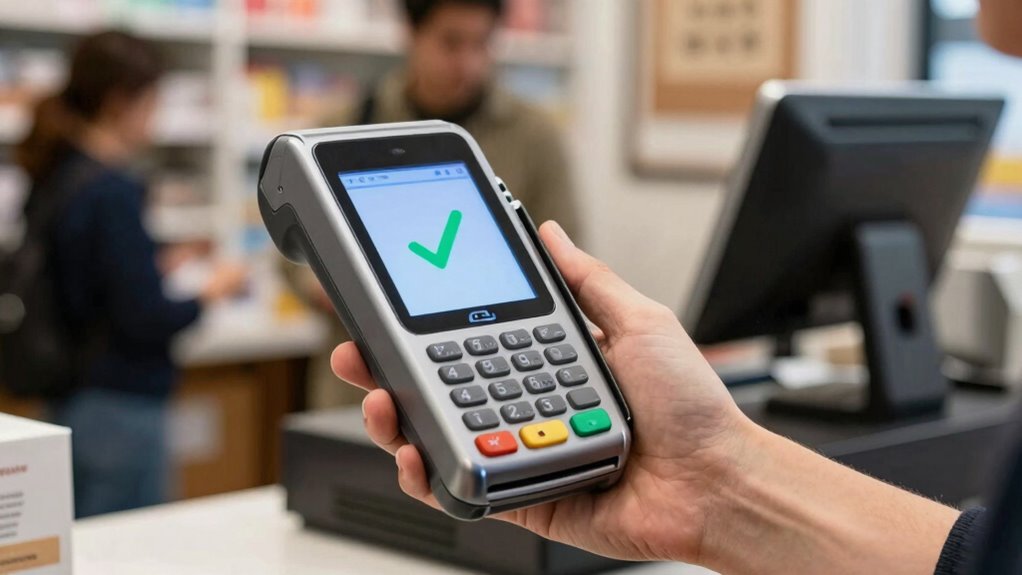

As a merchant, you should understand that offline fallback acceptance is essential for ensuring your payment systems stay operational during connectivity issues. Choose devices and processors that automatically reconcile transactions, preventing rejected payments and maintaining accurate sales data. It’s also important to train your staff on offline procedures and prioritize secure, reliable systems to protect sensitive info. Staying informed about offline solutions helps you keep revenue flowing and customer trust intact—exploring this topic further will provide valuable insights.

Get business pricing on office and shipping supplies
- Business-only prices and quantity discounts
- Tax-exempt purchasing
- Multiple users, one account, clear invoices
Key Takeaways
- Offline fallback acceptance is essential for minimizing revenue loss during connectivity issues.
- Choose POS systems that automatically reconcile transactions to ensure accurate sales and inventory records.
- Train staff on offline procedures to prevent errors and maintain transaction integrity.
- Prioritize secure offline payment solutions with encryption to protect sensitive customer data.
- Regularly update knowledge on offline payment technology to ensure system resilience and future readiness.
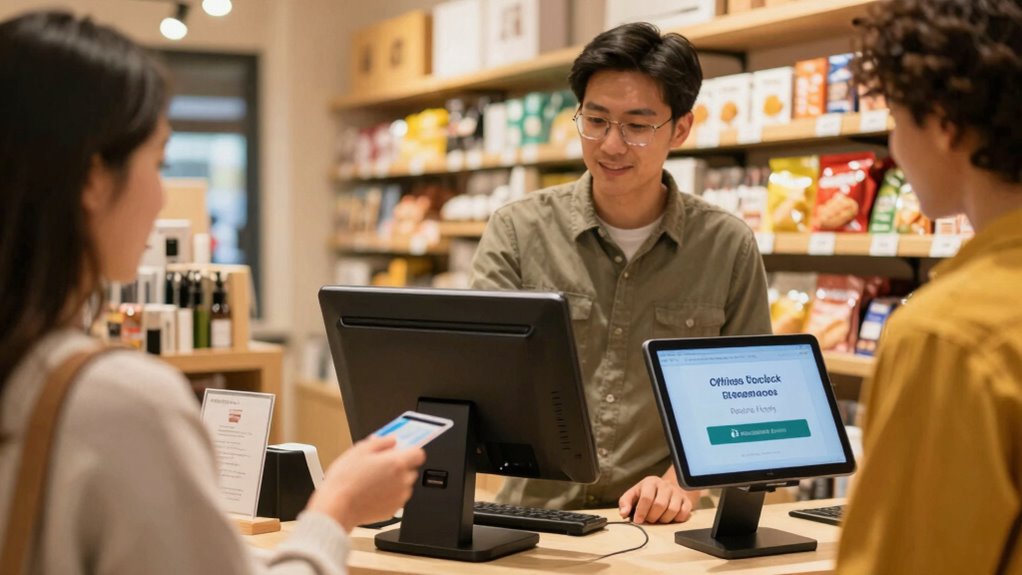
Transaction reliability is also key. You want to avoid scenarios where payments are accepted offline but later rejected once the system reconnects. To achieve this, select POS devices and payment processors that automatically reconcile transactions once back online. This ensures that all sales are accurately recorded, inventory is updated correctly, and your accounting remains consistent. Clear communication with your team about offline procedures and protocols is equally important, so they know how to handle offline transactions properly and avoid errors that could impact your business operations. Maintaining transaction integrity during offline periods is crucial for accurate record-keeping and customer trust.
Ultimately, offline fallback acceptance isn’t just a backup plan; it’s a vital component of a resilient payment infrastructure. By investing in reliable, secure systems that support offline transactions, you reduce the risk of revenue loss and improve the overall customer experience. Customers appreciate the convenience of being able to pay seamlessly, no matter the technical hiccup. Additionally, understanding the role of encryption in offline payment security can help you better protect sensitive data. As technology evolves, staying informed about the latest offline payment solutions will help you adapt quickly, ensuring your business remains operational, secure, and trustworthy—regardless of the digital environment’s stability.
As an affiliate, we earn on qualifying purchases.
Frequently Asked Questions
How Does Offline Fallback Affect Transaction Fees?
Offline fallback can lead to higher transaction fee implications since transactions processed offline often incur additional charges or higher rates once they’re processed later. As a merchant, you should be aware that relying on offline fallback impacts your cost management, potentially increasing overall expenses. It’s essential to balance the convenience of offline transactions with their effect on your fees, ensuring you’re prepared for possible cost increases during offline periods.
Can Offline Fallback Be Used Internationally?
Imagine your point-of-sale system as a bridge spanning borders—offline fallback can indeed be used internationally. It supports global deployment by allowing transactions even when online connections falter, making your business accessible worldwide. With international compatibility, you guarantee seamless sales across different countries, reducing disruptions. This capability provides confidence that your payment system remains reliable, whether you’re serving local customers or expanding into new markets.
What Are the Security Risks of Offline Fallback?
Offline fallback can pose security risks because transactions may lack real-time data encryption, making them vulnerable to interception. You also face challenges with fraud detection, as offline transactions aren’t immediately verified against fraud databases. To mitigate these risks, guarantee sensitive data is encrypted locally and implement robust fraud detection measures that can analyze offline transactions once reconnected. Regularly updating security protocols helps protect both your business and your customers.
How Long Can Offline Fallback Transactions Be Stored?
You can typically store offline fallback transactions for up to 72 hours, depending on your payment system’s policies. During this fallback duration, the transaction data is securely stored as part of transaction storage to guarantee it can be processed once the connection is restored. After this period, unprocessed transactions may be canceled or require manual intervention. Always confirm your specific system’s fallback duration to avoid processing issues.
What Training Is Required for Staff on Offline Fallback Procedures?
You need to provide staff with thorough training on offline fallback procedures, emphasizing procedural awareness. For example, if a transaction fails online, your team should confidently switch to offline mode, process the payment securely, and follow specific steps. This training guarantees staff understand the process, recognize fallback scenarios, and handle transactions efficiently, minimizing disruptions and maintaining customer trust during offline situations.
As an affiliate, we earn on qualifying purchases.
Conclusion
Understanding offline fallback acceptance guarantees you’re prepared for unexpected network issues, keeping transactions smooth and customers satisfied. By embracing this backup plan, you reduce the risk of lost sales and maintain trust in your business. Are you ready to confidently handle any situation that comes your way, ensuring your payment processes are seamless no matter what? With the right knowledge and tools, you can turn potential disruptions into opportunities for excellent customer service.
automatic transaction reconciliation POS
As an affiliate, we earn on qualifying purchases.
As an affiliate, we earn on qualifying purchases.
offline payment encryption device
As an affiliate, we earn on qualifying purchases.
As an affiliate, we earn on qualifying purchases.
Fall Picks
fall essentials
As an affiliate, we earn on qualifying purchases.