To protect unattended payment terminals, you must integrate security from the very start of the design process. Embedding safeguards like encryption, tamper-resistant hardware, and secure firmware updates helps prevent cyberattacks and physical tampering. By considering security early, you reduce vulnerabilities and build a more resilient device. Failing to do so can lead to costly breaches and data compromises. Keep going to discover how proactive security design can safeguard your payment environment effectively.

Get business pricing on office and shipping supplies
- Business-only prices and quantity discounts
- Tax-exempt purchasing
- Multiple users, one account, clear invoices
Key Takeaways
- Integrating security during initial design prevents vulnerabilities and enhances device resilience against attacks.
- Physical security features like tamper-evident enclosures protect against hardware manipulation.
- End-to-end encryption ensures secure transmission of payment data from the outset.
- Regular assessments and secure updates maintain ongoing protection against evolving threats.
- Compliance with security standards from day one simplifies regulatory adherence and builds customer trust.
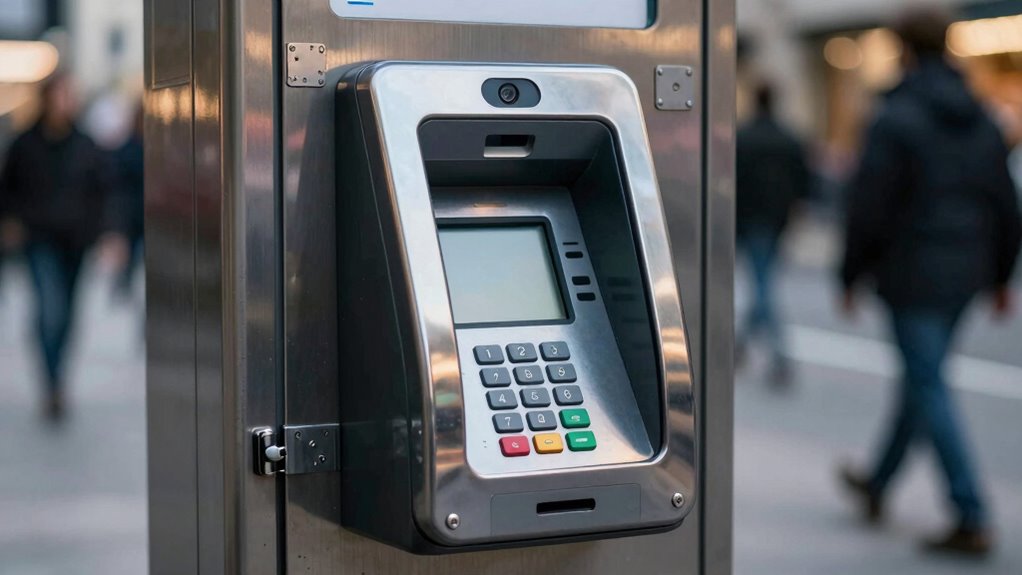
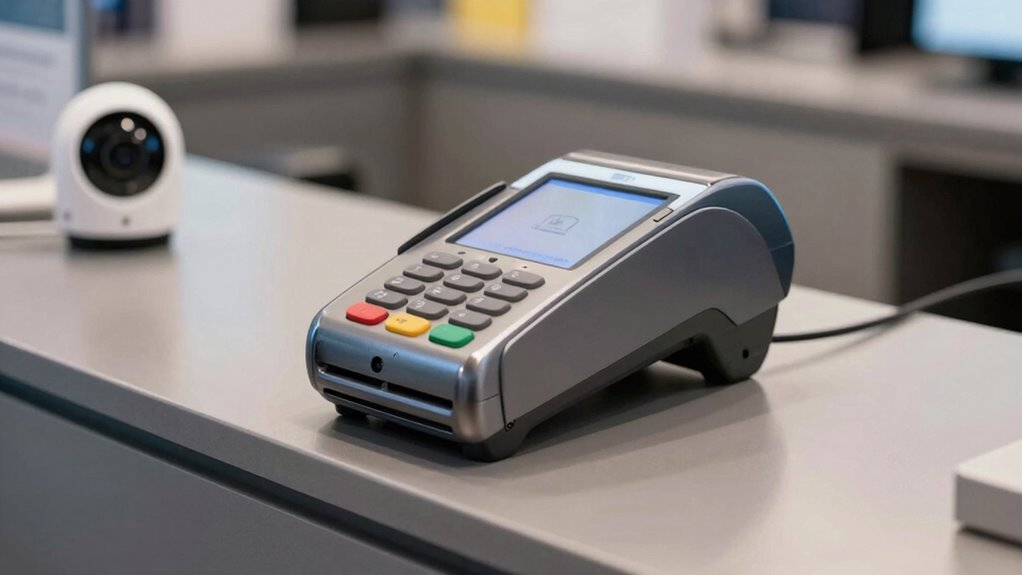
Unattended payment terminals are increasingly common, but many overlook a critical aspect: security must be integrated from the very beginning of their design. When you deploy these devices in public spaces, you’re exposing them to a range of threats, from cyberattacks to physical tampering. If security isn’t embedded into the core of the device’s architecture, you risk compromising sensitive customer data and facing costly breaches. Starting with robust encryption protocols is essential. These protocols ensure that all payment data transmitted between the terminal and your backend systems remains encrypted, making it much harder for hackers to intercept or decipher. Implementing end-to-end encryption, for example, helps protect cardholder information even if the terminal itself is compromised. But encryption alone isn’t enough. Physical tampering threats are equally critical. Attackers may attempt to open the device, insert malicious hardware, or manipulate its components to steal data or disrupt operations. To combat this, you should design terminals with tamper-evident and tamper-resistant features. These can include secure enclosures, tamper switches that trigger alarms or disable the device if tampering is detected, and secure hardware modules resistant to invasive attacks. You need to think beyond just software defenses; physical security measures are just as important. When you consider security from day one, you can embed these protective features into the design process, rather than retrofitting them later. This proactive approach reduces vulnerabilities and enhances overall resilience. Moreover, integrating security at the design stage allows you to implement secure boot processes and hardware-based encryption modules, which add additional layers of defense. You’ll also want to verify that all firmware updates are secured and that the device can receive updates remotely without exposing itself to man-in-the-middle attacks. Regular security assessments and testing should be part of your ongoing strategy, but they’re far more effective when the foundation is built with security in mind from the outset. Additionally, security-focused design ensures that the device’s architecture inherently mitigates potential threats and vulnerabilities. Incorporating security standards during development can help ensure comprehensive protection against evolving risks. Building security into the initial design also facilitates easier compliance with industry regulations, reducing future operational challenges. Recognizing the importance of physical security measures can further strengthen the overall defense system. Considering security best practices during development can significantly decrease the likelihood of successful attacks. Ultimately, unattended payment terminals are convenient, but they also pose significant security challenges. By prioritizing encryption protocols and physical security measures during the design phase, you’re safeguarding your customers’ data and protecting your business from costly breaches. It’s a proactive investment that pays off by creating a secure environment that customers can trust, no matter where or how they pay.
tamper-resistant payment terminal enclosure
As an affiliate, we earn on qualifying purchases.
As an affiliate, we earn on qualifying purchases.
Frequently Asked Questions
How Can Physical Tampering Be Prevented on Unattended Terminals?
To prevent physical tampering on unattended terminals, you should implement robust physical protection measures like secure enclosures and tamper-evident seals. Incorporate tamper detection features that alert you instantly if someone attempts to access or alter the device. Regular inspections and monitoring also help identify potential tampering early. Combining these strategies guarantees your terminals stay secure, minimizing risks of fraud or data breaches caused by physical interference.
What Are the Latest Encryption Standards for Unattended Payment Data?
You should know that PCI PTS POI standards now mandate strong data encryption for unattended payment data, with AES-256 being the current top standard. Effective key management is critical to keep encryption secure, preventing breaches. Over 80% of payment card fraud involves compromised encryption or poor key handling. By implementing the latest data encryption practices and robust key management, you markedly reduce the risk of unauthorized data access at unattended terminals.
How Often Should Security Updates Be Applied to These Terminals?
You should apply security updates to unattended payment terminals as soon as they’re available, ideally within 30 days. Regular updates address new software vulnerabilities and strengthen user authentication, reducing the risk of breaches. Staying current with patches guarantees your system remains secure from evolving threats. Implementing an automated update process can help maintain consistent security, keeping your payment environment safe for users and compliant with industry standards.
What Regulatory Compliance Issues Are Involved in Unattended Payment Security?
You need to guarantee your unattended payment terminals comply with regulations like PCI DSS and GDPR, which focus on fraud detection and user privacy. These standards require secure encryption, data protection, and robust authentication to prevent fraud and safeguard customer info. Regular audits and updates keep you compliant, reducing risks of penalties. By integrating compliance into your security design from the start, you protect your customers and uphold trust.
How Do Biometric Authentication Options Enhance Security?
Biometric authentication methods, like fingerprint or facial recognition, greatly enhance security by providing unique, hard-to-replicate identifiers. When you integrate biometric options into your unattended payment terminals, you reduce risks of fraud and identity theft, ensuring only authorized users access sensitive payment functions. Biometric integration offers a seamless, quick authentication process, making transactions safer and more efficient, while minimizing reliance on traditional PINs or cards vulnerable to theft or duplication.
end-to-end encryption payment device
As an affiliate, we earn on qualifying purchases.
As an affiliate, we earn on qualifying purchases.
Conclusion
Don’t wait until a breach happens to realize the importance of security in unattended payment terminals. Starting with a strong design from day one isn’t just smart — it’s essential to safeguard your customers’ data and your reputation. Some say security can be added later, but that’s a risk you can’t afford. Invest now, and guarantee your terminals are secure from the start, giving both you and your customers peace of mind.
As an affiliate, we earn on qualifying purchases.
tamper-evident hardware security
As an affiliate, we earn on qualifying purchases.
As an affiliate, we earn on qualifying purchases.
Fall Picks
fall essentials
As an affiliate, we earn on qualifying purchases.